Last Updated on December 18, 2025 by teamobn
If you are running out of room in your closets and garage, your attic might be the hidden storage space you have been looking for. Many attics are awkward A frame spaces that are hard to use with regular shelves and cabinets, but with a bit of planning you can turn even a small loft into an organized storage zone.
Quick Answer:
Some of the best attic storage ideas include built in shelves along the walls, clear labeled bins under the eaves, sliding barn doors to hide clutter, hidden compartments for valuables, low closets and drawers under sloped ceilings, and turning one corner into a low bookshelf and reading nook. These ideas use the odd shapes of an attic so you can store more safely and keep the space easy to walk through.
At A Glance
What This Guide Covers
• How to check if your attic is safe and suitable for storage
• Six practical attic storage ideas that work in real homes
• Tips for lighting, access and safety so you can move around easily
• Answers to common questions about what you can and cannot store in an attic
Who This Is For
• Homeowners with unfinished or finished attics who want more storage
• People who want simple, do it yourself friendly solutions
• Anyone looking to declutter other rooms by using attic space more wisely
Main Attic Storage Ideas in This Guide
- Built in shelving systems along attic walls
- Sliding barn doors to hide shelves and clutter
- Hidden storage compartments for valuables
- Closet storage with shelves under the roof slope
- Maximized shelving in low corners and under the eaves
- Low bookshelves and a reading nook in one attic corner
What You Will Gain
• More storage without adding on to your home
• Clear walking paths instead of piles of boxes
• Better protection for your belongings
• A space that can even feel cozy and inviting, not just like a dusty loft
Is Your Attic Suitable for Storage
Not every attic is ready to hold heavy boxes or delicate items. Take a little time to inspect your space so you do not damage your home or your belongings.
- Check the attic floor and structure Look for any signs that the floor or framing might not be strong enough.
- Examine the floor for sagging, soft spots or boards that move when you step on them.
- Look at joists and rafters for cracks, rot or bending.
- If you are unsure how much weight the attic can safely hold, ask a builder or structural engineer.
- Look for water and moisture problems Moisture can ruin cardboard boxes, clothes and keepsakes.
- Check for water stains on the ceiling, rafters or insulation.
- Look for mold or a musty smell.
- If you see any signs of leaks, have the roof repaired before you start storing items.
- Evaluate insulation and ventilation Good insulation and airflow help keep temperatures and humidity more stable.
- Make sure insulation is in place but not blocking vents.
- Check that soffit vents, ridge vents or gable vents are clear.
- If the attic gets extremely hot in summer or very damp, limit what you store there.
- Consider accessibility and safety Safe access matters just as much as space. • Make sure stairs or a pull down ladder are sturdy and secure.
- Add handrails where needed.
- Plan a clear walking path from the entrance to the main storage areas.
- Install basic lighting so you are not moving around in the dark.
Once you have checked these points and made any needed repairs, you are ready to plan storage that actually works for your attic rather than fighting against it.
Click on any image to start the lightbox display. Use your Esc key to close the lightbox.
6 Attic Storage Ideas That Really Work
These six ideas use low walls, tight corners and sloped ceilings to your advantage so you can fit more in without feeling cramped.
1. Built-In Attic Shelving System
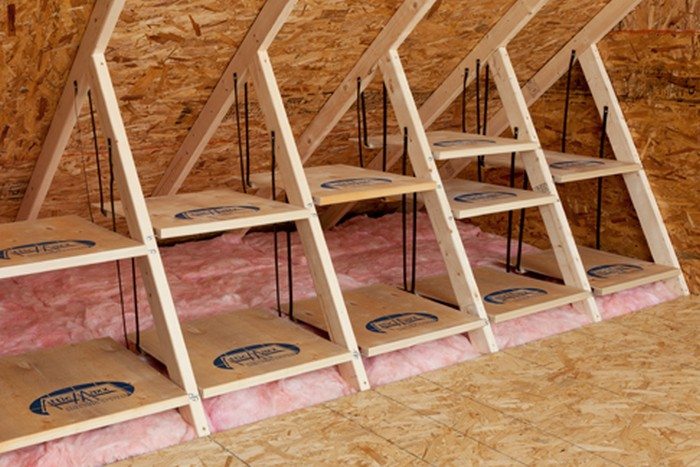
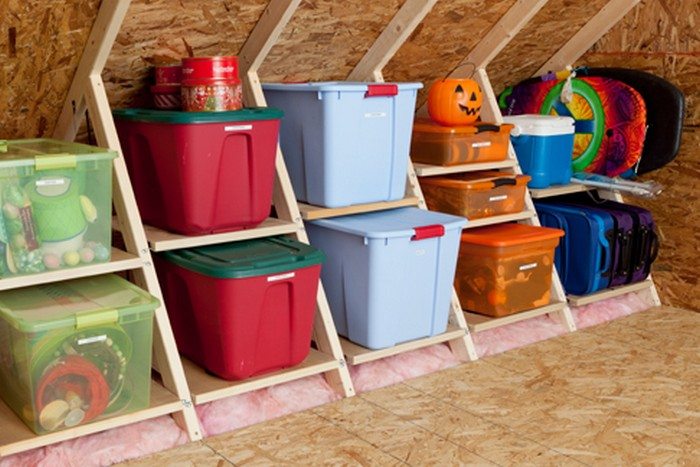
Instead of stacking random boxes on the floor, turn your attic walls into strong, shallow shelves.
Why It Works
- Uses the full height of the walls and low eaves.
- Keeps boxes off the floor and out of walkways.
- Makes it easy to see and reach what you need.
How To Set It Up
- Measure the open wall space and the height where the roof starts to slope.
- Build or install shelves that are not too deep so you can still walk past them easily.
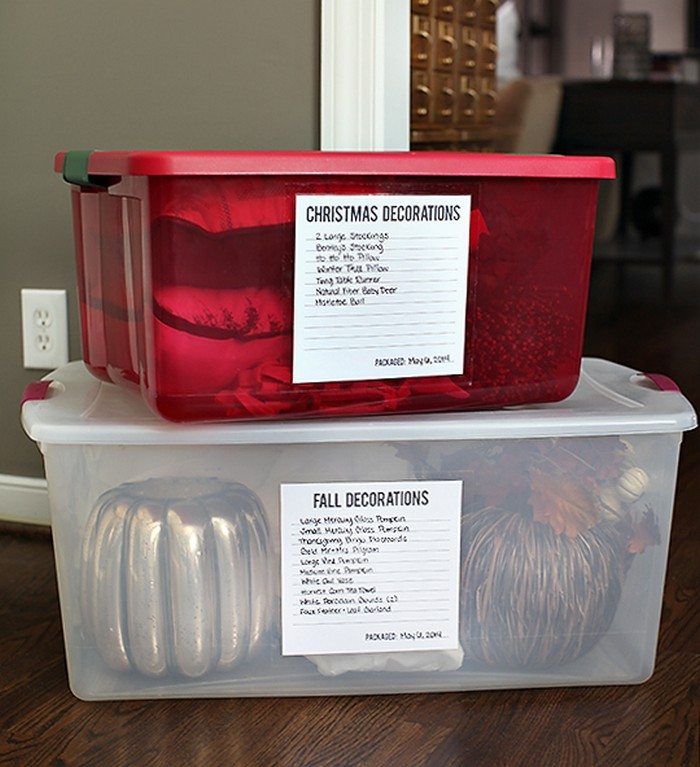
- Use clear plastic bins for most items and label each bin on at least two sides.
- Group similar things together, such as holiday decor, camping gear, kids clothes or old toys.
- Leave at least one main pathway free of boxes from the attic entrance to the back of the space.
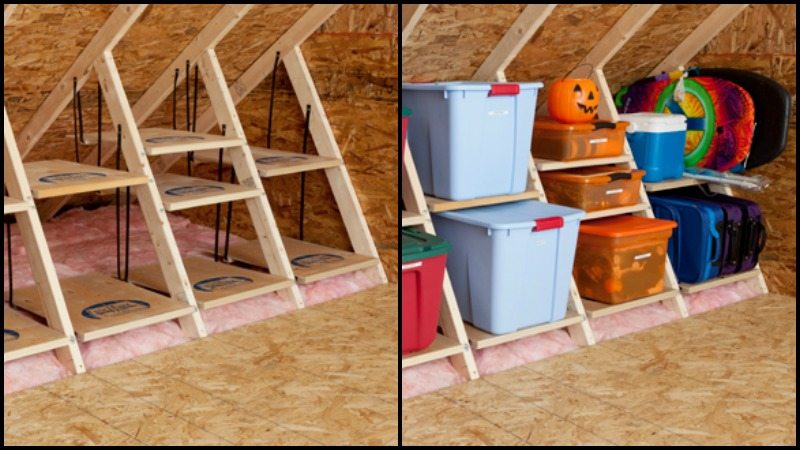
This kind of shelving system is one of the most efficient attic storage ideas and can turn a messy loft into a simple store and grab area, it is also seen from IHeart Organizing.
2. Sliding Barn Doors to Hide Clutter
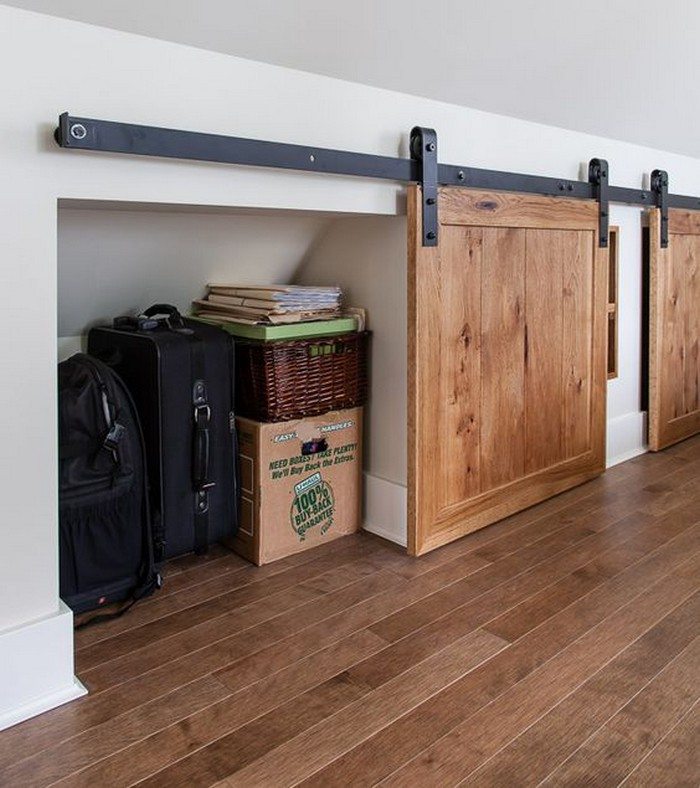
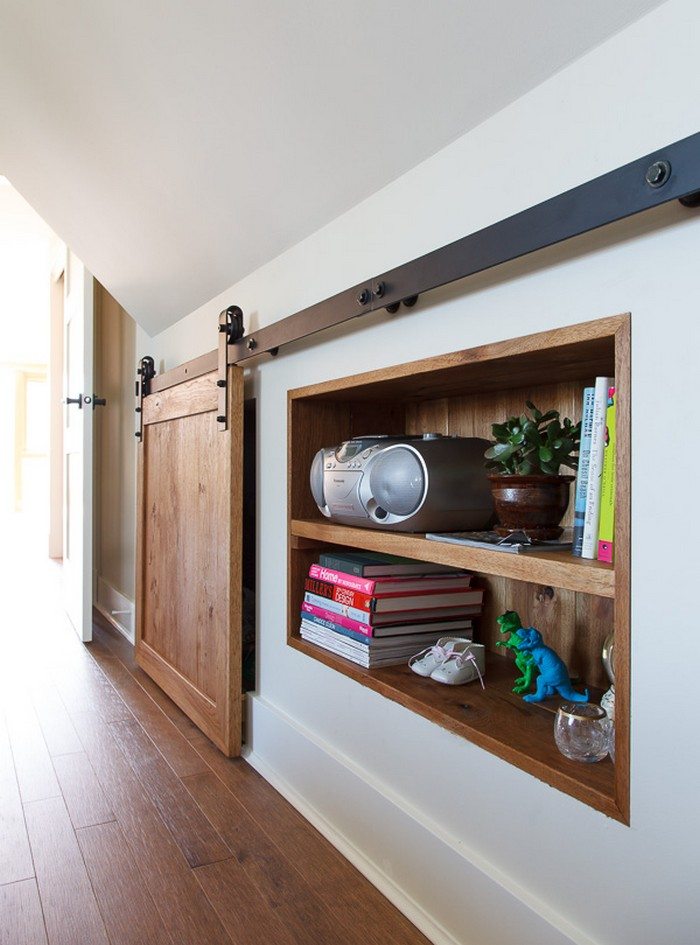
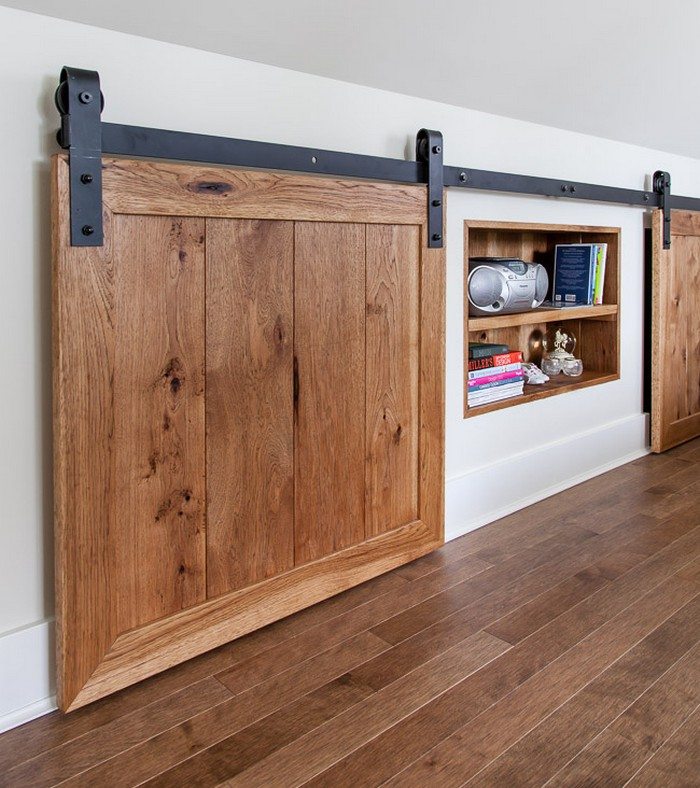
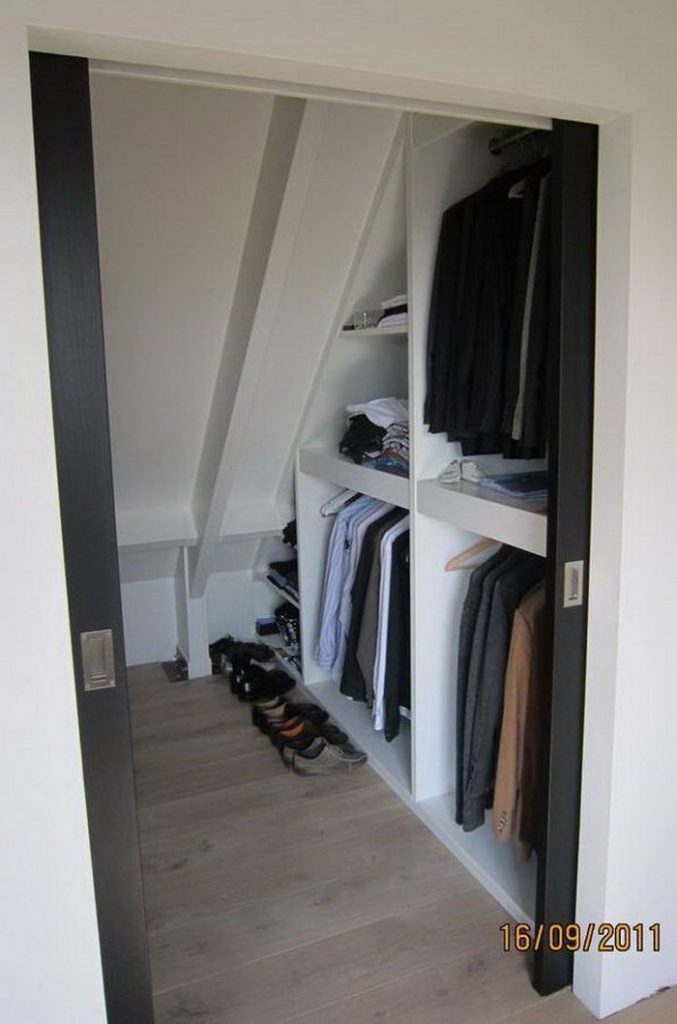
If you want your attic to look tidy, you can hide your shelves and boxes behind sliding doors instead of using a regular swing door.
Why It Works
- Sliding doors take up less floor space because they slide along the wall.
- You can hide entire sections of shelving while still keeping them easy to reach.
- The attic looks neater and more finished.
How To Use Sliding Doors in an Attic
- Decide which part of the attic you want to hide, such as a wall of shelves or hanging rods.
- Measure the opening and buy a barn door hardware kit that fits the width.
- Use a lightweight door or a simple panel so you do not add too much weight to the wall.
- Mount the rail directly into studs or rafters for strength.
- Add a simple handle and a floor guide so the door slides smoothly and does not swing.
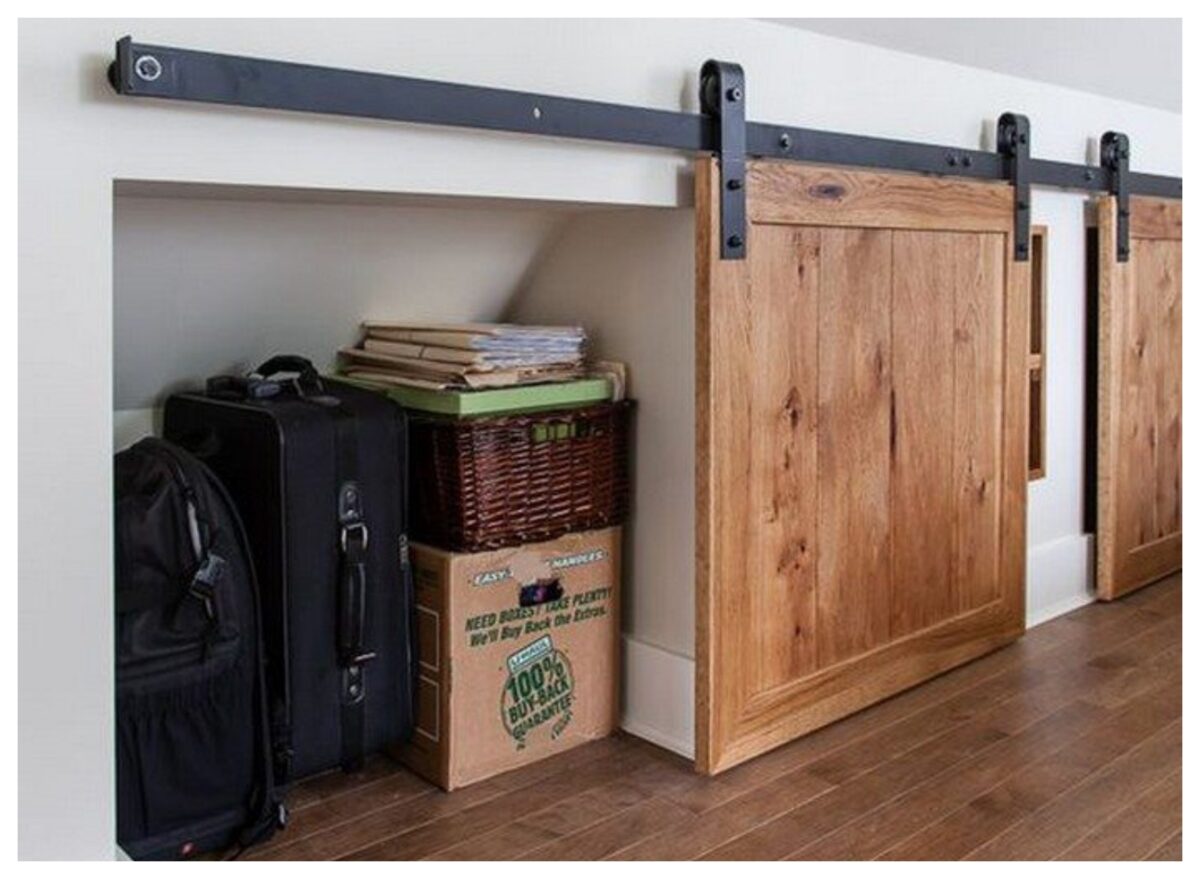
Small sliding barn doors work especially well in knee wall areas and under the eaves, where a regular door would be hard to open.
3. Hidden Storage for Valuables
If you keep special items in your attic, such as keepsakes or valuables you do not need often, you can build hidden storage to make them less obvious.
What Hidden Storage Is
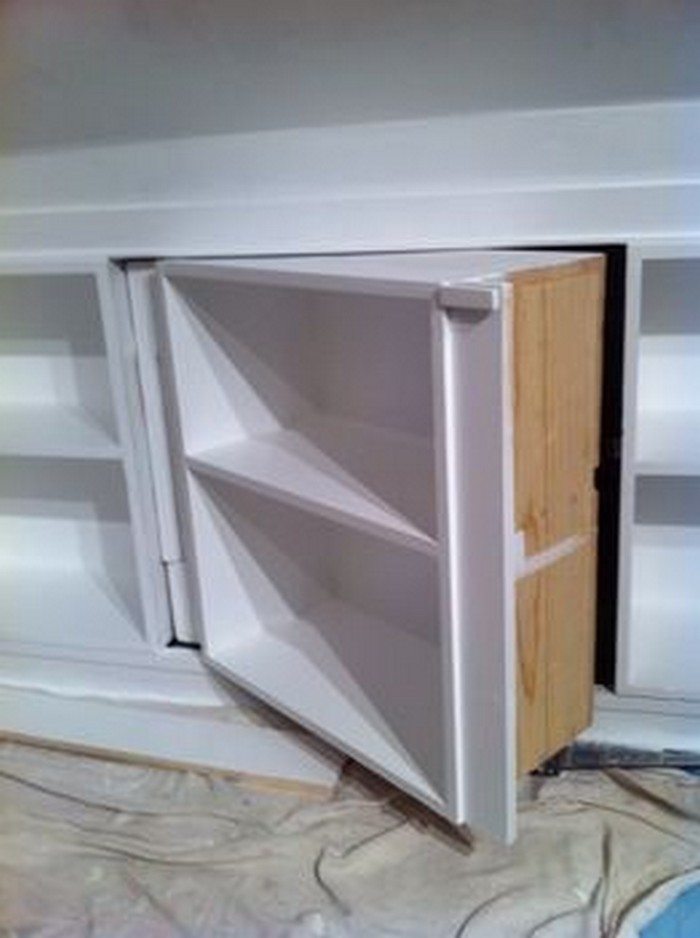
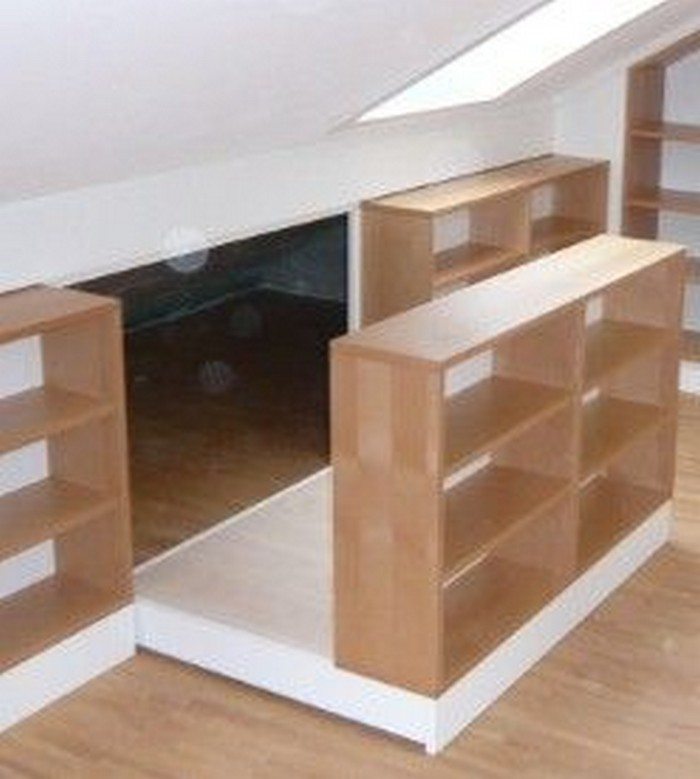
Hidden storage is a space that looks like part of a wall, floor or piece of furniture. It does not draw attention but can hold important things safely out of sight.
Simple Hidden Attic Storage Ideas
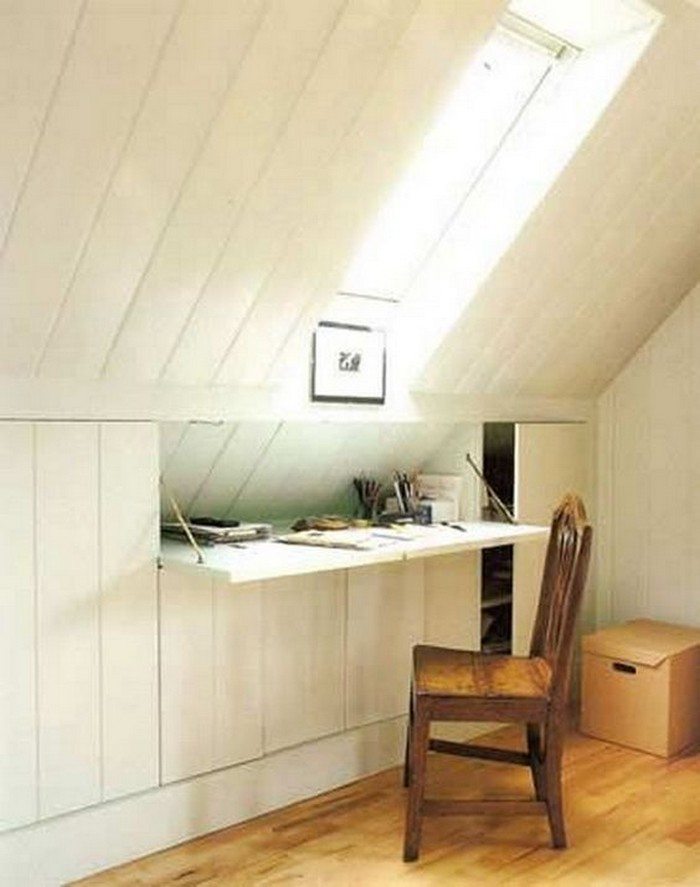
- Build a shallow cabinet into a knee wall and cover it with a plain door that matches the wall.
- Create a lift up bench seat under the eaves, with storage space inside the bench.
- Use a false bottom in a deep drawer for small valuables.
- Store these items inside sealed boxes or cases before placing them in the hidden compartment.
Hidden storage helps you keep the room looking simple while still having a safe place for items you care about.
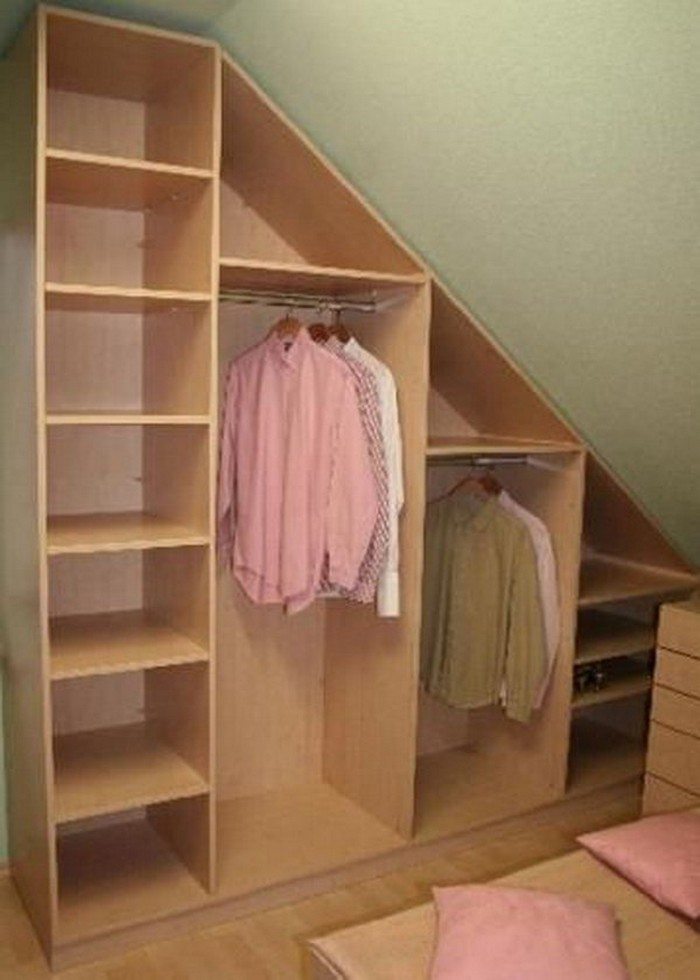
4. Closet Storage With Shelves Under the Slope
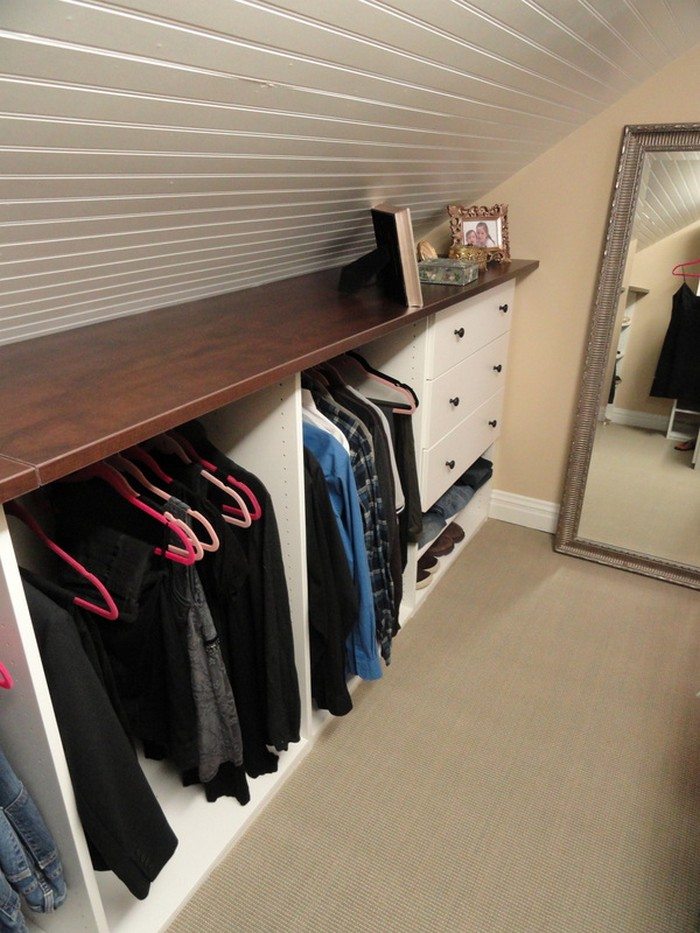
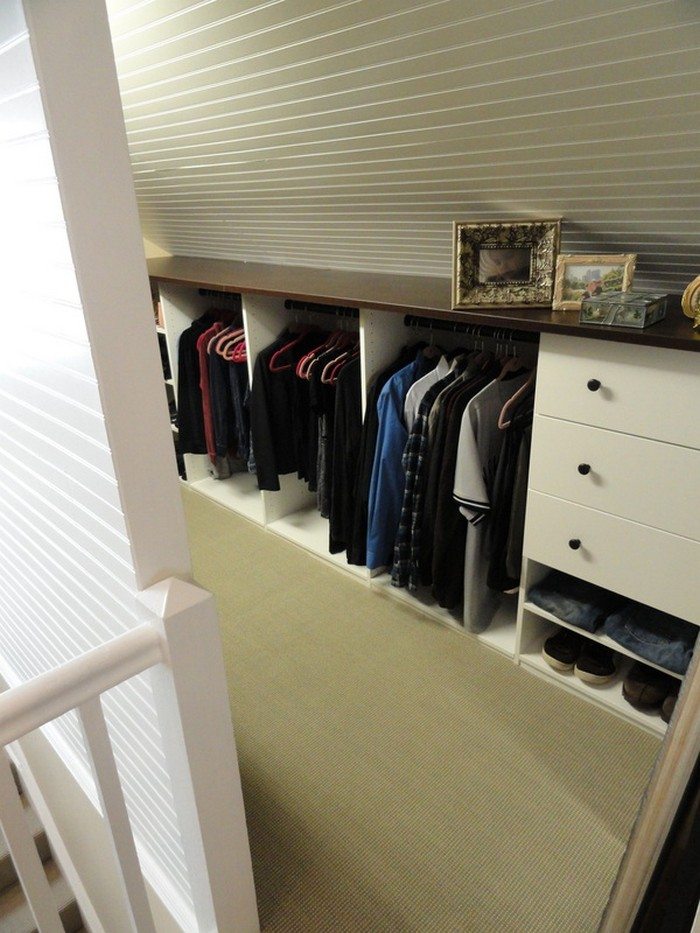
If your attic is used as a bedroom, guest room or play room, you can turn part of it into a practical closet that fits under the sloped ceiling.
Why This Works in Attics
- Sloped ceilings limit standing height but are perfect for hanging rods and shelves.
- You can gain real closet space without taking away much usable floor area.
How To Build an Attic Closet
- Choose a wall where the roof slope is fairly low but there is still enough height for hanging clothes.
- Install a hanging rod closer to the high side for shirts and shorter items.
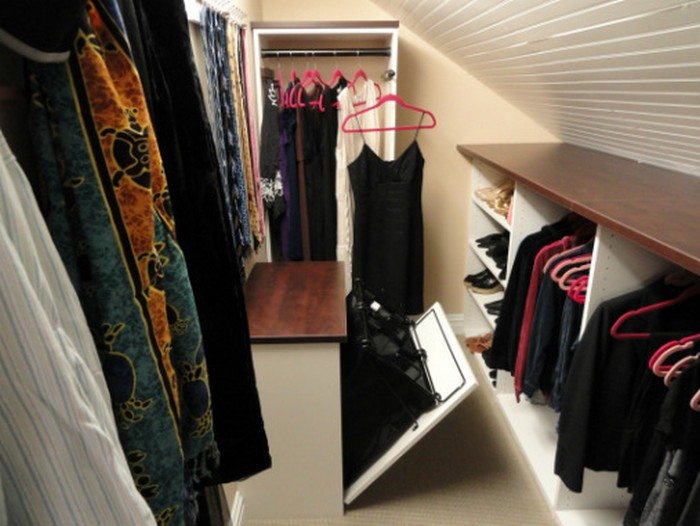
- Add shelves or cubbies under the slope for folded clothes, shoes and boxes.
- Use baskets or small bins on the shelves to keep things neat.
- Add sliding or bifold doors, or leave it open with a simple curtain if space is tight.
This turns awkward corners into useful storage, especially in attics that double as living or sleeping spaces.
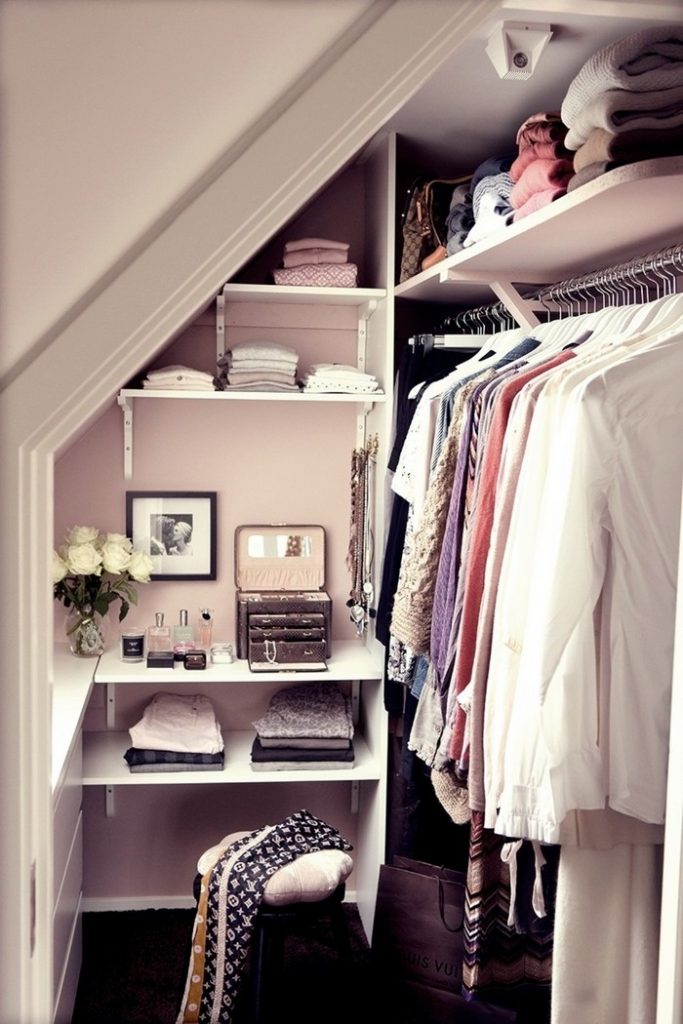
5. Maximize Every Low Corner With Shelving
The lowest parts of the attic often go unused because you cannot stand there. Shallow shelves and cubbies are a perfect way to fill those pockets of space.
Why It Works
- Takes advantage of areas where you would not normally walk anyway.
- Keeps small things sorted so they do not end up scattered across the floor.
- Makes it easier to keep track of seasonal or rarely used items.
Ways To Use Low Corner Shelving
- Build corner shelves from floor level up to the point where the roof slope becomes too steep.
- Use these shelves for lightweight items, like decor, linens, kids toys and craft supplies.
- Place heavier items on lower shelves or on the floor under the shelving.
- Add labels to each shelf or bin so you know exactly what belongs where.
By filling these corners with purpose built shelves, you gain far more storage than you could by just stacking a few boxes there.
6. Attic Bookshelves and a Reading Nook
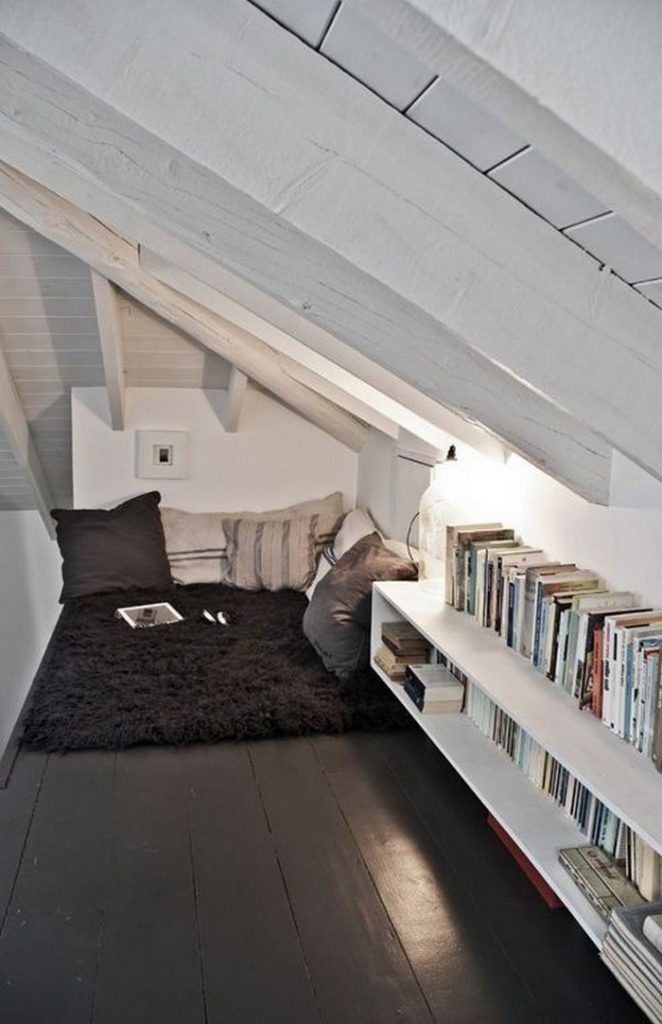
If you love books but have run out of space in the living room or bedroom, the attic can become a cozy reading and book storage area.
Why This Is a Smart Use of Attic Space
- Books fit well on low shelves under a sloped roof.
- You can combine storage with a comfortable, quiet corner for reading.
- It makes good use of an area that might otherwise sit empty.
How To Create a Reading Nook With Storage
- Install low shelves along the wall under the slope and arrange your books by category or size.
- Add a small armchair, floor cushions or a built in bench with storage under the seat.
- Use baskets on the lowest shelves for magazines, kids books or blankets.
- Add a reading lamp and, if possible, a skylight or window for natural light.
With a few simple changes, your attic can become both a library and a smart storage zone for your book collection.
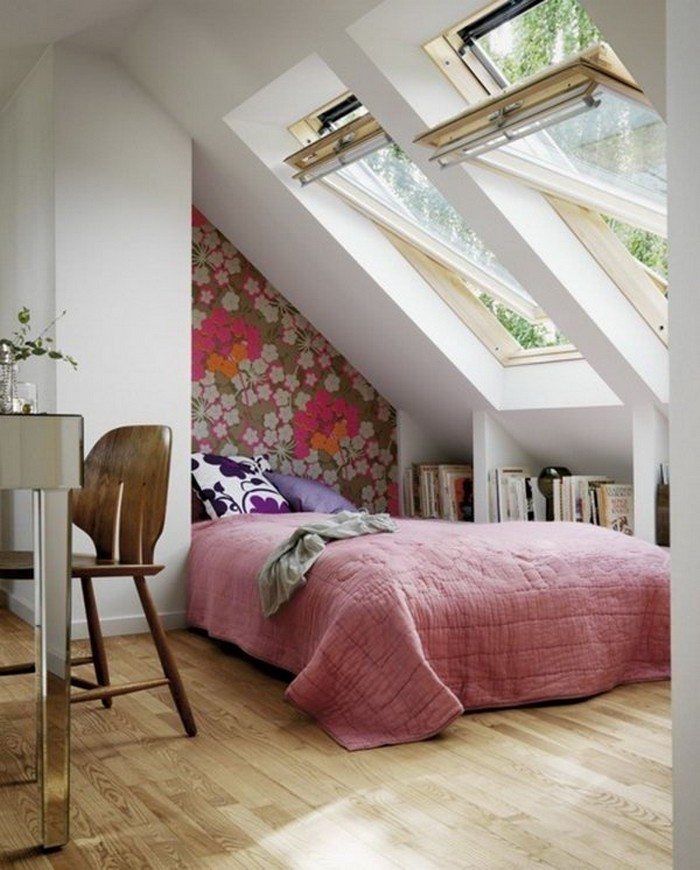
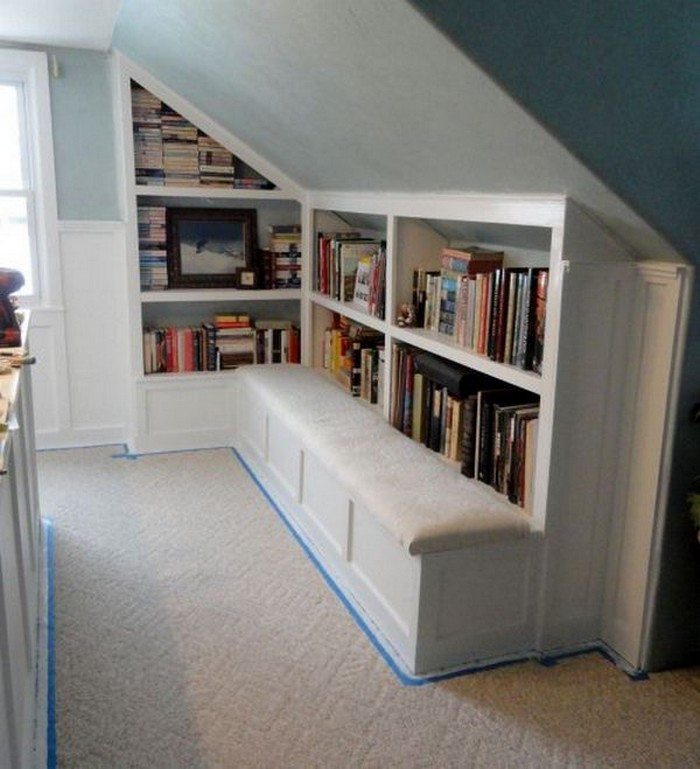
If you liked these attic storage ideas, you will also like viewing these other creative storage ideas…
Lighting And Accessibility
Lighting Good lighting and easy access make attic storage safer and more pleasant to use. Without enough light, it is easy to trip or damage stored items. With the right lighting and layout, you can move around comfortably and find what you need quickly.
Lighting Options
- Skylights Skylights are windows placed in the roof that let natural light into the attic. • They brighten the space during the day without using electricity.
- They make the attic feel less closed in and more like a regular room.
- They can help you see labels and colors more clearly when organizing.
- LED fixtures LED lights are a good choice for attic storage.
- They use less energy than traditional bulbs.
- They last a long time, so you do not have to replace them often.
- They stay cooler, which is helpful in small, enclosed spaces.
- You can use recessed lights, track lights or simple strip lights along the ceiling or rafters.
Accessibility Tips
- Keep pathways clear
- Plan one or two main walkways from the entrance to the far ends of the attic.
- Do not stack boxes in these pathways.
- If you use shelves, place them against the walls so the center area stays open.
- Organize by how often you use items
- Store things you use often, such as luggage or seasonal clothes, near the entrance.
- Put rarely used items farther back or higher up.
- Keep heavy items on lower shelves or on the floor, close to the entrance if possible.
- Use sliding shelves or pull out bins
- In deep spaces under the eaves, consider pull out drawers or sliding trays
- This lets you reach items at the back without crawling or bending awkwardly.
- Focus on safety
- Add handrails near stairs or ladders.
- Make sure any temporary flooring is secure and does not flex.
- Fix loose boards or nails that stick up.
- Check lighting and access points regularly and repair anything that feels unsafe.ull out drawers or sliding trays.
- This lets you reach items at the back without crawling or bending awkwardly.
The Wrap Up
With careful planning, an attic can be much more than a place for dusty old boxes. By checking that your attic is safe for storage, improving lighting and access, and choosing storage ideas that match the shape of the space, you can turn your loft into a useful and organized part of your home.
Built in shelving, clear labeled bins, sliding doors, hidden storage, low closets and bookshelves all help you make the most of tight corners and low ceilings. Vertical storage and smart use of the eaves allow you to store more without blocking pathways. At the same time, good lighting and safe access make it easier to move around and find what you need.
Whether you want to declutter the rest of your house, create more room for hobbies, or simply protect your belongings better, these attic storage ideas give you a simple starting point. You can tackle one small project at a time or plan a full attic makeover. Either way, your once forgotten space can become an orderly, practical and even inviting part of your home.
Frequently Asked Questions
1. How do you determine if your attic is suitable for storage?
Check the attic’s structural integrity, insulation, and ventilation. Ensure there are no signs of leaks or moisture. Consider accessibility and safety factors before deciding on some attic storage ideas.
2. What are the benefits of using the attic for storage?
Utilizing attic space can free up space in other areas of the home, reduce clutter, and provide convenient storage for seasonal items or keepsakes. It’s a practical way to maximize available space in your home.
3. What are some common storage solutions for attics?
Common attic storage ideas include shelving units, plastic storage bins, hanging organizers, and labelled boxes. Vertical storage options, such as tall shelves, are also effective for maximizing space.
4. How can you make your attic storage space more accessible?
Organize items for easy access and keep pathways clear. Install sturdy attic stairs or ladders for safe entry and exit. Consider adding lighting to improve visibility, especially in darker areas of the attic.
5. Are there any safety considerations to keep in mind when using the attic for storage?
Yes, safety is crucial when it comes to incorporating attic storage ideas. Avoid overloading the attic with heavy items, and distribute weight evenly. Ensure access points are secure and stable, and keep flammable materials away from heat sources.
6. Can you store sensitive items like documents or electronics in the attic?
It’s generally not recommended to store sensitive items in the attic due to temperature fluctuations and potential moisture issues. Consider alternative storage options, such as climate-controlled areas, for these items.