
Last Updated on August 12, 2026 by teamobn
A DIY hanging gutter garden is a simple vertical garden that lets you grow plants when you do not have much space. It uses rain gutters or PVC gutters hung on cables or brackets so you can grow herbs, lettuce, strawberries and flowers in a very small area.
To build a DIY hanging gutter garden, you cut PVC pipe into sections, split each section into long troughs, drill drainage and cable holes, run steel cables through each trough, clamp them in place, fill them with potting soil, and hang the tiered planters from eye hooks on a sturdy beam or wall.
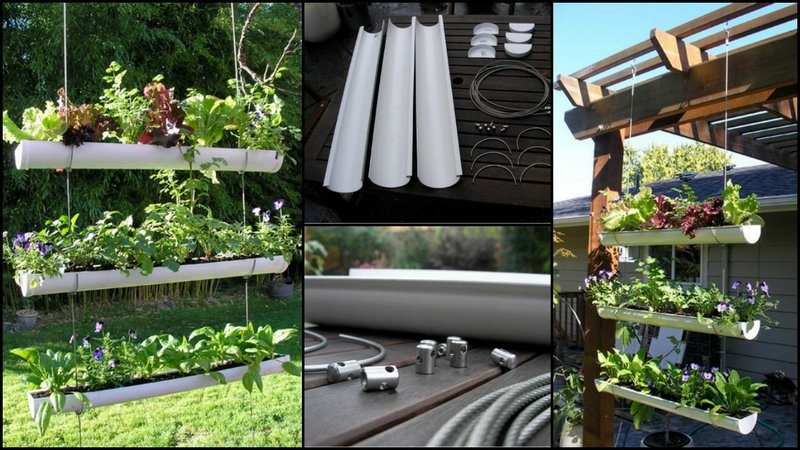
What Is a Hanging Gutter Garden
A hanging gutter garden is a type of vertical garden made from horizontal rows of gutters. The gutters are hung using steel cables or brackets so they are lifted off the ground.
You can:
- Mount them on a wall or fence
- Hang them from a pergola, porch, balcony or other overhead support
- Use old metal gutters or new PVC rain gutters
Because the gutters are shallow, they are perfect for plants with small root systems. A hanging gutter garden works well in narrow yards, courtyards, balconies and wherever ground space is limited.
Building a Hanging Gutter Garden
This section walks you through the full build process, from setup to final installation, so your structure is sturdy, level, and ready to support healthy plant growth for the long haul. Simple steps, solid results.
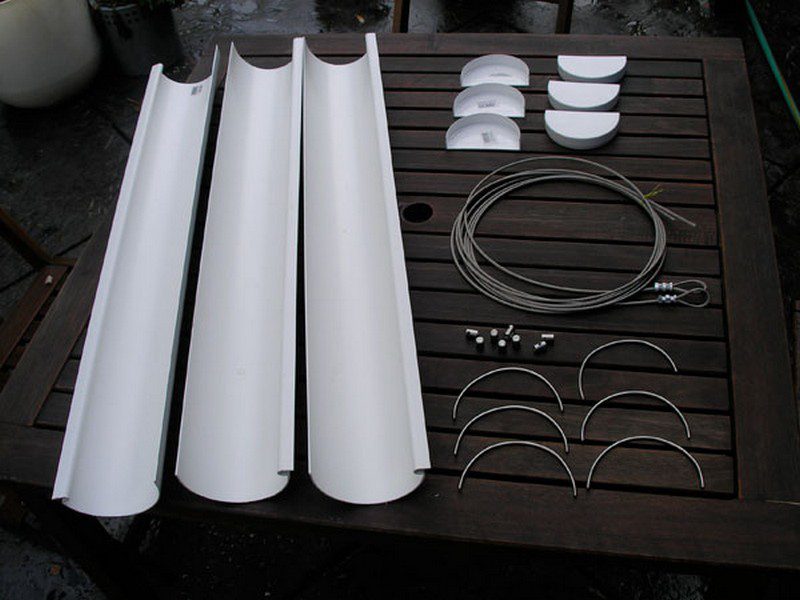
What Materials are Needed to Build a Hanging Gutter Garden
For this project we will use PVC rain gutters. You can also adapt the idea to recycled metal gutters if you have them.
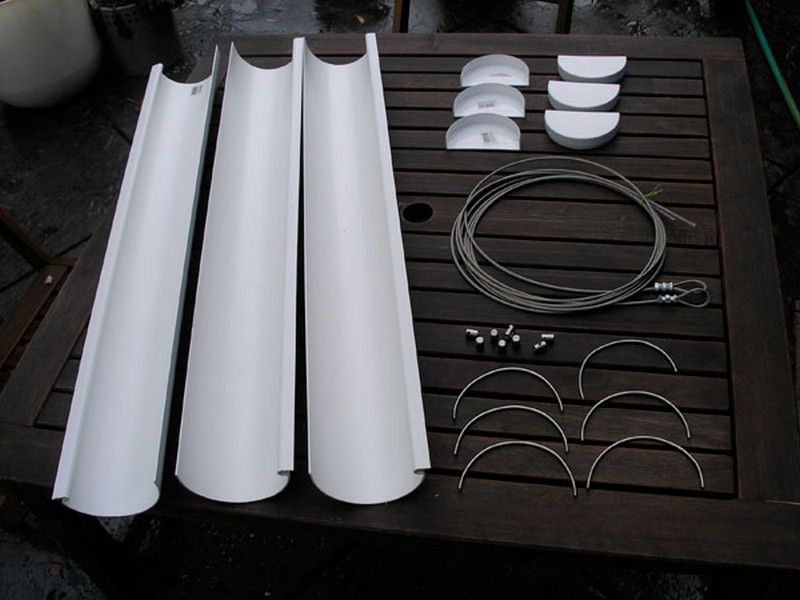
- 1 piece 8 foot PVC white rain gutter cut into three 32 inch lengths
- 6 PVC white gutter end caps
- 2 pieces 1/8 inch diameter steel cable cut to the desired hanging length
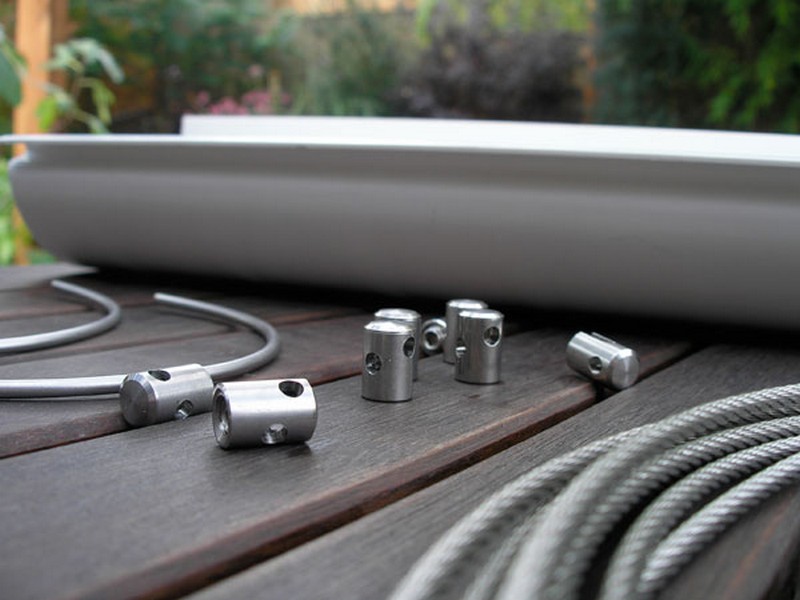
- 6 Feeney cross clamps
- 6 pieces 1/8 inch diameter Feeney steel rod
- 2 galvanized eye hooks
- Quality potting soil
- Plants such as herbs, leafy greens, strawberries or flowers
What Tools Are Needed to Build a Hanging Gutter Garden
- Cordless drill with drill bit set
- Hand or hack saw
- T-square or straight edge
- Tape measure
- Level
- Marker
- Safety glasses or eye protection
- Ladder if you are hanging the garden from a high spot
How to Build a DIY Hanging Gutter Garden Step by Step
Step 1: Plan the Location and Height
Adorable Clay Flower People 7-Step.Before you start cutting, decide where you will hang your gutter garden.
- Choose a spot that gets the right amount of sun for your plants
- Make sure the wall, fence or beam is strong enough to hold the weight of wet soil and plants
- Measure the space so you know how long to cut the gutters and how far apart to space each tier
Write down your measurements so you can use them in the next steps.
Step 2: Split Each Pipe Section Into a Trough
To create open planters, you need to cut each pipe section in half along its length.
- Lay one pipe section on a stable work surface.
- With a marker and straight edge, draw a straight line down the length of the pipe.
- Rotate the pipe and draw a second straight line on the opposite side, so the two lines divide the pipe into two halves.
- Very carefully cut along both lines with the saw so the pipe splits into two long troughs.
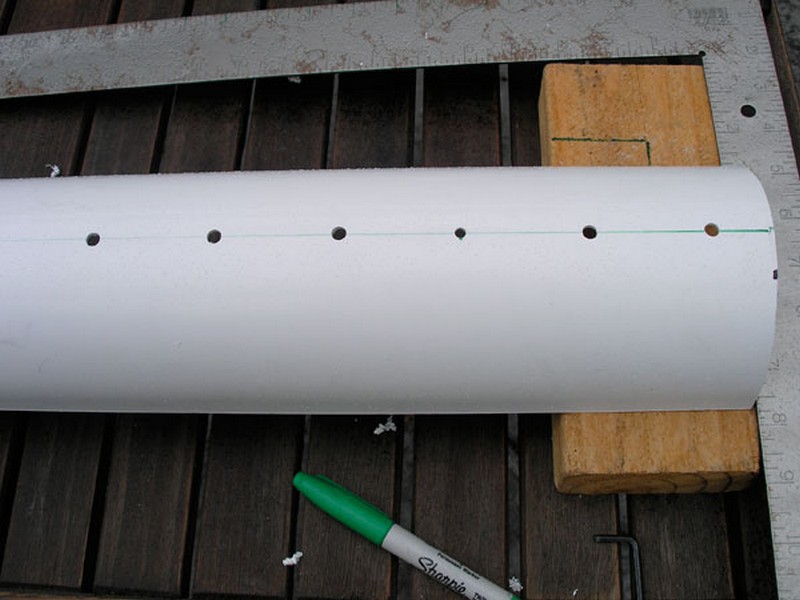
- Repeat for each section until you have several half pipe troughs, as shown in the pictures.
You now have long, shallow channels that will hold soil and plants. If you want shorter or longer planters, you can adjust the length. Shorter gutters hold less weight and are safer to hang if you are unsure about your support structure.
Step 3: Attach the End Caps
- Press a PVC end cap onto each end of the three gutter sections
- Make sure each cap fits tightly so soil and water stay inside
- If needed, you can use PVC adhesive rated for gutters to secure them more firmly
Your three gutters are now like shallow planters that will hold soil.
Step 4: Drill Drainage and Cable Holes
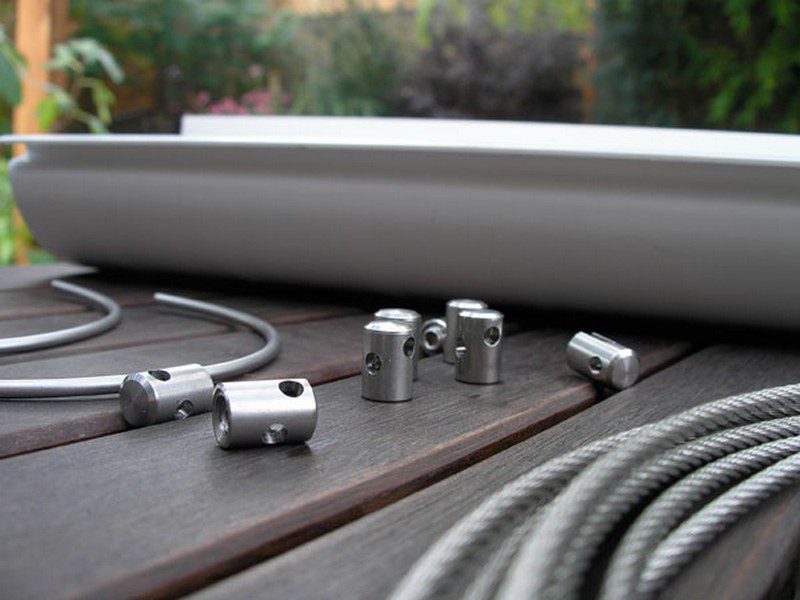
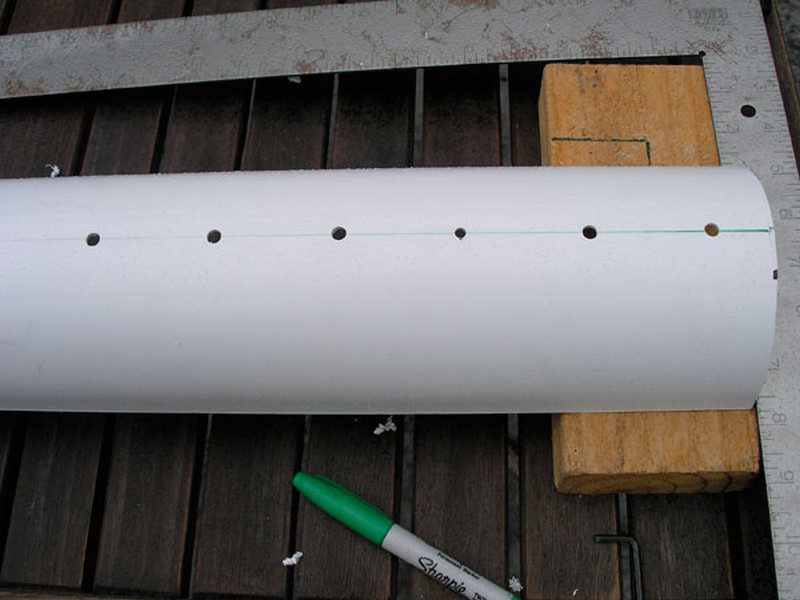
The photos show holes drilled along the bottom and at the ends of each trough.
- Turn a trough so the open side faces up.
- Along the center of the bottom, mark spots for drainage holes every 4 to 6 inches.
- Drill small holes at each mark so extra water can escape.
- At each end of the trough, near the top edge, mark a spot for cable holes.
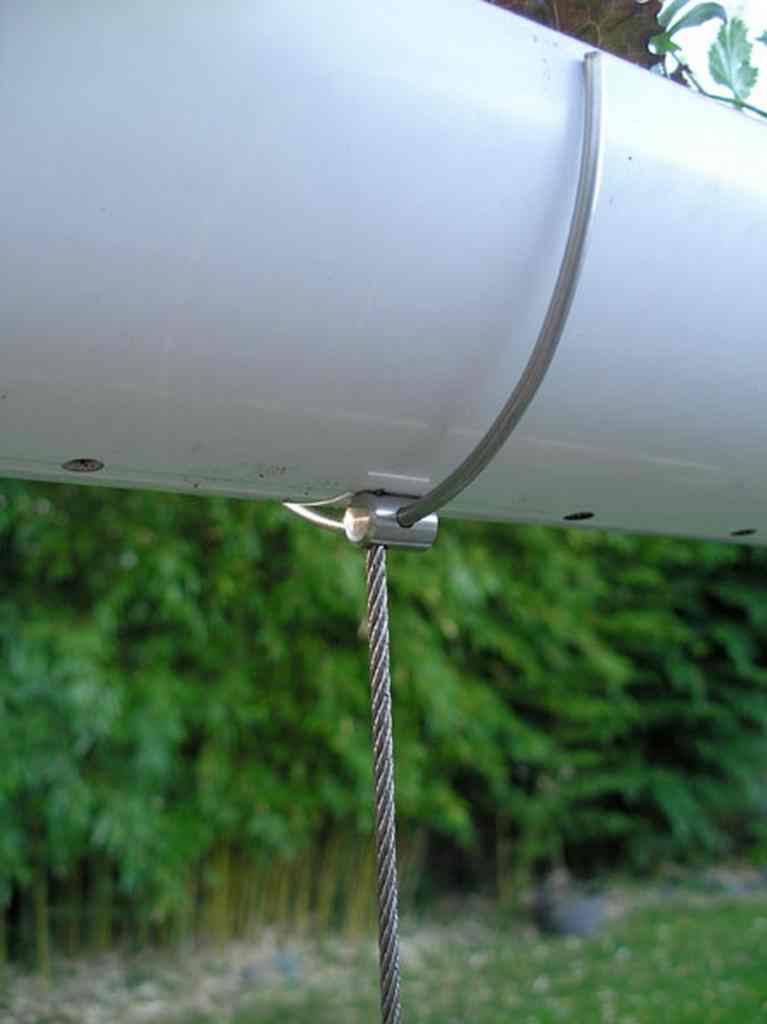
- Drill a hole through each end at the marks. These end holes are where the steel cables will run through to support the troughs.
- Repeat for all troughs.
Make sure the end holes on each trough are in the same position so the pieces hang straight when stacked.
Step 5: Thread the Steel Cables and Set the Spacing
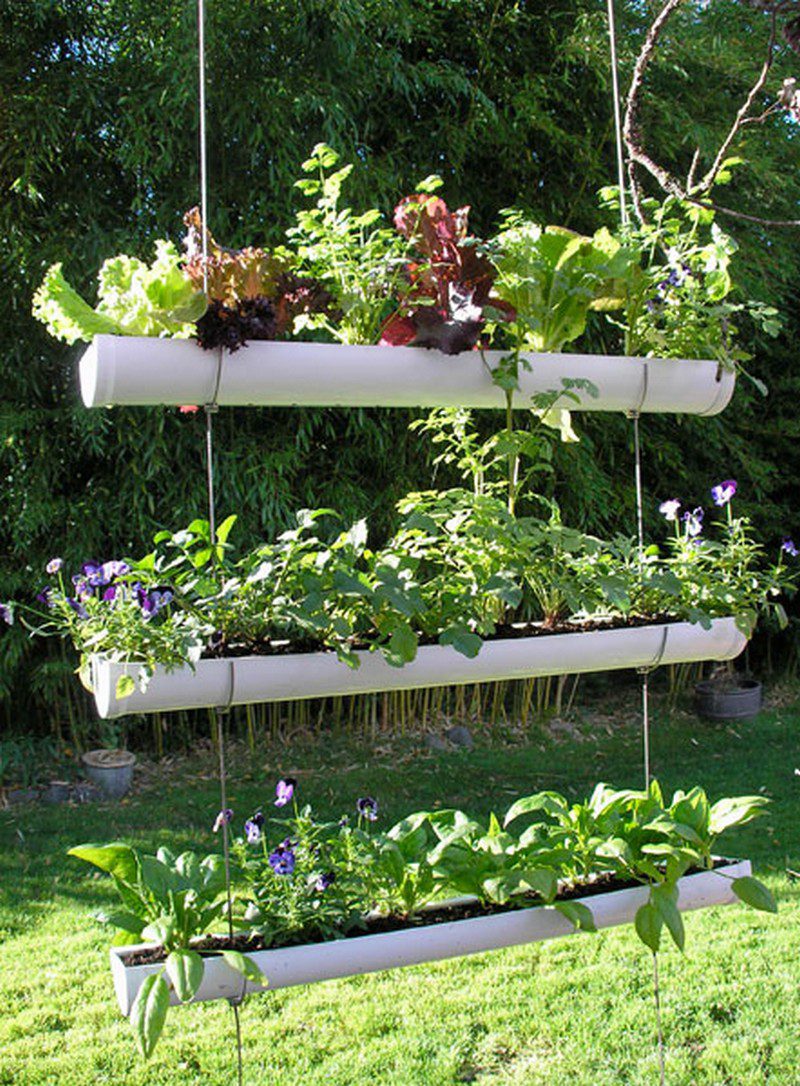
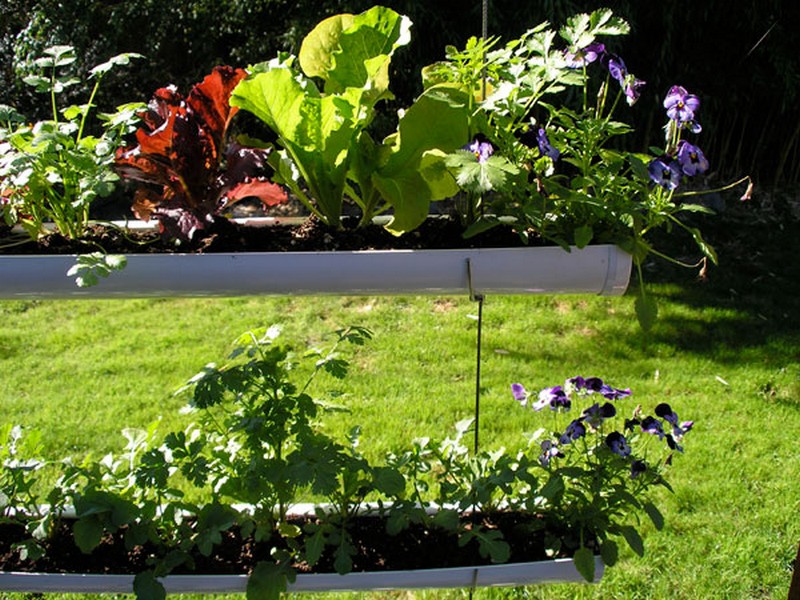
The garden in the pictures hangs on two vertical steel cables, one on each side, with the troughs stacked at even intervals.
- Cut two lengths of 1/8 inch steel cable long enough for all tiers plus extra at the top for hanging.
- Starting with the bottom trough, thread one cable up through the hole in the left end and the other cable up through the hole in the right end.
- Slide the next trough onto both cables above the first. Continue sliding higher troughs on until you have the number of tiers you want.
- Decide how much space you want between each level. Leave enough room for plants to grow and for your hand to reach in.
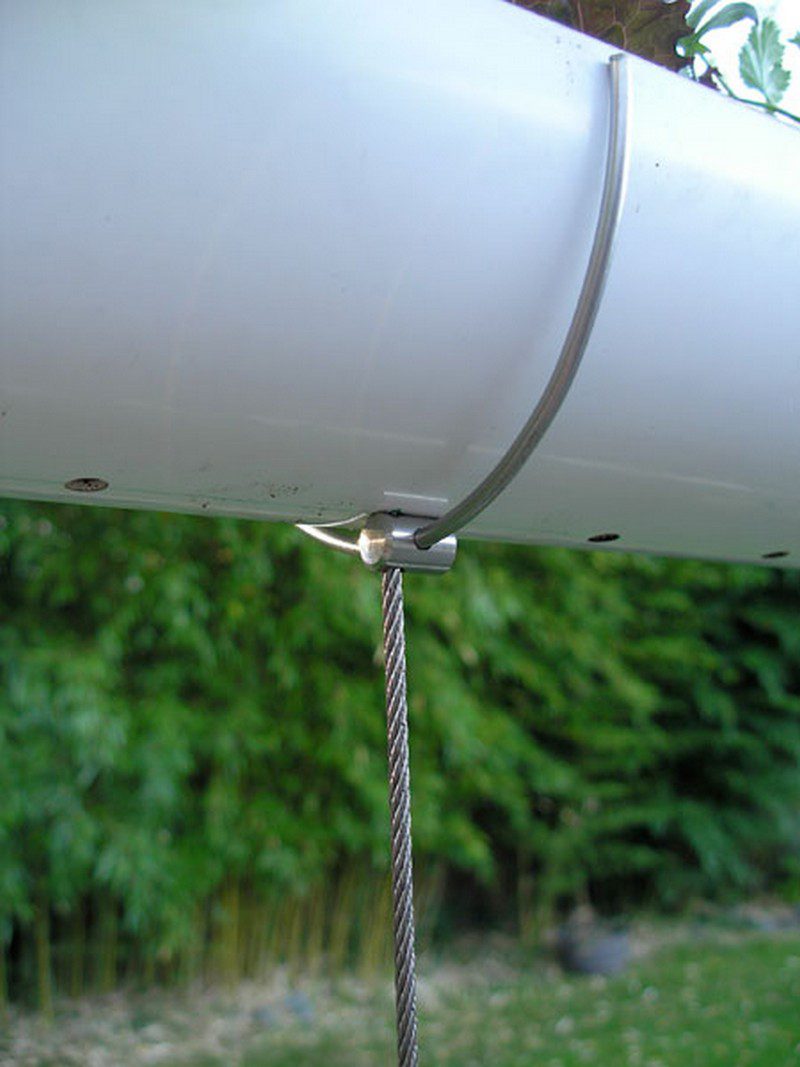
- Use Feeney cross clamps and steel rods or similar hardware on each cable under every trough to hold it at the desired height.
- Once each trough is sitting on its supports, tighten the clamps firmly.
- Use a level to check that the troughs sit straight side to side. Adjust the supports if needed.
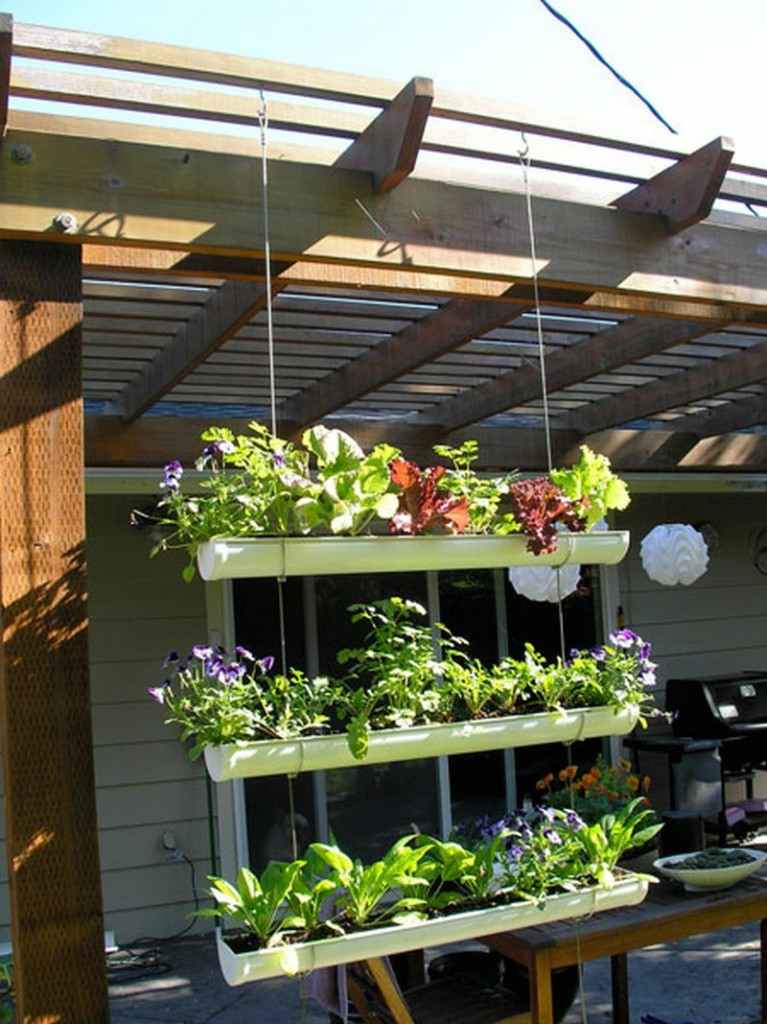
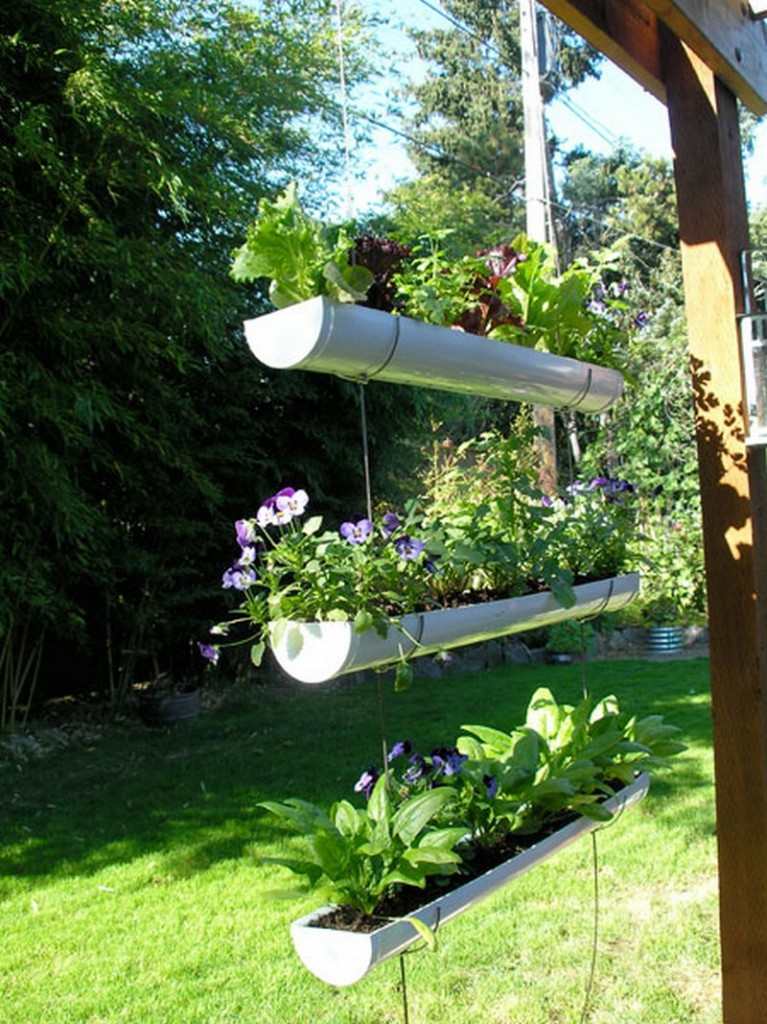
When you are finished, you should have a neat stack of open PVC troughs hanging on two cables, just like in the project photos.
Step 6: Attach Hooks and Hang the Garden
In the example, the finished gutter garden hangs from solid overhead supports.
- Choose a sturdy beam, pergola frame, porch roof or wall bracket that can safely hold the weight.
- Mark two points for hanging that match the distance between your two steel cables.
- Install heavy duty eye hooks or similar hardware into solid wood or a strong support.
- Lift the cable assembly and attach the tops of the cables to the hooks. You can loop the cables through the hooks and secure them with cable clamps, or use pre made cable ends if you have them.
- Step back and check that the whole structure hangs straight and even.
Make any final adjustments so the troughs are level and do not twist on the cables.

Step 7: Fill With Soil and Plant
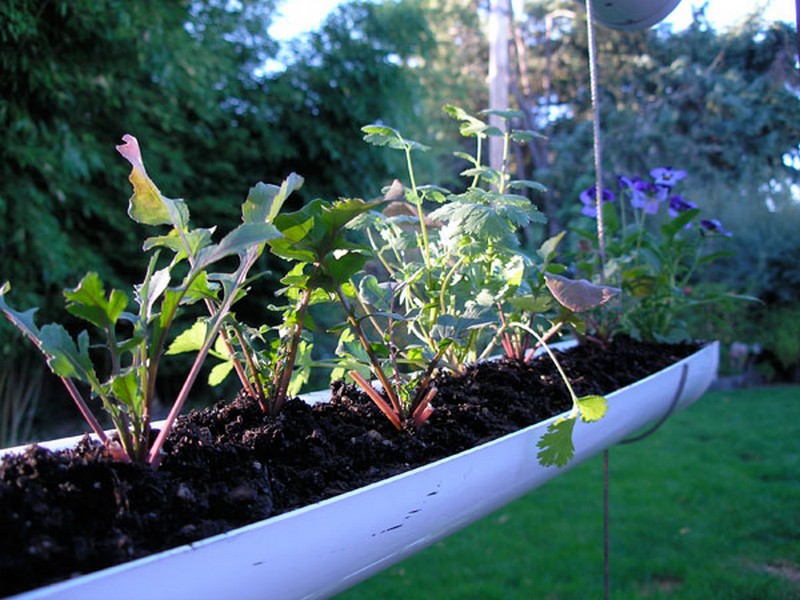
In the photos, the finished pipes are filled with soil and planted with low growing herbs and small plants.
- Fill each trough with light potting mix, not heavy garden soil.
- Gently firm the soil and leave some space at the top so water does not spill out.
- Plant herbs, leafy greens, strawberries or flowers, keeping roots spread out and not crowded.
- Water slowly so the soil settles and water begins to drip from the drainage holes.
Your hanging gutter garden should now look very similar to the project shown in the pictures, with clean white PVC troughs stacked on steel cables and full of plants.
Choosing the Right Plants for Your Hanging Gutter Garden
Picking the right plants is the key to a healthy and productive hanging gutter garden. Gutters are shallow, so you want plants with small root systems that do not need deep soil.
Consider Your Environment
Look at:
- Sunlight. Is the area in full sun, partial shade or full shade
- Wind. Hanging gardens are more exposed and can dry out faster
- Temperature changes. Walls and balconies can heat up more in the afternoon sun
Choose plants that match your light and climate. For example:
- Full sun. Most herbs, strawberries, cherry tomatoes and many flowers
- Partial shade. Lettuce, spinach, and some herbs like mint and parsley
- Shade. Some leafy greens and shade-loving flowers
Plant Size and Root Depth
Hanging gutter gardens work best with compact plants that have shallow roots. Avoid large plants or deep-rooted vegetables such as big tomatoes, corn or large peppers.
Good choices include:
- Herbs with shallow roots
- Leafy salad greens
- Small fruiting plants bred for containers
- Compact flowering plants and trailing ornamentals
Click on any image to start the lightbox display. Use your Esc key to close the lightbox. You can also view the images as a slideshow if you prefer 😎
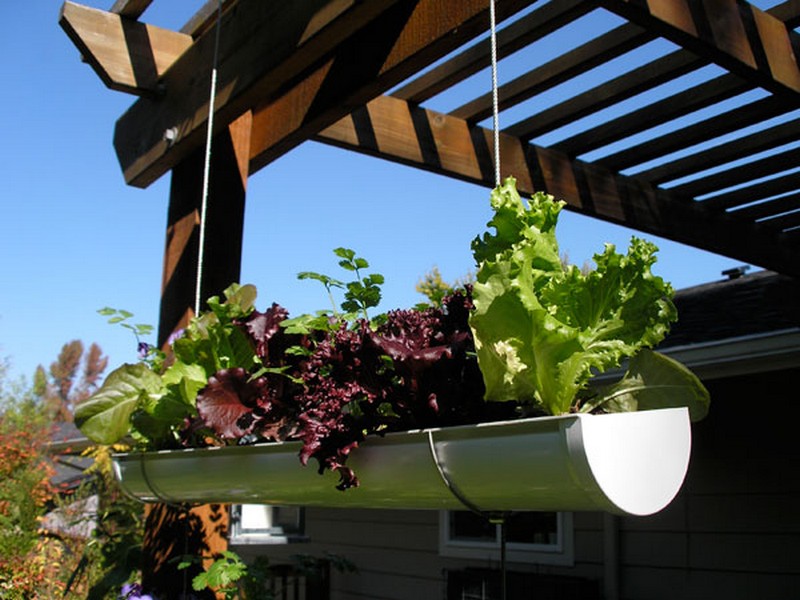



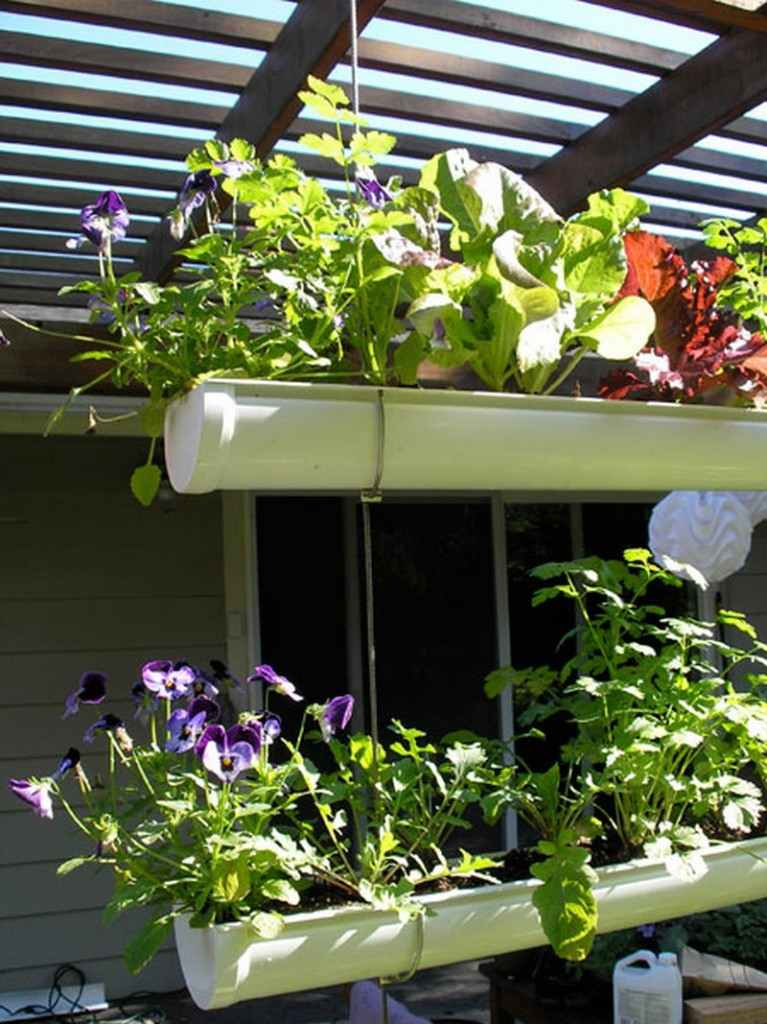
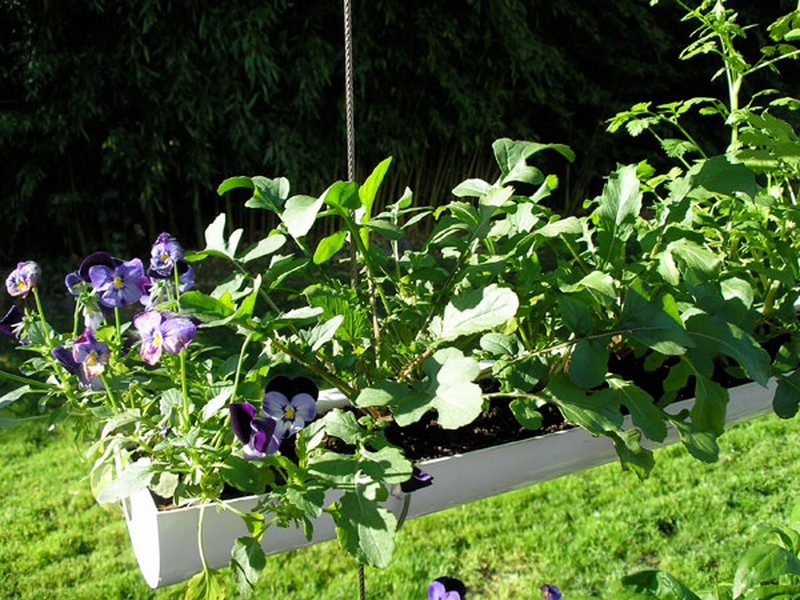
Thanks to Nest in Style for this great project. You can get the step-by-step instructions here…
Best Herbs and Leafy Greens for Gutter Gardens
Herbs and salad greens are among the easiest and most useful plants for a hanging gutter garden.
- Basil grows quickly in warm weather and needs full sun and regular water
- Cilantro prefers cooler weather and partial sun
- Parsley tolerates partial shade and grows well in gutters
- Mint spreads quickly so keep it in its own section
- Lettuce comes in many varieties and does well in shallow soil
- Spinach grows best in cooler weather with partial shade
- Arugula gives salads a spicy taste and grows quickly
Plant them in rows or small groups. Harvest the outer leaves regularly so the plants keep producing.
Small Fruits and Vegetables That Work Well
Some small fruits and vegetables can also do well in a hanging gutter garden.
- Strawberries are one of the best choices. They have shallow roots and the berries hang over the edge, which keeps them clean and easy to pick
- Cherry tomatoes can work if you choose compact or patio varieties and give them support
- Radishes grow quickly and can handle the shallow soil of a gutter
- Small peppers bred for containers can also be grown if the gutters are not too narrow
Check the plant tag or seed packet and look for varieties described as compact, dwarf, patio or container friendly.
Ornamental Plants for Color and Texture
If you want more color in your space, fill your hanging gutter garden with flowers and decorative plants.
Good choices include:
- Petunias for bright color and trailing blooms
- Marigolds for orange and yellow flowers that can also help repel some pests
- Pansies and violas for cooler seasons
- Succulents that like dry, well drained soil and look great in shallow planters
- Trailing plants such as ivy or creeping jenny that hang over the edge and soften the look of the gutters
Mixing edible plants with flowers can create a beautiful and productive display.
Benefits of Vertical Gardening With Hanging Gutters
Vertical gardening uses upright space instead of spreading plants across the ground. Hanging gutter gardens are a simple way to enjoy these benefits.
Space Efficiency
Hanging gutter gardens save ground space by stacking plants vertically. You can grow many plants in the area that a single planter would normally use. This is ideal for:
- Small yards and courtyards
- Apartment balconies
- Narrow side passages along a house
Better Accessibility
Because the gutters are raised, you do not need to kneel or bend as much. You can hang the gutters at a height that is comfortable for you. This makes gardening easier for people with back or knee problems and for anyone who wants a more comfortable way to garden.
Improved Appearance
A hanging gutter garden can turn a plain fence or wall into a living feature. You can:
- Arrange the gutters in even rows for a clean modern look
- Stagger them for a softer, more natural effect
- Fill them with a mix of colors and textures
This adds life and interest to balconies, patios and bare walls.
Microclimate Control
A wall covered with plants can help cool the area around it. The plants provide shade and release moisture into the air. This can make balconies and patios more comfortable in hot weather and can protect the wall surface from direct sun.
Better Air Quality
Plants take in carbon dioxide and release oxygen. A dense group of plants can also catch dust and some air particles. A hanging gutter garden is a small but helpful way to improve air quality around your living space, especially in urban areas.
Efficient Water Use
Hanging gutter gardens can be watered with a small drip system or gentle hand watering. Because the space is compact, you can direct water straight to the plant roots. This reduces waste from runoff and evaporation compared to some traditional beds.
Healthier Plants
Raising plants off the ground helps reduce some common problems.
- Fewer soil borne pests such as slugs and snails
- Better air flow around leaves which lowers the risk of fungal diseases
- Cleaner fruit and leaves since they do not rest on damp soil
With good drainage and regular care, plants in a hanging gutter garden can be very healthy and productive.
Versatility
You can easily change or rearrange a hanging gutter garden.
- Swap plants between seasons
- Try different plant combinations
- Move the entire garden to another wall or structure if you change your layout
This makes it a flexible option for renters and for anyone who likes to experiment.
Safety and maintenance tips
A hanging gutter garden is simple, but you should keep a few safety and care tips in mind.
- Check the support. Make sure the beam, wall, fence or bracket can hold the weight of wet soil and plants
- Use strong hardware. Choose heavy duty eye hooks, quality steel cables and reliable clamps and install them correctly
- Do not overload. Shorter gutters with light potting soil are safer than very long, heavy ones
- Inspect regularly. Check for loose hardware, sagging cables or cracked gutters and fix problems right away
- Keep drainage clear. Make sure the drainage holes do not clog so water can flow out and roots do not sit in standing water
- Prepare for winter. In cold climates, empty or remove the gutters before hard freezes if the material might crack in freezing temperatures
A few minutes of regular checking can prevent damage and keep your garden safe.
Frequently Asked Questions about DIY Hanging Gutter Gardens
- Can you grow strawberries in a hanging gutter garden?
- Yes. Strawberries are one of the best choices for a hanging gutter garden. They have shallow roots and the berries hang over the edge, which keeps them clean and easy to harvest. Give them at least 6 hours of direct sun per day and regular water.
- How often should I water a hanging gutter garden?
- Gutters dry out faster than deep containers. In warm weather you may need to water every day or every other day. Check the top inch of soil. If it feels dry, water until you see water drain out of the bottom holes.
- Do I need special soil for a gutter garden?
- Use a light potting mix instead of garden soil. Potting mix is lighter, drains better and is less likely to compact. This is important because the gutters are shallow and hanging.
- How much weight can a hanging gutter garden hold?
- The weight depends on your hardware and mounting surface. To stay safe:
- Use heavy duty eye hooks and steel cable
- Mount them into solid wood, masonry or other strong material
- Keep gutter sections fairly short
- Do not overfill with wet soil
- If you are unsure, start with smaller, lighter sections and add more only after you see how the structure performs.
- The weight depends on your hardware and mounting surface. To stay safe:
- Can I build a hanging gutter garden with recycled gutters?
- Yes. You can reuse old metal gutters if they are not rusted through. Clean them well, drill drainage and cable holes, and add end caps if needed. Make sure there are no sharp edges that could cut you or damage the plants.
Conclusion
A DIY hanging gutter garden is an easy weekend project that turns unused vertical space into a productive and attractive garden. With a few pieces of PVC gutter, steel cables and basic tools, you can build a compact vertical garden that grows herbs, leafy greens, strawberries and flowers even in very small spaces.
By choosing the right plants, securing the structure well and following simple maintenance tips, your hanging gutter garden can stay healthy and useful for many seasons. If you enjoy this type of space-saving gardening, you can expand your setup or explore other small space ideas, such as raised beds and other vertical planters.
You can further elevate your urban gardening with our guide on using raised beds!