
Last Updated on May 16, 2025 by teamobn
Toronto, Canada – Shim-Sutcliffe Architects
Built area: 18,000 sq. ft.
Completion Year: 2009
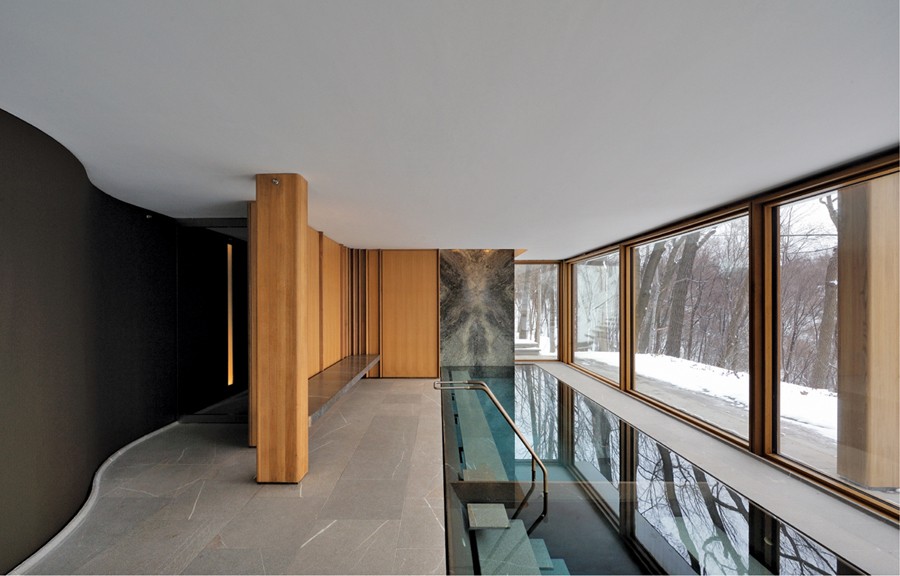
It has a floor area of 18,000 sq. ft., overlooks a ravine, 4 bedrooms, 8 bathrooms, an indoor and outdoor pool, a spa, a blown glass staircase, an elevator, and a concert hall that could seat 150. It was also a family home to original owner, James Stewart.
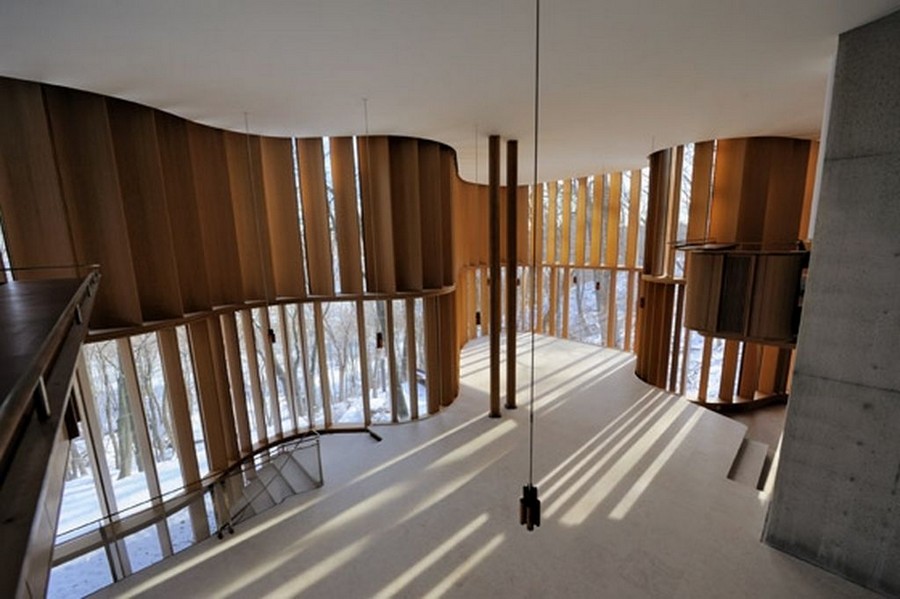
What is The Integral House?
One could say that the Integral House was a monument to Stewart’s life works, who made a fortune from the math textbooks he has authored. In fact the house was named such because it was designed in the shape of the integral symbol in mathematics. He spent $34 million and 15 years on it. To quote Glenn Lowry, director of New York’s Museum of Modern Art, the Integral House was “one of the most important private houses built in North America in a long time”.
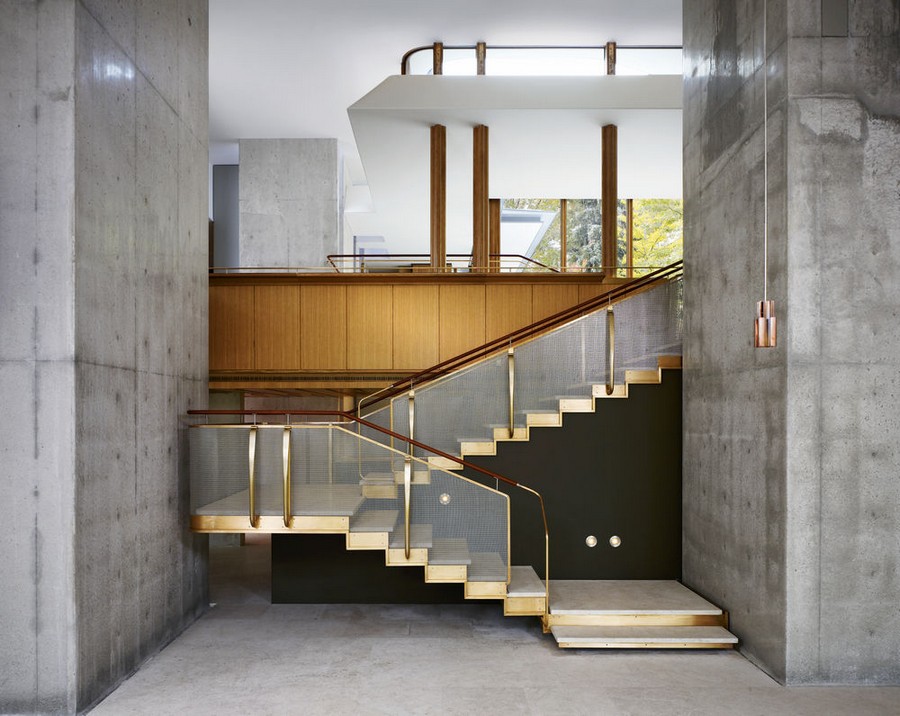
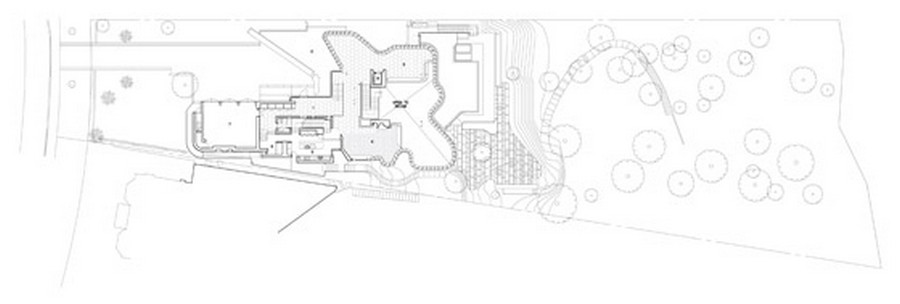
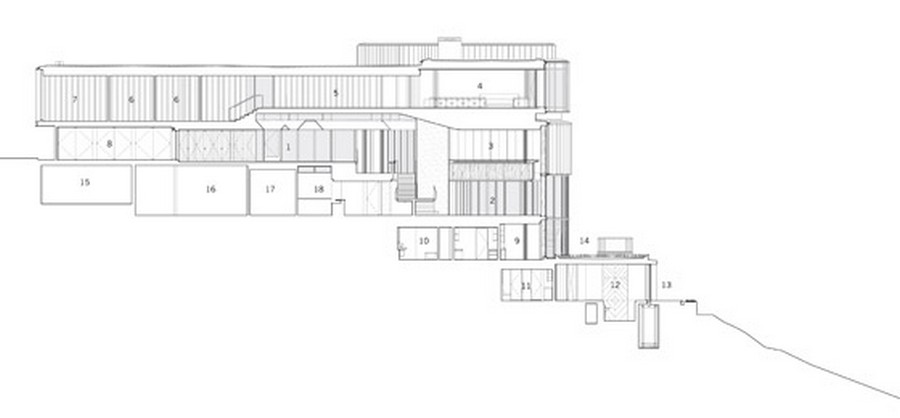
The Integral House is also one of the celebrated accomplishments of Canadian architecture. When viewed from the street, the house is a two-storied building, with the top floor made of curved glass skin on top of the ground floor that’s clad in oak panels. But the house actually has three more floors on the ravine side that’s hidden from plain sight, hence the inclusion of an elevator.
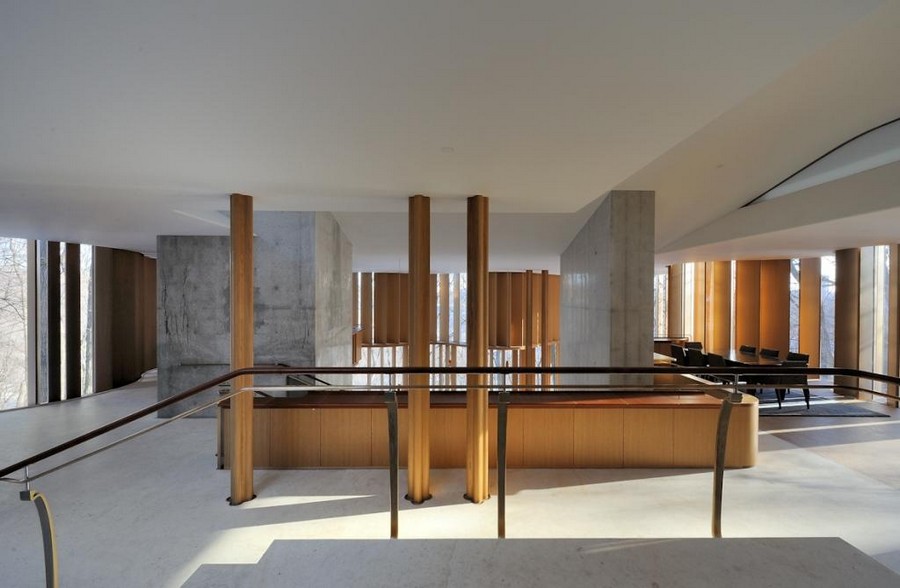
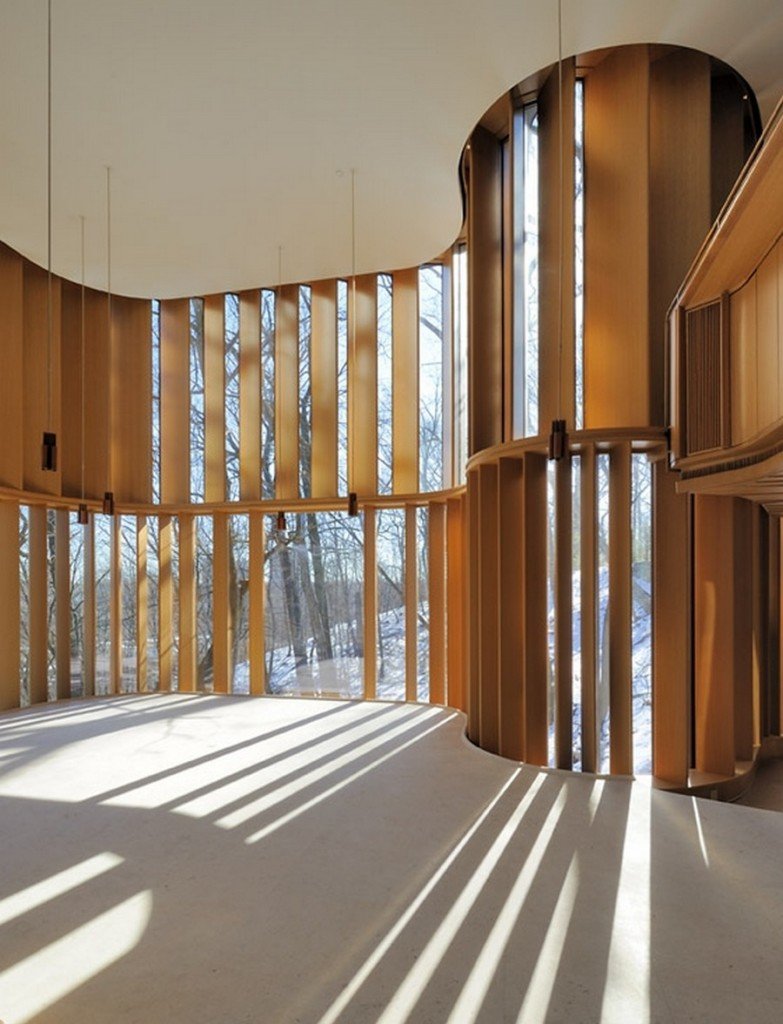
The gently curved glass walls with oak fins lining the perimeter of the house follows the contour of the river valley below it. The concert hall is located on the the third floor that’s right below the entry level floor. The living and dining areas above it has a view of the concert area, hence functioning like balconies during a performance.
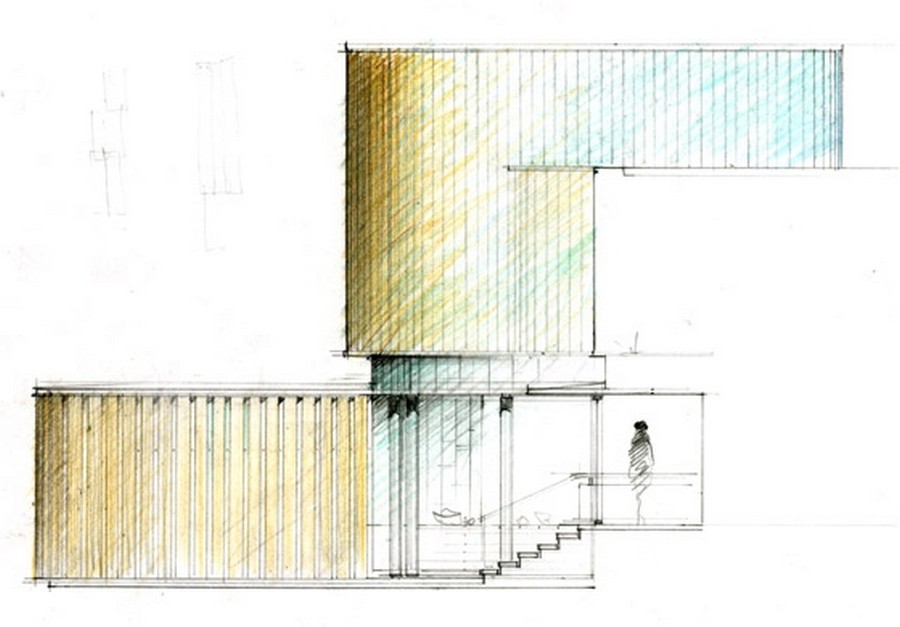
Design is not only confined to the aesthetics of the house, sustainability is too. It’s energy efficient, with a green roof that reduces heat. The vertical wooden fins on the wall are not merely for visual enjoyment, it contributes to the acoustical performance of the concert hall within. The materials used were chosen for its sustainability, to withstand the elements for longer than the usual wear and tear of most houses.
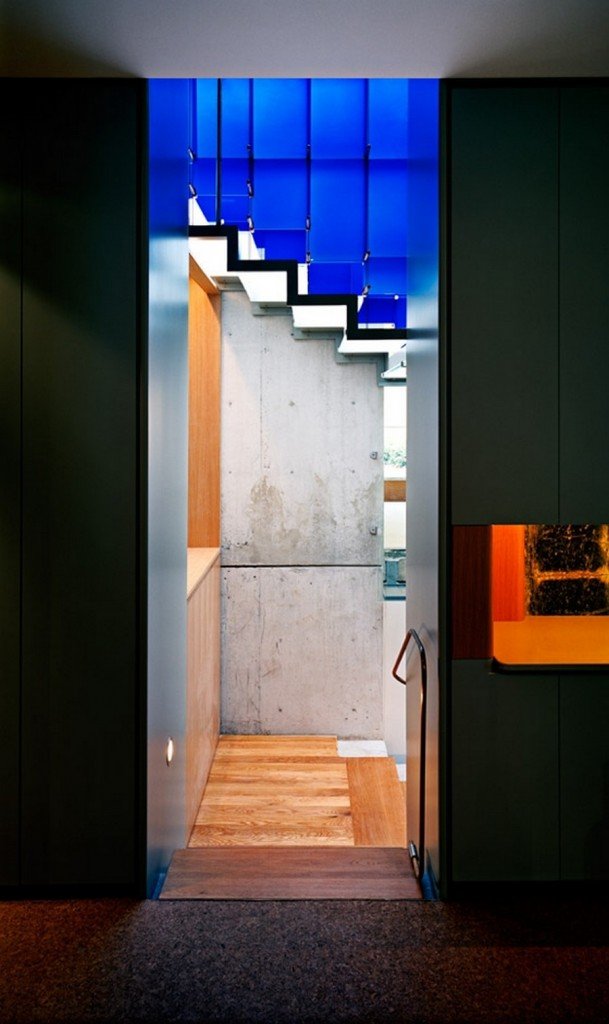
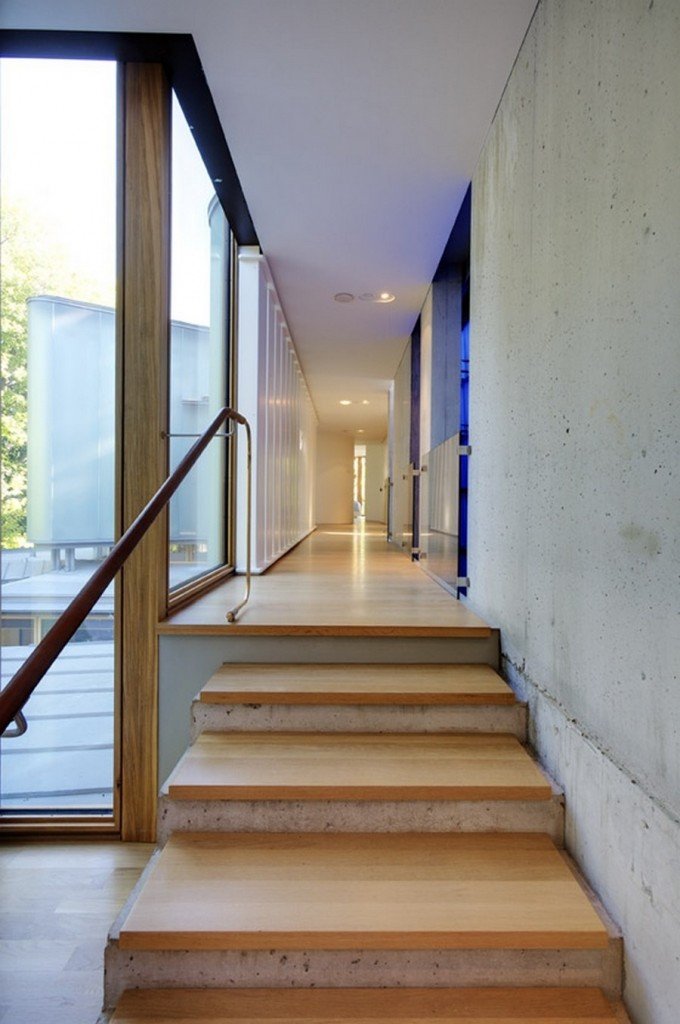
Another one of its special features is the blue glass stairs made of hand blown laminated blue glass, a product of the collaboration between glass artist Mimi Gellman, Shim-Sutcliffe Architects and structural engineer David Bowick. The laminated glass allows natural light from the skylight above it.
You may wonder why the house has a concert hall. Stewart as a musician made it a venue for philanthropic activities such as hosting benefit concerts and fundraisers. When he died in 2014, his family decided to put the house up for sale to someone who would appreciate the intricacies of every detail of the house as well as continue his legacy.
It is now owned by a family in Toronto who plan to keep Stewart’s legacy and the tradition of letting it be a venue for philanthropic functions.
Architectural Philosophy Behind the Integral House
The Integral House isn’t just a residence. It’s an embodiment of mathematics, music, and design, crafted with intention at every turn. Created by Shim-Sutcliffe Architects for mathematician and musician James Stewart, the house was envisioned as a physical expression of his life’s passions. The architecture reflects not only Stewart’s identity but also the discipline of mathematics made tactile, livable, and human.
Design Rooted in Mathematics
At the heart of the architectural philosophy is the integral symbo l—∫—a shape that defines the house’s structure. This mathematical curve was more than just inspiration. It became a literal and figurative blueprint for how space would unfold throughout the home.
The sweeping lines and curved glass walls mimic the fluidity and continuity of the symbol itself. For Stewart, the house needed to be an extension of the logic and elegance that define mathematics. That vision became the starting point of every design choice.
Form Follows Music
The house had to accommodate more than domestic living. It needed to function as a concert venue. That dual purpose created a fascinating design challenge—how to create a private residence that opens up into a public performance space. The architects responded by integrating acoustical design into the layout.
Vertical oak fins enhance sound quality, while the concert hall’s tiered levels mimic a musical instrument’s inner body. Even the glass and wood were chosen for their resonant properties. The space invites music to move through it, just as ideas flow through mathematical formulas.
Organic Integration With the Land
The house is nestled along a ravine in Toronto, and its architecture responds to this setting. Instead of dominating the landscape, it bows to it. From the street, the integral house appears modest, just two levels. But as you move through the home, it reveals itself downward along the ravine, extending across five levels.
This descent mirrors the slope of the land and allows the house to feel embedded within nature. The curving forms and materials, glass, oak, and stone, echo the surrounding environment and soften the boundaries between indoors and out.
Balance Between Innovation and Warmth
The integral house is not cold modernism. It’s not just steel and glass. There’s a warmth here, generated through a palette of natural materials, the filtered light that floods in through curved walls, and the intimate detailing of spaces.
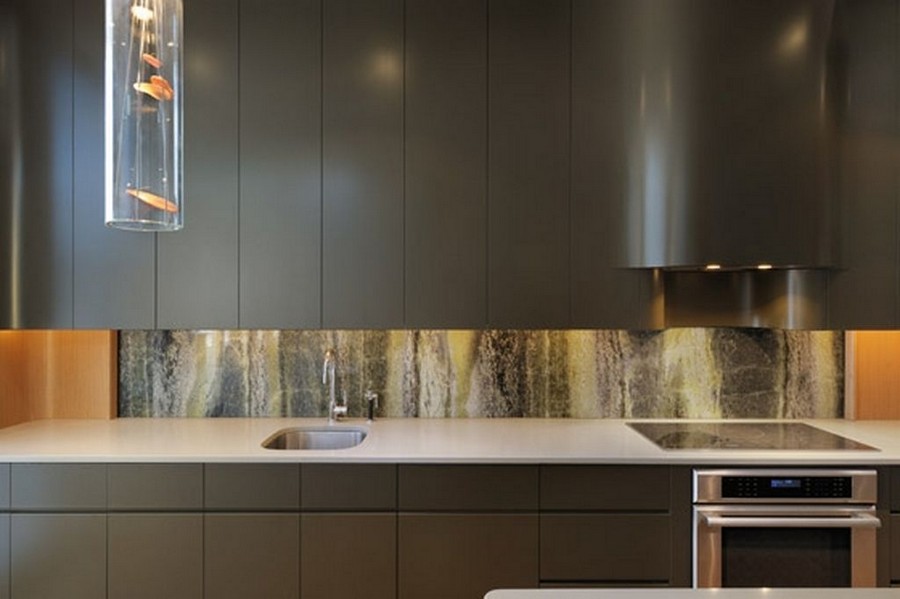
Every surface, junction, and material change is purposeful. The blown glass staircase is a work of structural art. The elevator, seamlessly integrated, ensures the house remains accessible across its many levels. Innovation is present in every room, but always in service to human experience.
A Philosophy That Lives On
More than a monument, the integral house is a statement about how architecture can reflect the full spectrum of human intellect and emotion. It shows that mathematics can be visual. That a concert hall can coexist with a kitchen. That elegance and utility don’t need to compete. The house remains one of Canada’s architectural treasures because it doesn’t simply shelter life. It celebrates it.
Exterior and Interior of The Integral House:
Click on any image to start lightbox display. Use your Esc key to close the lightbox. You can also view the images as a slideshow if you prefer 😎


The Acoustic Engineering of the Integral House Concert Hall
The concert hall inside the Integral House isn’t just an architectural feature—it’s the soul of the home. Designed for live music, this space was built to perform as beautifully as the instruments played within it. James Stewart’s deep love for music and his passion for precision shaped how the concert hall was conceived. The result is a seamless fusion of architecture and acoustic engineering that turns the house into an instrument of its own.
Designing for Sound and Silence
Acoustic performance was a primary driver in the design of the concert hall. Stewart wanted a space where chamber music, solo performances, and intimate gatherings could take place without the need for amplification.
That meant building a space that didn’t just contain sound but shaped it. Every surface, angle, and material was selected to support a warm, clear, and resonant sound profile. The height of the ceilings, the placement of balconies, and even the flow of staircases all play a role in distributing sound evenly across the hall.
Oak Fins with a Purpose
One of the most striking features of the hall is the series of vertical oak fins that line the walls. While these provide a distinct visual rhythm, their true purpose lies in their function. They break up sound waves, preventing echoes and dead zones while helping distribute tones evenly throughout the space.
Their spacing and curvature were carefully calculated, giving the room a natural acoustic clarity. These fins create both intimacy and grandeur, helping the space adapt to both a single voice and a full string quartet.
Material Matters in Acoustics
The concert hall’s materials are anything but decorative. Wood was selected not only for warmth and texture but also for its acoustic benefits. Oak provides rich resonance, while the layered construction of walls enhances the balance between absorption and reflection.
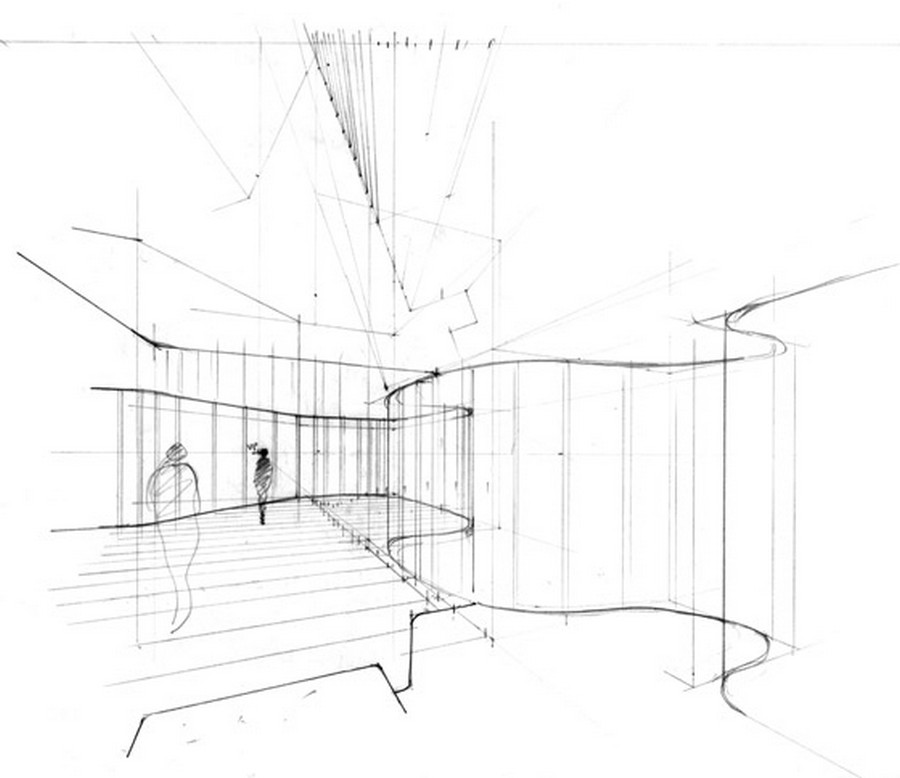
Even the curved glass—used throughout the house—was engineered to avoid sound distortion. Instead of flat, sound-killing panes, the glass flows along the structure in gentle curves, helping sound bounce naturally without sharp interruptions.
Sound Isolation and Control
Sound quality inside the concert hall is only half of the challenge. Keeping outside noise out—and music in—was just as critical. Advanced insulation systems and precision-sealed entryways ensure the space is protected from the hum of the outside world. HVAC systems were custom-designed for quiet performance.
Floors and ceilings were reinforced to prevent vibrations and sound leaks between levels. Every detail reinforces the integrity of the music experience, allowing listeners to hear every note without interference.
A Performance Space That Lives in a Home
What makes the acoustic engineering of the Integral House concert hall remarkable is how naturally it blends into a private residence. It doesn’t feel like a commercial venue. It feels like a sanctuary for sound.
The careful work by Shim-Sutcliffe Architects, along with acoustic consultants and engineers, resulted in a space that responds to sound as much as it supports it. Stewart’s vision lives on in every performance, as each note resonates through wood, glass, and space built to honor it.
Conclusion
The Integral House stands as a rare union of mathematics, music, and architecture. Every curve, material, and space reflects James Stewart’s vision. It’s not just a home but a cultural and artistic legacy. Its design continues to inspire architects, musicians, and admirers worldwide. The house proves that living spaces can be both personal sanctuaries and public masterpieces.
For more interesting houses, check out our article on the Bridge House!