Last Updated on December 18, 2025 by teamobn
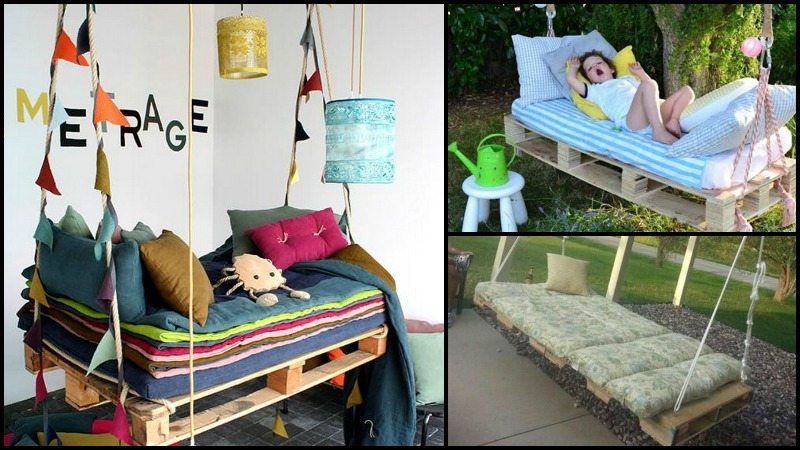
If you dream of relaxing outdoors on a daybed or enjoying the gentle sway of a hammock, a DIY pallet swing bed is the perfect project for you. It’s an easy, affordable way to create a comfortable spot under a shade tree on warm days. This guide will walk you through building a safe, full-size pallet swing bed from standard pallets.
Project At A Glance
- Skill Level: Beginner-Intermediate
- Time: 1 weekend
- Estimated Cost: Under $150 (if you can source pallets for free)
Why Choose a Pallet for Your Swing Bed?
Pallets are an excellent choice for a DIY swing bed for several reasons:
- Sturdy and Accessible
- Pallets are generally strong enough to support a good amount of weight and are often easy to find, sometimes even for free or at a low cost from local businesses or recycling centers.
- Customizable Style
- Their simple, rustic appearance adds character to any space. You can leave them natural, paint them, or stain them to match your outdoor decor. Adding cushions or pillows instantly makes them more comfortable and stylish.
- Eco-Friendly
- Repurposing pallets is a great way to contribute to sustainability efforts. You’re giving new life to an item that might otherwise end up in a landfill, reducing waste and conserving resources.
How to Assemble the Pallet Swing Bed
What you’ll need to build a pallet swing bed…
- Pallets
- 2×4 Lumber (3 8-ft pieces)
- Screws
- 700-lbs weight limit pro-grade Rope
- Mattress/Cushion
- 2-3 Vinyl Zippered Mattress Covers
Tools:
- Drill
- Measuring Tape
- Saw
Step-by-Step Instructions
Follow these steps to build your own pallet swing bed:
Gather and Prepare Your Pallets:
- Find two standard 48″ x 40″ pallets. Look for pallets in good condition, free from rot, mold, insect damage, or chemical spills.
- Pallets stamped “HT” (heat-treated) are preferred.
- Lay the pallets on a flat, level surface. If needed, use shims to ensure they are stable.
- Sand down any rough edges or splinters on the pallets to prevent injuries.
- Apply an outdoor sealant or paint to protect the wood from weather and prolong its lifespan.
Build the Frame with 2×4 Lumber:
- Cut your 2×4 lumber to create a sturdy frame that will support and connect the two pallets.
- The exact lengths will depend on how you configure your pallets and the desired size of your bed.
- For a standard twin-size bed, you’ll typically need pieces to create a perimeter around the joined pallets.
- Securely fasten the 2×4 lumber to the pallets using screws. Ensure all connections are tight and stable.
Join the Pallets to the Frame:
- Carefully align the two prepared pallets and the 2×4 frame.
- Use screws to securely fasten the pallets together and to the 2×4 frame, forming a single, solid bed base.
- Reinforce joints with additional supports if necessary to prevent wobbling or shifting.
Drill Hanging Holes and Attach Rope:
- Drill four holes, one in each corner of the swing bed frame. Position each hole approximately 2 inches in from the edges.
- Thread your pro-grade rope (rated for at least 700 lbs) through each hole. You’ll need enough rope to reach your hanging point with extra for secure knots.
- Tie secure knots beneath the bed frame to hold the rope firmly in place.
Hang the Swing Bed Safely:
- Identify a sturdy overhead support structure, such as a strong tree branch or a reinforced pergola beam. This support must be able to hold at least twice the expected load (e.g., 700-1000 lbs).
- Attach the ropes to your chosen support structure, ensuring the knots are tight and secure.
- Adjust the rope lengths so the swing bed hangs level and at a comfortable height from the ground.
Safety Check: Before anyone uses the swing, slowly test it with increasing weight. Check for any creaks, movement, or loosening knots. Re-tighten all hardware and retest. Never exceed the weight limit of the weakest component (usually the rope or eye bolts).
Add Comfort and Style:
- Place a mattress that fits your pallet base onto the swing bed.
- Cover the mattress with vinyl zippered mattress covers for weather protection.
- Add your favorite pillows and cushions to make it comfortable and inviting.
- Consider adding a backrest for extra support.
Your pallet swing bed is now ready to use! Grab your favorite book and drink, and enjoy your new outdoor oasis.
If you’re looking for some inspiration, be sure to check out our gallery. It’s full of great examples of what you can do with your space.
Click on any image to start the lightbox display. Use your Esc key to close the lightbox. You can also view the images as a slideshow if you prefer 😎

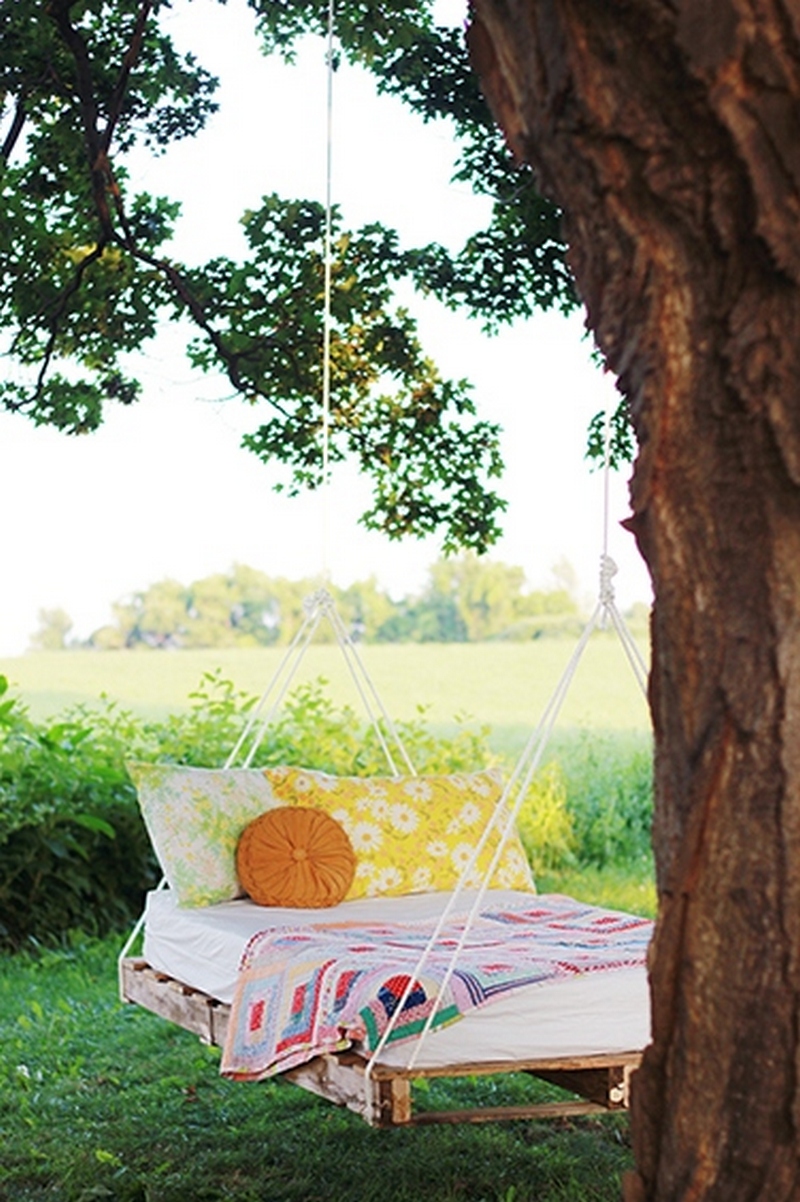

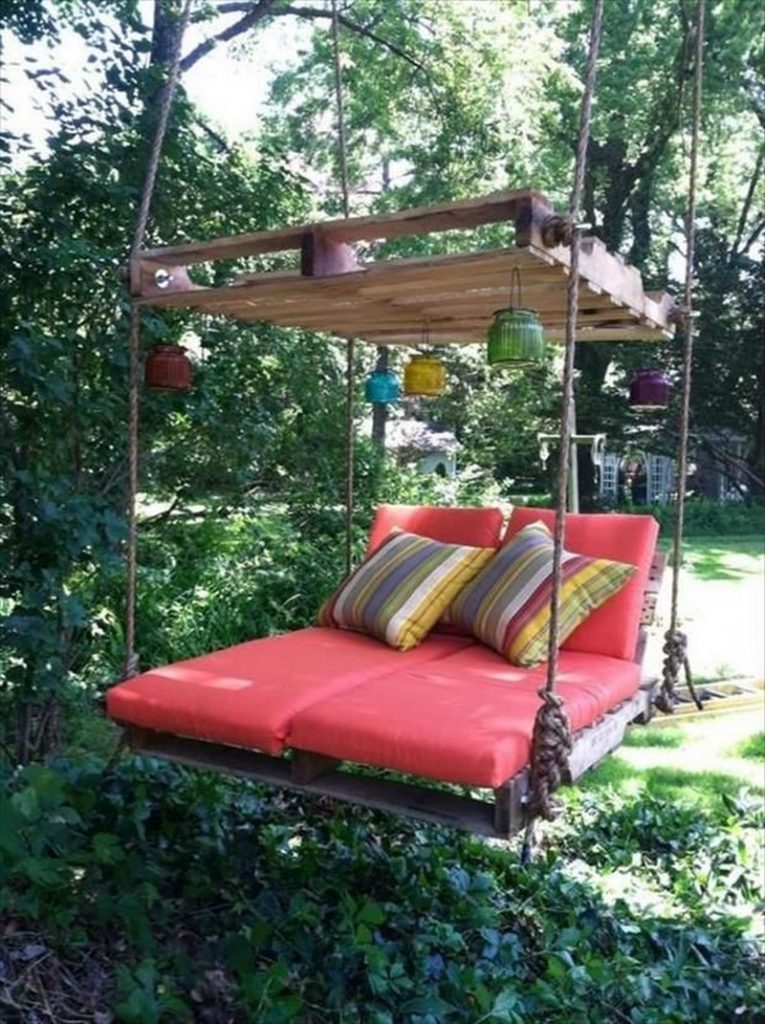
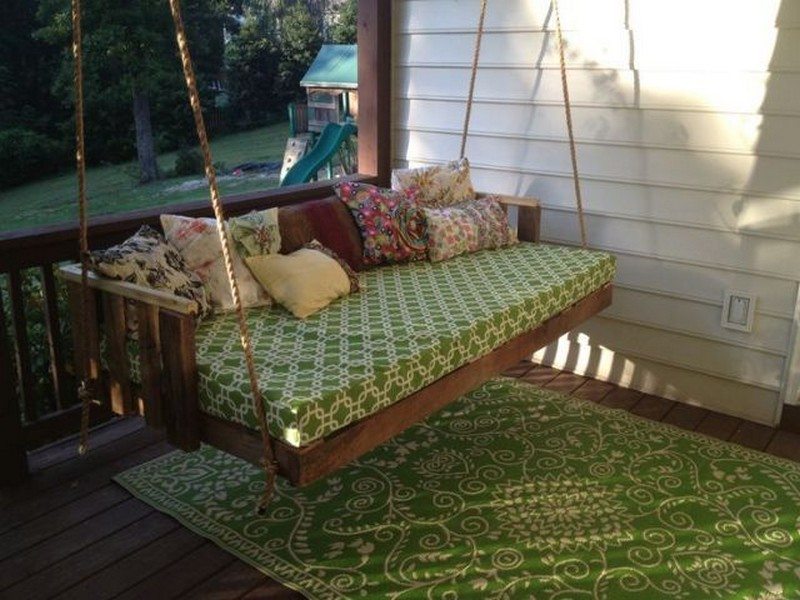
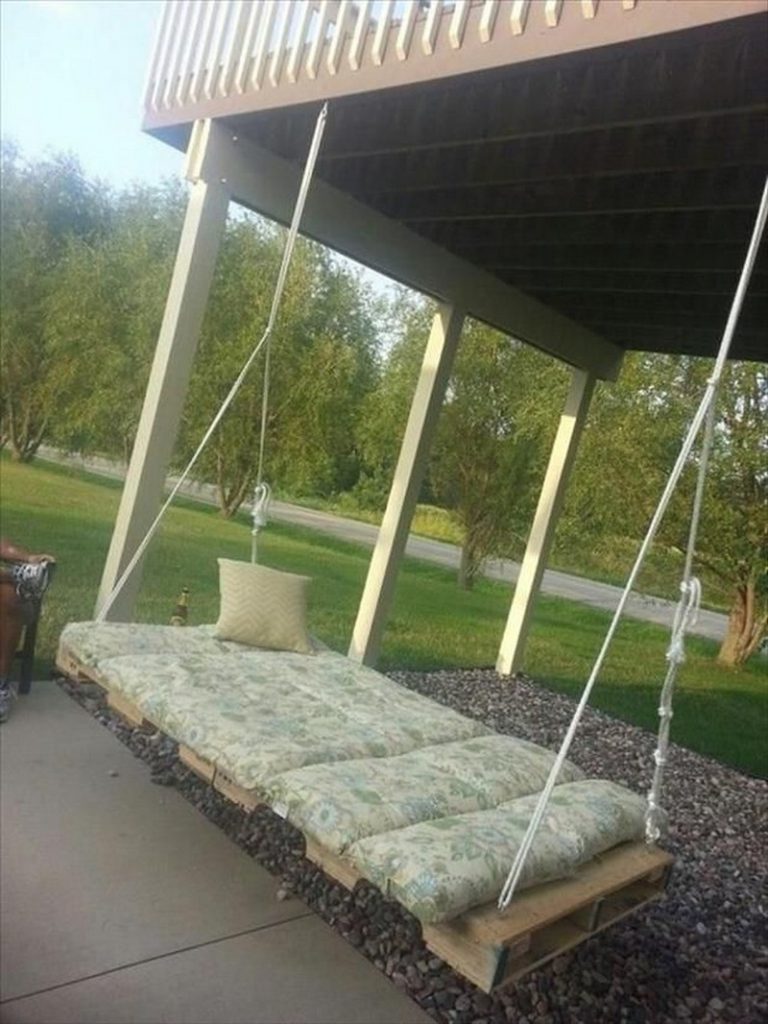

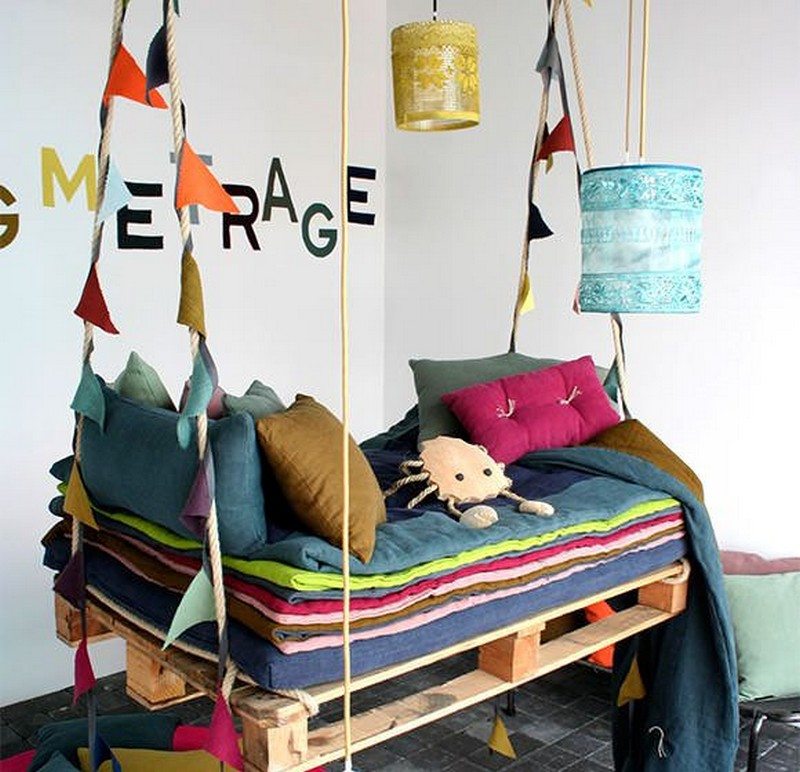
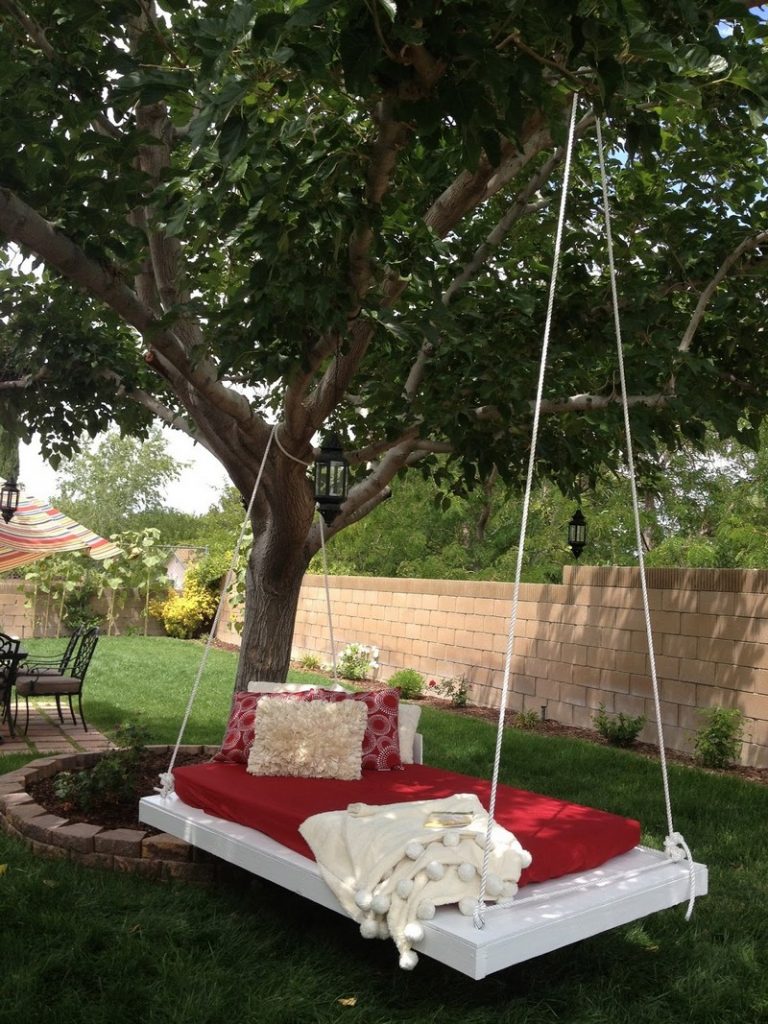


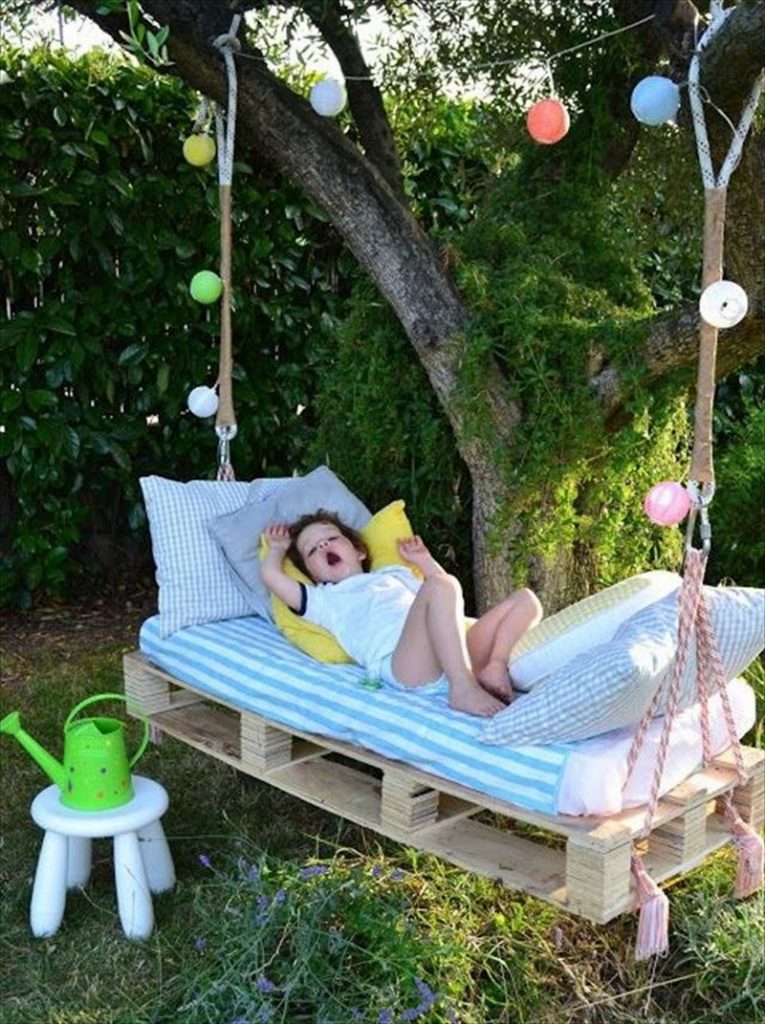
Thanks to The Merry Thought for sharing tips and strategies on how to make a DIY pallet swing bed.
If you liked this project, you will also like viewing these swings and hammocks…
Pro Strategies for a Successful Build
To ensure a successful outcome and a sturdy, long-lasting swing bed, consider these professional tips:
- Thorough Planning and Preparation
- Measure your space, determine the desired size, and sketch out your design. This helps you plan materials and steps effectively.
- Select High-Quality Materials
- Choose sturdy pallets free from damage. Use pressure-treated lumber for the frame and corrosion-resistant hardware suitable for outdoor use.
- Proper Assembly Techniques
- Securely fasten all components with screws or bolts. Reinforce joints to prevent wobbling and ensure the bed can safely support its intended load.
- Consider Safety Factors
- Sand rough edges, use safety equipment, and install railings or guardrails if children will be using the swing bed.
- Weatherproofing and Maintenance
- Apply a weatherproofing sealant to the wood. Regularly inspect for wear and tear, and cover the swing bed during bad weather.
- Personalize and Customize
- Paint or stain the wood, add decorative cushions, pillows, or even a canopy to reflect your unique style.
The Wrap Up
Building your own DIY pallet swing bed is more than just a project; it’s a rewarding experience that transforms basic materials into a functional and inviting outdoor retreat. You’ve put in the time, effort, and creativity to craft a unique piece of furniture you can be proud of.
Now that your pallet swing bed is complete, it’s time to enjoy the fruits of your labor. Imagine relaxing with a good book, sharing quiet moments with loved ones, or simply unwinding as you gently sway in your new outdoor oasis. This swing bed isn’t just a place to sit; it’s a space to create lasting memories and find tranquility.
We encourage you to personalize your swing bed even further with decorative accents, different cushion colors, or ambient lighting. The possibilities are endless, allowing you to continually refresh its look to match your style.
So, take pride in your accomplishment, embrace the joy it brings, and get ready to enjoy countless hours of comfort and relaxation in your very own DIY pallet swing bed!
Frequently Asked Questions
1. How do you choose the right pallets for the pallet swing bed project?
Look for pallets that are in good condition, with no signs of damage or rot. Make sure they’re clean and free from any chemicals or contaminants that could be harmful to your health.
2. Do I need to treat or seal the pallets before using them?
It’s a good idea to sand the pallets to remove any rough edges or splinters and to seal them with an outdoor sealant or paint to protect them from the elements and prolong their lifespan.
3. How do you attach the pallets to form the swing bed?
You can use screws to secure the pallets together in a rectangular shape, making sure they’re aligned and evenly spaced. Reinforce the joints with additional support if needed to ensure stability.
4. How do you hang the pallet swing bed securely?
Drill holes in the corners of the swing bed frame and thread the rope through them, tying secure knots to hold the bed in place. Make sure the knots are tight and the rope is securely anchored to a sturdy overhead support structure, such as a strong tree branch or pergola.
5. Can you customize the design of the pallet swing bed?
Absolutely! You can customize the swing bed to suit your preferences by adding decorative elements, such as cushions, pillows, or even a canopy for shade. Get creative and make it your own!
6. How do you ensure the pallet swing bed is safe to use?
Check the integrity of the pallets and ropes regularly to ensure they’re in good condition and free from any signs of wear or damage. Avoid overloading the swing bed with too much weight, and always supervise children when they’re using it.
7. Can you use the pallet swing bed indoors?
While the swing bed is designed for outdoor use, you can certainly install it indoors if you have enough space and a sturdy overhead support structure to hang it from. Just make sure to secure it properly to prevent accidents.
8. How do you clean and maintain the pallet swing bed?
Regularly clean the swing bed with a mild detergent and water to remove dirt and debris. Check the ropes and hardware for signs of wear and tear, and replace them if necessary to ensure the swing bed remains safe and functional.
9. What weight limit does the swing bed support?
The swing bed should be able to support up to 700 pounds, but it’s essential to check the weight limit of the ropes and hardware you’re using and ensure they’re rated for the intended load