Last Updated on November 17, 2025 by teamobn
Forget generic forecasts. A home weather station gives you hyperlocal data for your exact backyard, garden, or rooftop. But with so many models boasting different features, choosing the best one can be confusing. In this guide, we compare the best home weather stations for different budgets and needs, explain what features really matter, and answer common questions about accuracy and setup.
Key Takeaways: Best Home Weather Stations
- Best Overall: Netatmo Weather Station – The most accurate and smart-home-friendly option for a premium experience.
- Best Budget: Ambient Weather WS-2902C – A feature-rich station offering tremendous value under $200.
- Best for Accuracy: AcuRite Atlas – Delivers near-professional grade data, though setup can be complex.
- Best Simple Setup: WeatherFlow Tempest – A completely app-based, pre-assembled station that’s ultra-easy to install.
Amateur weather enthusiasts and meteorologists are no strangers to home weather stations. This clever device collects data related to weather and the environment using sensors. The sensors gather information from your home area to provide a detailed look into the moods of Mother Nature.
By recording data several times a minute, home weather stations offer real-time insights long before weather disturbances become imminent. This can be useful for people living in areas where extreme weather events are a common occurrence.
The Best Home Weather Stations
When shopping for a home weather station, it’s essential to understand what features best suit your needs. The least expensive models typically measure basic weather elements such as temperature and humidity, both inside and outside your home.
These entry-level stations often include a thermometer and a hygrometer, making them ideal for those who just want to keep tabs on the immediate environment. They usually come with clock and calendar functions, and some can alert you to specific weather conditions, like extreme heat or frost.
However, if you’re looking for more detailed weather data, there are advanced home weather stations with additional features. These systems go beyond temperature and humidity by including instruments such as rain gauges, which measure rainfall, and anemometers, which monitor wind speed and direction.
Barometers are also common in more sophisticated models, helping you track atmospheric pressure and predict weather changes. For those concerned with UV exposure and solar radiation, some weather stations feature an actinometer to provide real-time data on UV index levels and solar radiation, making them perfect for gardeners or anyone monitoring sun exposure.
How to Choose the Best Home Weather Station
Before diving into specific models, consider what you truly need from your home weather station.
Decide What You Want to Measure
Basic stations measure temperature and humidity. Advanced sensors track wind speed/direction, rainfall, UV levels, and solar radiation. If you’re a gardener, UV and solar data are crucial. For general use, temperature, humidity, and rainfall are the core metrics.
Consider Accuracy and Calibration
A home weather station is only as good as its data. Look for stations with high-quality anemometers (wind) and rain gauges. Remember, proper placement away from heat sources and obstructions is critical for accuracy.
Check Connectivity and Apps
A home weather station with Wi-Fi lets you access your data from anywhere and often allows for data sharing with services like Weather Underground. Check reviews for app reliability, as a buggy app can ruin the experience.
Plan for Installation and Maintenance
Consider where you’ll mount the sensors. Is your roof accessible? Some stations require a separate mounting pole. Also, think about maintenance, like occasionally cleaning the rain gauge to prevent clogging.
Balance Budget vs. Long-Term Value
While it’s tempting to go for the cheapest option, investing in a more robust home weather station often means better durability, more accurate sensors, and a longer lifespan.
Best Home Weather Stations at a Glance
| Model | Best For | Key Features | Approx. Price | Main Drawbacks |
|---|---|---|---|---|
| Netatmo Weather Station | Smart Home & Design | Indoor/Outdoor modules, CO₂ monitoring, barometric pressure, Alexa/Siri | $180+ (add-ons cost extra) | Expensive with all accessories |
| Ambient Weather WS-2902C | Budget Users | Temp, humidity, wind, rain, UV, solar radiation, Wi-Fi | $180 – $220 | Flimsy sensor array, tricky mounting |
| AcuRite Atlas | Accuracy-Focused | High-accuracy temp, lightning detection, HD display | $200 – $250 | Frustrating Wi-Fi setup process |
| WeatherFlow Tempest | Easy Installation | Pre-assembled, app-based, self-calibrating, no moving parts | $300 – $340 | Temperature readings can run high |
Below are the best home weather stations on the market right now.
The Best Budget Choice
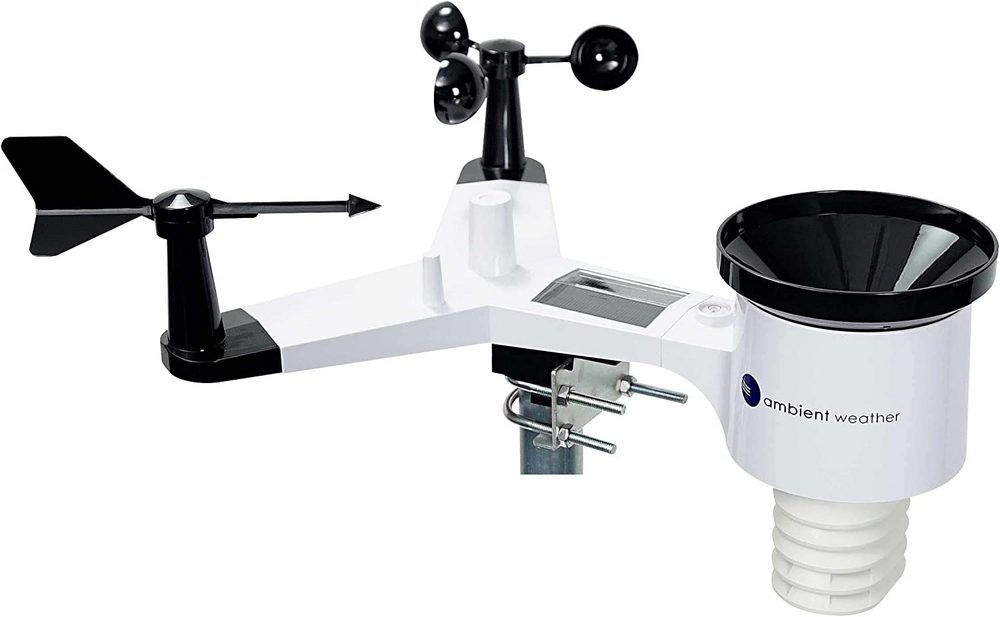
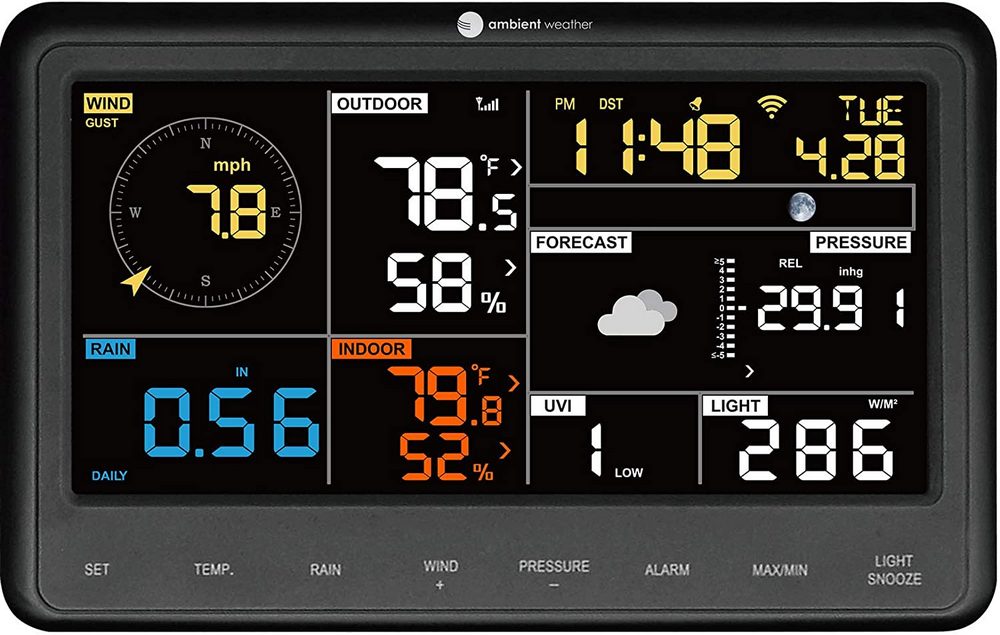
The Arizona-based company, Ambient Weather, has one of the most recognizable brand names in the industry. If you’re shopping for budget home weather stations, you may have already come across Ambient Weather’s WS-2902C. The Osprey is a solar-powered wireless device that uses Wi-Fi to process data.
The new version has a revamped web-based dashboard and LCD screen. The device itself offers many options for storing and sharing data. You can also connect it to other services and schedule actions dependent on specific weather conditions.
The Osprey’s integrated sensor measures temperature, humidity, wind, rain, UV, and solar radiation. It can calculate the heat index, dew point, and wind chill, as well. You can calibrate the device to present the information in either the imperial or metric units of measure.
Many people will not splurge on home weather stations. That’s understandable, but spending less – in this instance – does have its trade-offs. The Osprey’s sensor array feels flimsy. You’ll also need to find a pole on which to mount it.
The device arrives completely unassembled. You’ll need to spend some time putting everything together. The mounting system – which relies on two metal U-bolts tightened by a tiny wrench – doesn’t feel stable, either.
That said, if budget is a significant deciding factor, the WS- 2902C merits consideration. Given that it’s one of the most inexpensive home weather stations on this list, it does its job quite well.
The Best Stickler for Accuracy
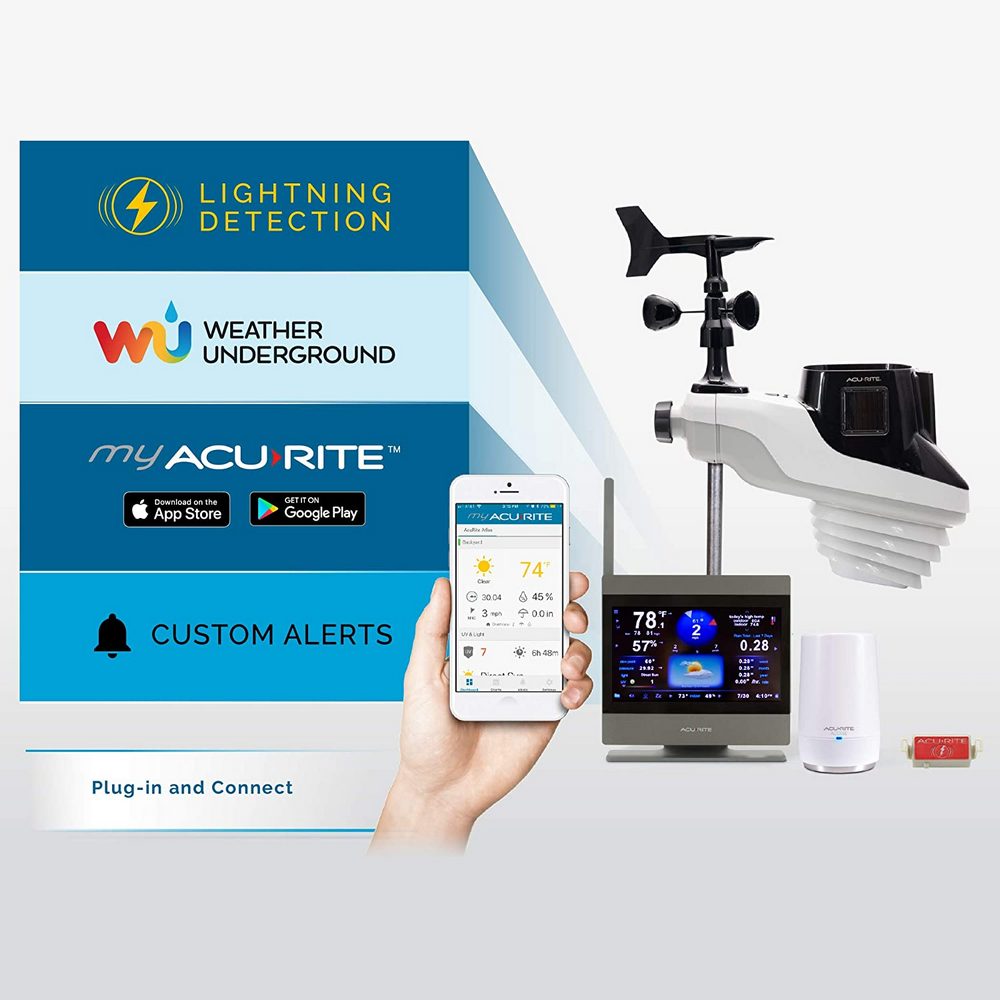
AcuRite is no stranger to those who regularly use home weather stations. The company is behind some of the best weather stations on the market. The company’s latest product, the AcuRite Atlas, is the first enthusiast model from the company.
The Atlas is an all-in-one device, so the initial setup process is quick and easy. What is apparent right out of the box, though, is that the hardware is both substantial and clunky.
You’ll need a pole 1-inch to 1.25-inch thick on which to mount the integrated sensor suite. But the setting that up should be a breeze, as well, lasting no more than a few minutes.
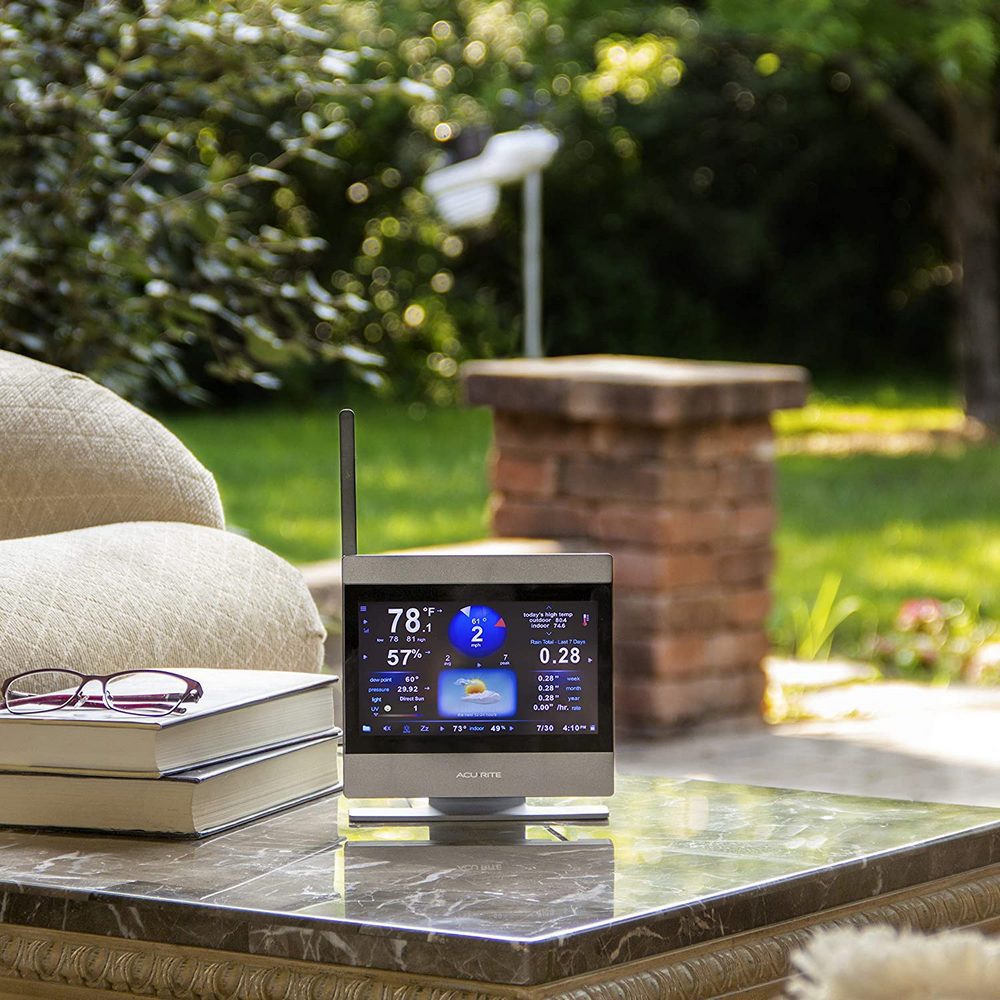
The system includes an impressive full-color high-definition display. We liked its top-notch quality, viewing angle, and well-designed layout, which made the information so much more compelling.
The Atlas detects indoor and outdoor temperatures, humidity, wind speed and direction, UV and light intensity, barometric pressure, and rain. AcuRite also offers an optional module that detects and records lightning up to 25 miles away.
But getting this information from the Web or the AcuRite app requires connecting the device to WiFi. That can prove exasperating. Previous reviews have lamented the frustrating process involved in connecting to AcuRite’s temporary website. We now know why.
Still, once it’s up and running, the Atlas performs like a champion. Its temperature readings are near perfect, with an average variance of about a degree or two from actual temperatures.
Our verdict? If a perfect forecast is your most important criterion, then Atlas is for you. We think it’s well worth the price it commands in that respect. Ultimately, though, it’s just too complicated and difficult a device to recommend for most home users.
The Best Newcomer
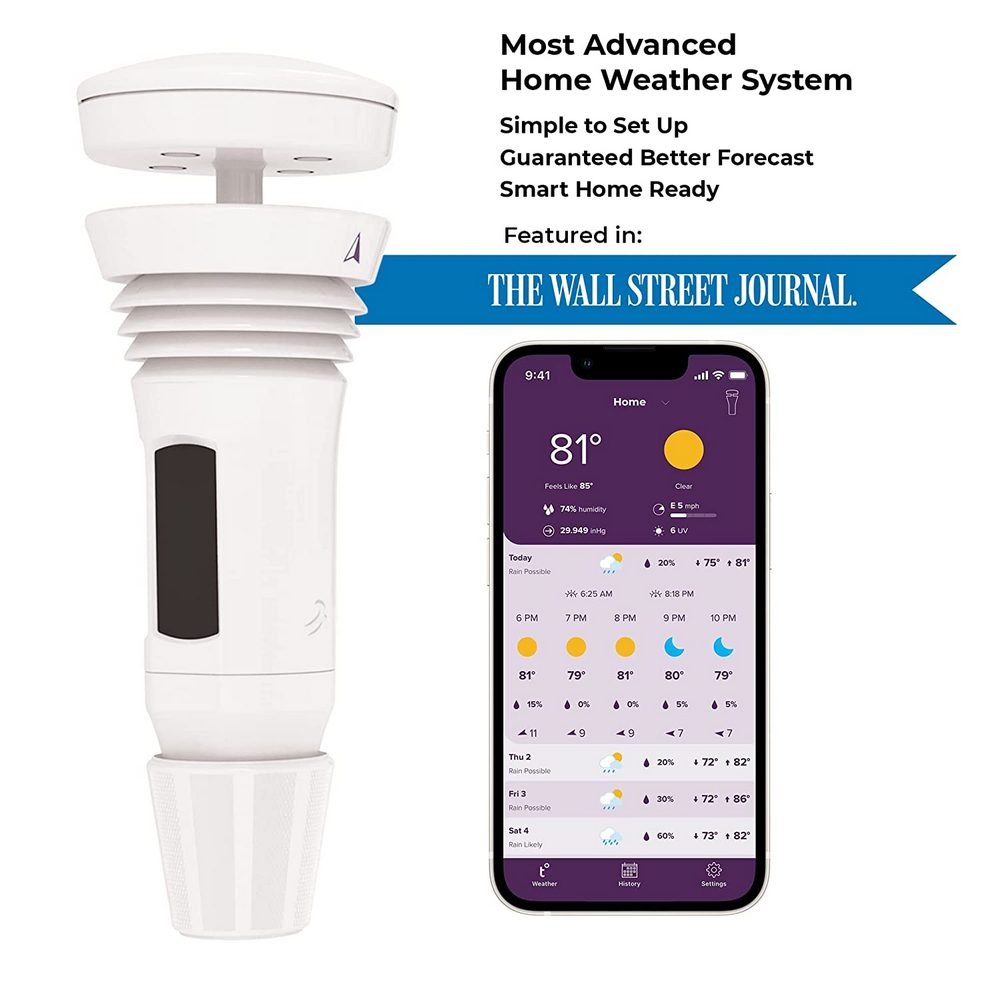
The Weatherflow Tempest is one of the new home weather stations entry to the market. Industry insiders say it took a long time coming, too. WeatherFlow had promised investors a station by 2017. But manufacturing issues pushed the Tempest’s launch back a number of times. Now that it has arrived, it’s making its mark.
There isn’t much to do when it comes to setting up this device. The entire sensor suite comes preassembled and it’s small and light at 3.5 lbs.
If all goes well, you should have this station up and reporting data in just five minutes. You don’t have to bother calibrating the sensors. The Tempest is self-calibrating.
To install the station, you can attach it to the top of a mast or a pole. But the Tempest isn’t finicky. In fact, you can screw it on top of just about anything using its standard tripod mount.
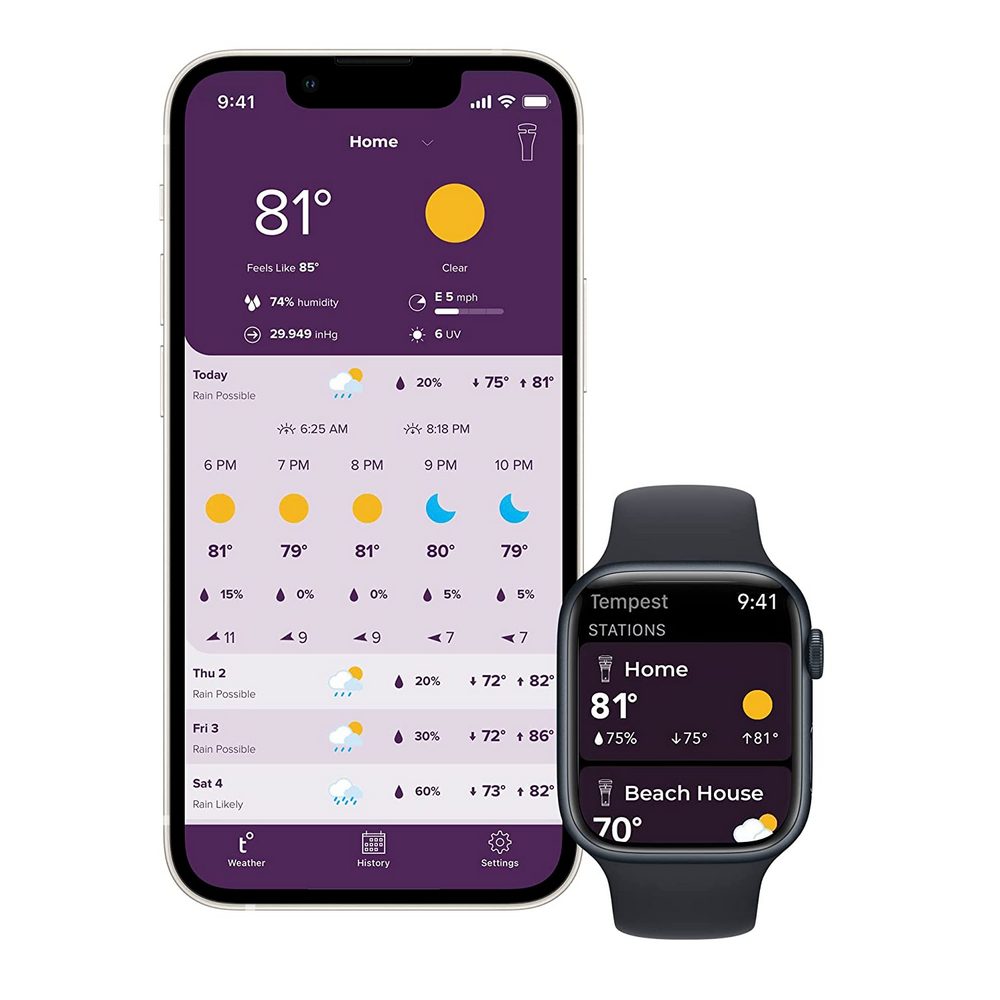
This device includes a Wi-Fi base station, which the device uses to connect to your home network. The entire setup process is within the app.
Unlike many weather stations, the Tempest does not have a console. You don’t get the typical indoor measurements that you get with other home weather stations. The smartphone and web-based apps act as your console, which updates once every three seconds or so.
The app is simple and easy to use. You get every weather variable you’d need and more. The device detects and measures temperature, humidity, wind speed and direction, and rain.
The station also has a built-in lightning detector and a UV and light sensor. The latter reports everything from the UV index, to brightness, to solar radiation.
We found that its temperature readings tend to run high. The device missed by an average of about 5.2 degrees. This is probably why its weather forecasts were the worst in this lineup.
That’s baffling because forecasting is supposed to be Tempest’s forte! Weatheflow does expect the station’s machine learning to “significantly improve the forecast over time,” though.
We like the Tempest despite its flaws, which a few software updates should fix. We are particularly impressed by the quick and easy setup and the compact hardware. But this device commands a price of more than $300. We think that’s a bit much for what you actually get.
The Best of the Best!
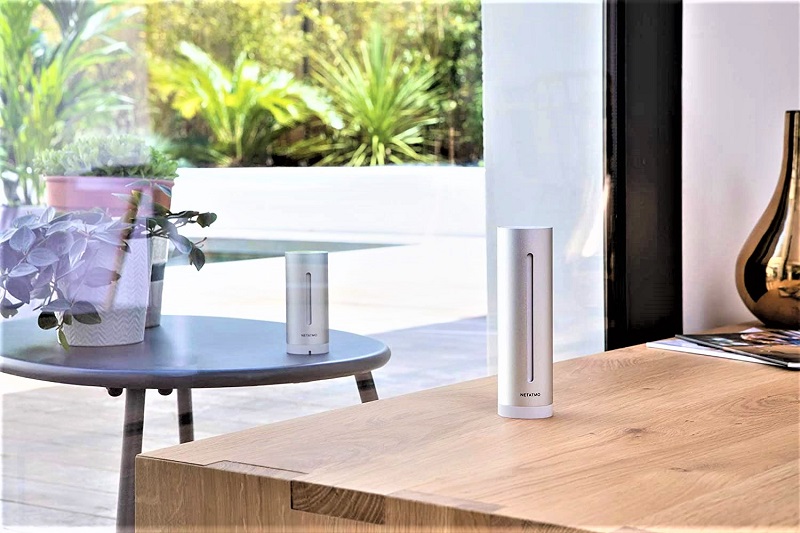
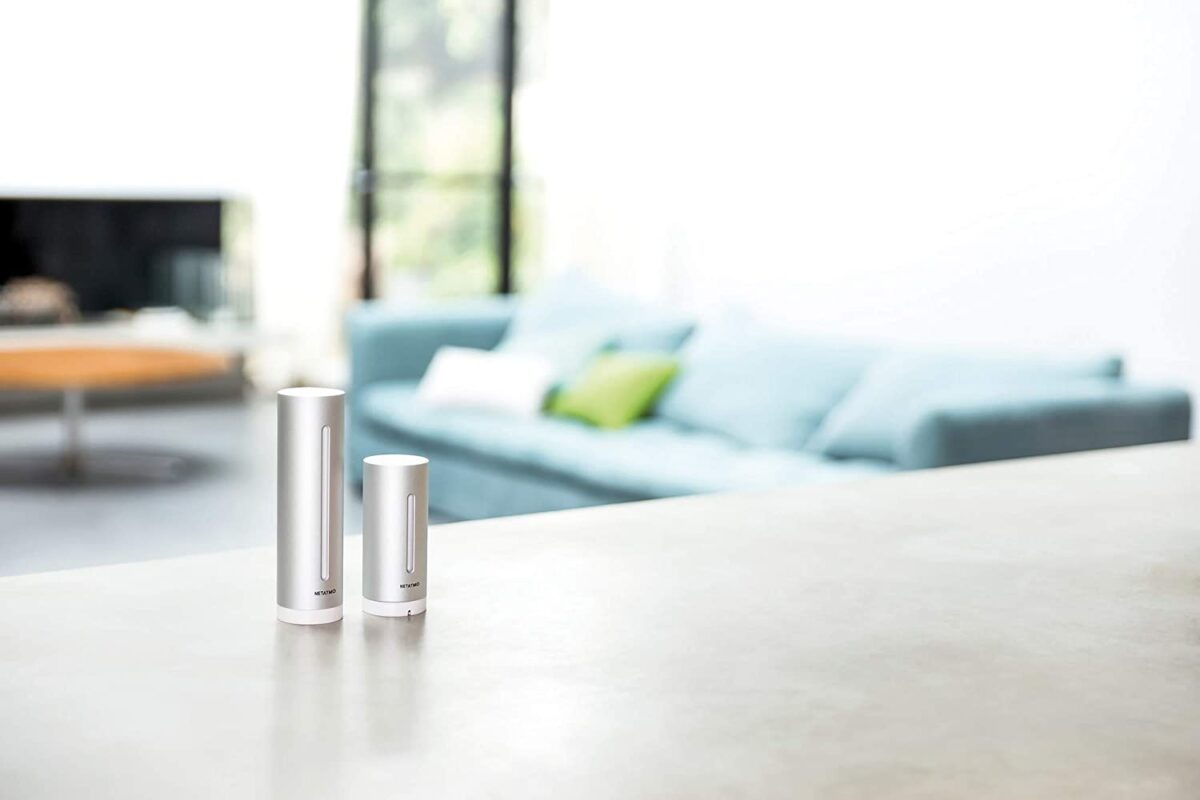
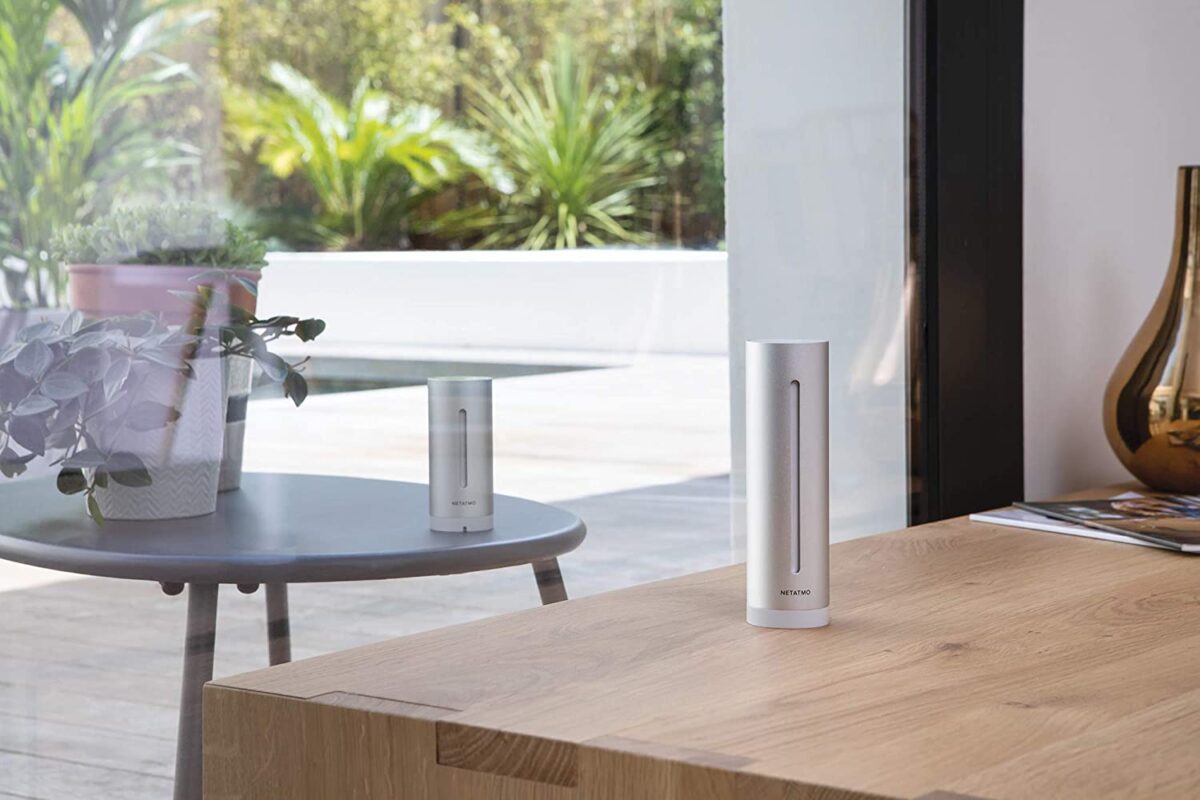
You won’t find a more streamlined weather station than the French-made Netatmo. But that is far from all that the aluminum-bodied device has to offer. Its modern design, pinpoint accuracy, and easy-to-use functions have earned it accolades from Wired, Good Housekeeping, and Wirecutter.
Netatmo’s base model includes two sensors. The slim, battery-operated outdoor tower tracks temperature, humidity, and barometric pressure. The AC-powered indoor sensor – which you situate near your router – measures CO2 and sound levels.
Right out of the box, you’ll note that setting up the Netatmo is a complicated and buggy endeavor. Netatmo’s approach will have you install each component individually.
What’s worse, you need to press buttons and remove and reinstall batteries at just the right time. That can be a bewildering exercise.
Once they’re running, the outdoor sensor talks to the indoor sensor, which relays the data to the web and the Netatmo app. For a more complete picture of what’s outside, though, you’ll need to buy the compatible rain gauge and anemometer. That doubles your investment.
Buying a full complement of gear, including both gauges, will cost you a total of more than $300. A complete set of peripheral equipment will provide measurements of indoor and outdoor temperature and humidity and barometric pressure.
You’ll receive the measurements in the Netatmo Weather app or on its website. You can be confident that Netatmo’s measurements are always spot-on.
The app is pleasantly intuitive. The easy-to-read graphics and charts of real-time and historical data are well-laid out and rather captivating. You’ll have access to a reliable seven-day forecast, as well.
You can pair the Netatmo with Amazon and Apple smart speakers. Do that and you can request weather reports from Alexa or Siri! Pairing should be easy if you’re already living in a smart home.
Despite its issues, the Netatmo home weather station does its job exceedingly well. We like its performance and overall value.
Frequently Asked Questions: Home Weather Stations
- Are home weather stations worth it?
- Yes, a home weather station is worth it if you want precise, real-time weather data for your exact location. This is invaluable for gardeners, outdoor enthusiasts, pilots, or anyone tired of inaccurate regional forecasts.
- How accurate are home weather stations?
- The accuracy of a home weather station varies by model and sensor quality. Budget models are good for general trends, while high-end stations with professional-grade sensors can rival official data when properly calibrated and sited.
- Do I need Wi-Fi for a home weather station?
- No, you don’t need Wi-Fi for all models, but it is highly recommended. A home weather station with Wi-Fi connectivity allows you to view your data remotely on your phone, contribute to weather networks, and integrate with smart home systems.
- What features should I look for in a home weather station?
- Key features to look for in a home weather station include the sensors you need (temperature, humidity, wind, rain), connectivity (Wi-Fi), app quality, solar radiation/UV sensors for gardeners, and smart home compatibility.
- Which home weather station is best for beginners?
- The best home weather station for beginners is the WeatherFlow Tempest due to its tool-free, app-driven setup. For a more traditional but still user-friendly option, the Ambient Weather WS-2902C is an excellent budget-friendly choice.
To Wrap It Up
Home weather stations provide valuable real-time data that can help you stay ahead of unpredictable weather patterns.
Do you own a home weather station? If not, do you think buying one would be a good investment, given today’s unpredictable weather patterns? Please feel free to share your views in the comment section below.