
Last Updated on November 13, 2025 by teamobn
At a Glance:
- Pallet flooring can be a low-cost, rustic alternative to hardwood if you choose heat-treated pallets, properly mill/season the boards, and seal them correctly.
- Key steps: source and sort pallets, denail and mill, acclimate, prep subfloor, dry-lay for pattern, install and gap-fill, sand, stain, and seal.
- Safety first: only use HT-stamped pallets, wear PPE, test for moisture, and avoid pallets used for food/chemicals.
- Budget: often $1–$3 per sq ft in materials if pallets are free; time is the biggest cost.
- Best for low-traffic or accent spaces; for wet zones, use a more moisture-resistant finish or another flooring type.
What Is Pallet Flooring and Who Is It Best For?
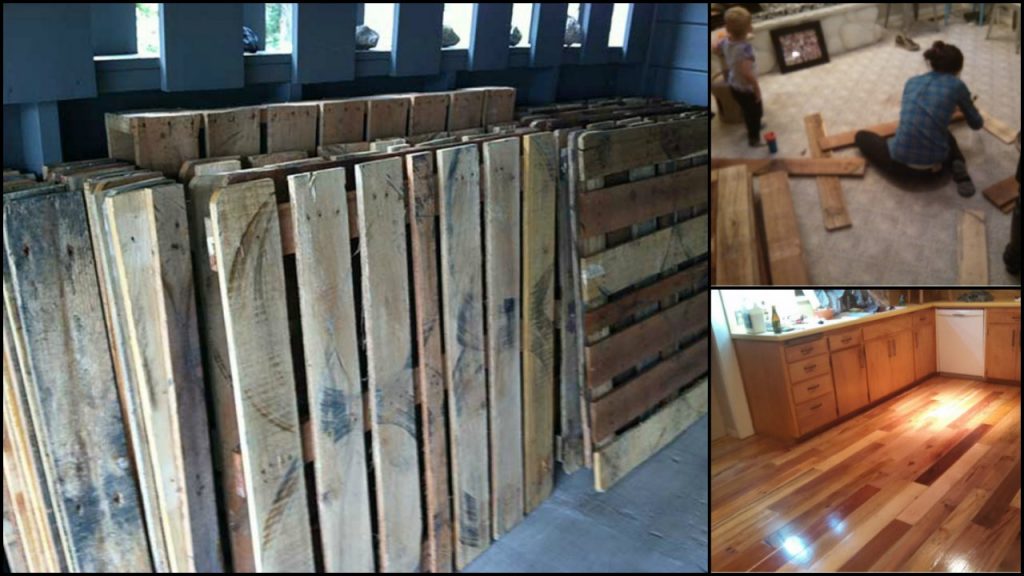
Pallet flooring uses reclaimed pallet boards as the finished floor. It’s ideal for DIYers seeking a rustic, lived-in aesthetic on a tight budget, especially in workshops, cabins, bonus rooms, and accent areas. It requires time, tools, and attention to safety.
Is Pallet Flooring Safe and Durable?
Durability depends on wood species, thickness after milling, and finish. Expect more dents and patina than factory hardwood — part of the charm.
Safe if you select only heat-treated (HT) pallets with no chemical or food contamination and properly mill and seal the wood.
What Pallets Should I Use and Avoid?
- Use: pallets stamped “HT” (heat-treated). Prefer domestic suppliers or pallets that carried non-food, non-chemical goods.
- Avoid: pallets stamped “MB” (methyl bromide) or any with unknown stains, odors, or spills. When in doubt, don’t use it.
Note: In many regions, MB has been phased out, but legacy pallets exist. The HT stamp is your green light.
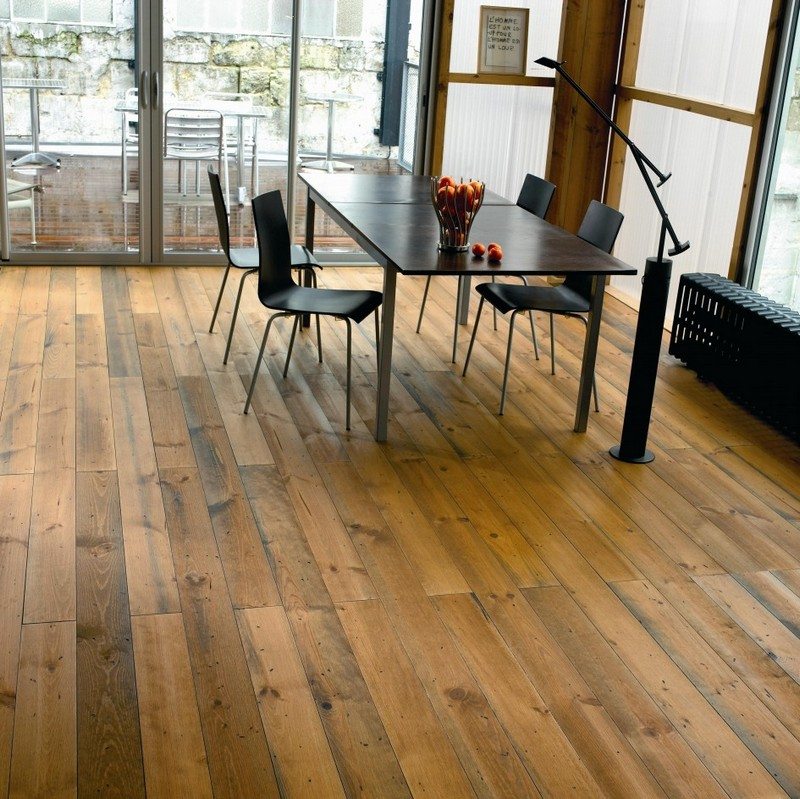
Still, set on converting to timber flooring? Check our gallery of timber flooring ideas for inspiration.
Safety First: What Precautions Should I Take?
- Fastening and finish: follow manufacturer guidance; allow finish to fully cure before heavy use.
- PPE: safety glasses, cut-resistant gloves, hearing protection, dust mask/respirator when sanding.
- Ventilation: work outdoors or in a well-ventilated shop.
- Dust control: use dust collection and a shop vac; wood dust can be hazardous.
- Moisture: acclimate boards in the install room 5–7 days; target 6–9% moisture content before install.
Constructing a Pallet Flooring
The pallets used to construct a DIY pallet flooring are usually cheap and can also be free if these are recycled from landfills.
What materials are needed to construct a Pallet Flooring?
- HT-stamped pallet boards (20–30% extra to allow for defects)
- Underlayment (rosin paper or vapor retarder appropriate to your subfloor)
- Construction adhesive (optional, for mixed install methods)
- Flooring nails/brads or trim-head screws
- Wood filler or sawdust + glue for gaps
- Stain (optional) and finish (polyurethane, hardwax oil, or floor-grade waterborne finish)
What tools are needed to construct a Pallet Flooring?
- Pry bar, pallet buster, or reciprocating saw with metal-cutting blade (to remove nails between stringers)
- Hammer, nail punch, magnetic stud finder (for hidden nails)
- Denailing tools: end-cutting pliers, cat’s paw
- Planer or thicknesser; jointer optional; circular/table saw for straight edges
- Orbital/rotary sander and grits (80/120/150/180), shop vac
- Moisture meter
- Mitre saw for end cuts
- Chalk line, tape measure, spacers PPE as above
How much does pallet flooring cost?
- Pallet boards: often free to $0.50/board; expect to discard a portion.
- Consumables: fasteners, adhesives, sandpaper, finish, underlayment typically $0.75–$2.00 per sq ft.
- Total: $1–$3 per sq ft if pallets are free. Tooling/time can be significant if you’re milling from rough stock.
What patterns work well with pallet boards?
- Staggered random-length plank (most forgiving)
- Herringbone or chevron (requires straight, uniform boards)
- Mixed-width plank for a more reclaimed aesthetic
- Frame-and-field borders to elevate the look
Dry-lay a small section to preview color variation and knot placement.
How to Construct a Pallet Flooring?
1) Source and sort
- Collect HT-stamped pallets only. Reject any with stains, heavy odors, oil, or chemical residue.
- Sort by thickness, straightness, and species/color to simplify milling and layout.
2) Break down and denail
- Remove deck boards with a pallet buster or cut nails between stringers with a recip saw.
- Denail carefully. Run a magnet over the boards. Hidden nails can ruin blades and cause injury.
3) Mill and acclimate
- Square an edge and rip to desired widths; thickness-plane to a consistent thickness (e.g., 1/2″–5/8″ finished).
- Lightly joint or edge-sand to ensure tight seams.
- Sticker-stack and acclimate boards in the install room for 5–7 days; verify moisture content matches the space.
4) Prepare the subfloor
- Ensure subfloor is dry, flat (within 3/16″ over 10′), clean, and fastener-sound.
- Install underlayment per your subfloor type. Fix squeaks now.
5) Plan layout and dry-lay
- Snap a chalk line for your first course—square to the main sightline (door or longest wall).
- Dry-lay a few rows to balance color, knots, and seam staggering. Keep end joints at least 6″ apart.
6) Install boards
- Methods:
- Nail-down: predrill and face-nail/edge-nail with brads or finish nails into joists/subfloor.
- Glue-assist: thin construction adhesive beads to minimize squeaks; add nails to hold while curing.
- Use spacers at walls for expansion gaps (1/4″). Scribe to irregular walls if needed.
- Keep checking straightness against the chalk line.
7) Fill and sand
- Fill visible nail holes and small gaps with wood filler or a sawdust + glue mix color-matched to the wood.
- Sand progressively (80 → 120 → 150/180). Vacuum thoroughly between grits.
8) Stain and finish
- Optional stain: test on offcuts; pallet species vary so colors take differently.
- Apply floor-grade finish:
- Oil-based poly: warm tone, durable, longer cure.
- Waterborne poly: clearer tone, faster dry/cure, low odor.
- Hardwax oil: easy spot repairs, matte/natural look.
- Follow manufacturer’s coats and cure times; avoid heavy traffic until fully cured.
9) Transitions and trim
- Add thresholds/reducers at doorways. Install baseboards/shoe molding to cover expansion gaps.
Maintenance Tips and Long-Term Care for Pallet Flooring
Pallet flooring offers a unique and rustic charm to any space, but like any flooring, it requires proper care to maintain its beauty and durability. Here are some essential tips to help you take care of your pallet flooring and ensure it lasts for many years.
Regular Cleaning
- Daily Dusting
- Regularly sweep your pallet flooring with a soft-bristled broom or use a dust mop to remove dirt and grit. These small particles can act like sandpaper underfoot, wearing down the finish over time.
- Weekly Vacuuming
- Vacuum your pallet flooring weekly using a soft brush attachment to get rid of finer dust particles that sweeping might miss. Ensure the vacuum is set to the wood floors setting to avoid scratches.
- Mopping
- Use a damp mop with a mild soap solution for deeper cleaning. Make sure the mop is only slightly damp, as excessive water can seep into the wood, causing damage like swelling or warping.
Preventing Damage
- Use Protective Pads
- Place felt pads under the legs of furniture to prevent scratches and gouges on your pallet flooring. These pads should be replaced periodically as they can wear down and collect grit.
- Rugs and Mats
- Utilize area rugs or mats in high-traffic areas to minimize wear. Ensure these are non-slip and cleaned regularly to avoid dirt buildup underneath that could scratch the floor.
- Avoid High Heels and Sharp Objects
- High heels and sharp objects can dent and scratch pallet flooring. Avoid wearing such footwear on your floor and be cautious when moving sharp or heavy objects.
Managing Moisture
- Address Spills Immediately
- Any spills should be wiped up immediately with a dry or slightly damp cloth to prevent water marks or stains.
- Monitor Humidity Levels
- Pallet flooring can react to changes in humidity by expanding or contracting. Try to keep indoor humidity levels consistent, ideally between 35% and 55%, to avoid warping or cracking.
Periodic Maintenance
- Refinishing
- Over time, your pallet flooring may start to show signs of wear. Refinishing the surface can restore its original shine and provide additional protection. This usually involves sanding down the existing finish and applying a new top coat.
- Deep Cleaning
- Occasionally, it might be necessary to conduct a deep clean or polish to restore the luster of your pallet flooring. Use products specifically designed for wood floors and follow the manufacturer’s instructions.
Long-Term Considerations
- Regular Inspections
- Periodically inspect your pallet flooring for signs of damage or wear. Early detection of problems like loose planks or lifted edges can save you from more extensive repairs down the line.
- Professional Help
- If you encounter serious issues with your pallet flooring, such as large areas of damage or persistent squeaks, it might be best to consult a professional. They can provide expert advice and services to ensure your floor is properly repaired and maintained.
This care and maintenance advice will help you to keep your pallet flooring looking great and working great for many years to come. Recall that routine maintenance and quick resolution of any possible problems are the secrets to long-lasting wood flooring.
Impressive DIY Pallet Flooring Design Ideas
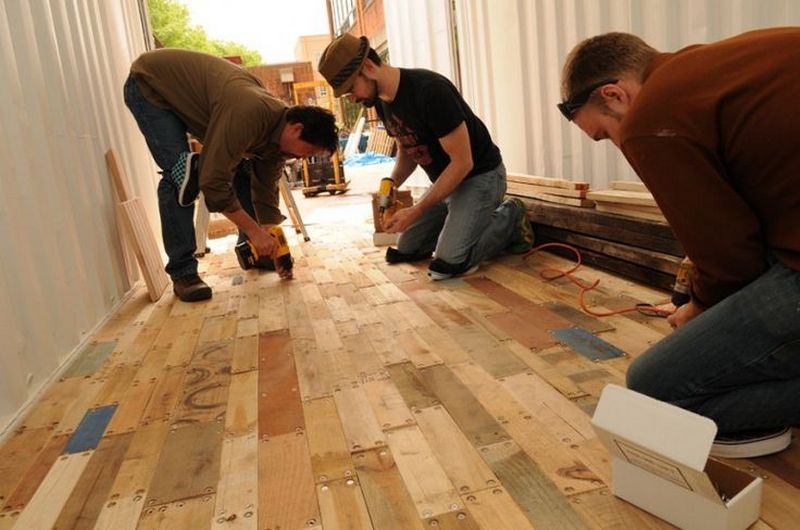
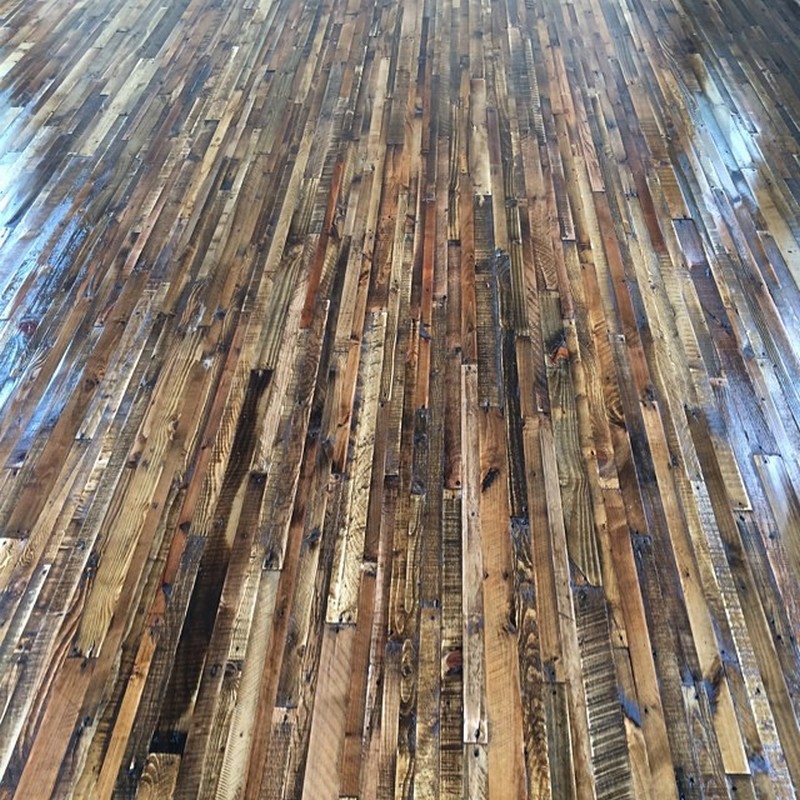
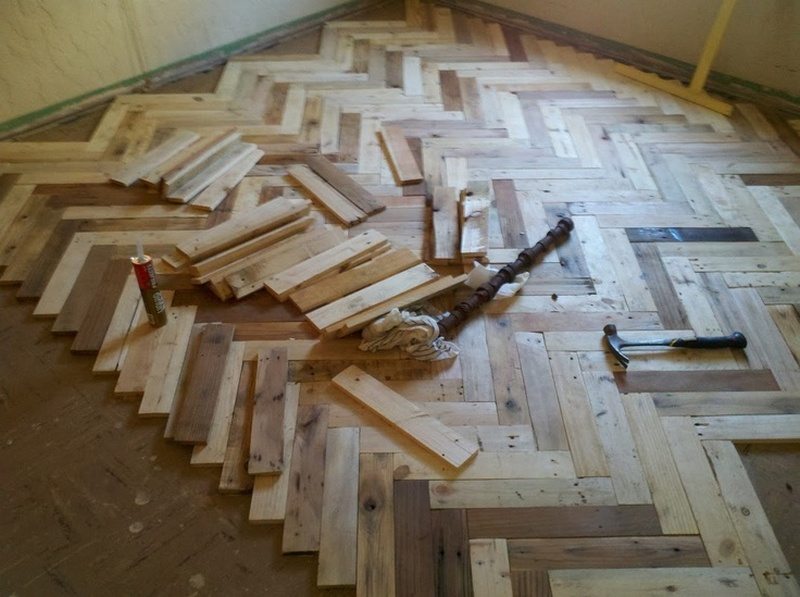
Below are images of impressive DIY Pallet flooring design ideas.
Click on any image to start the lightbox display. Use your Esc key to close the lightbox. You can also view the images as a slideshow if you prefer 😎
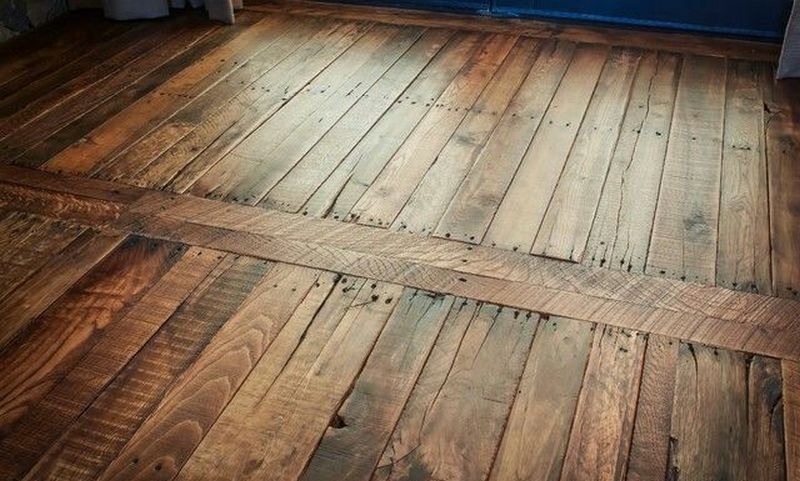

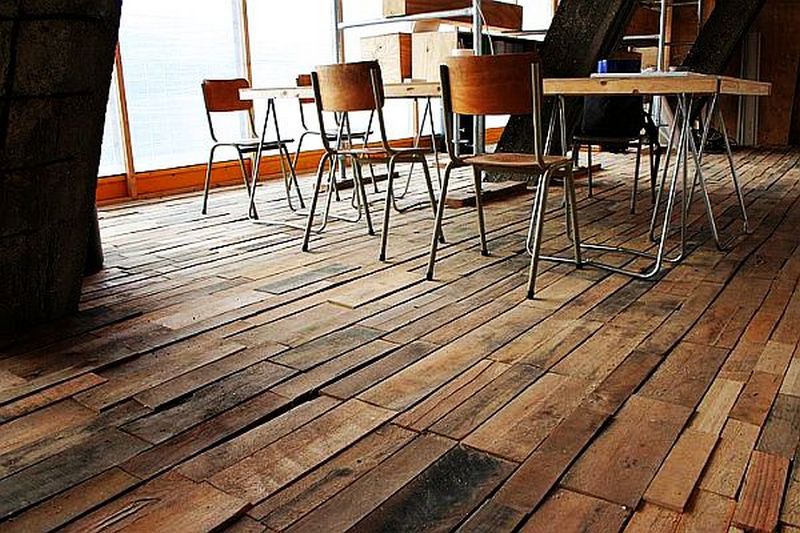
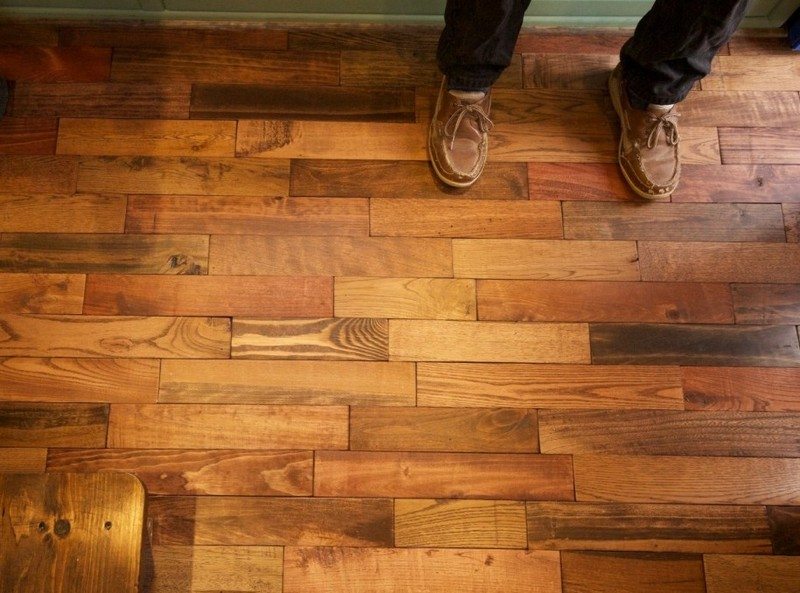

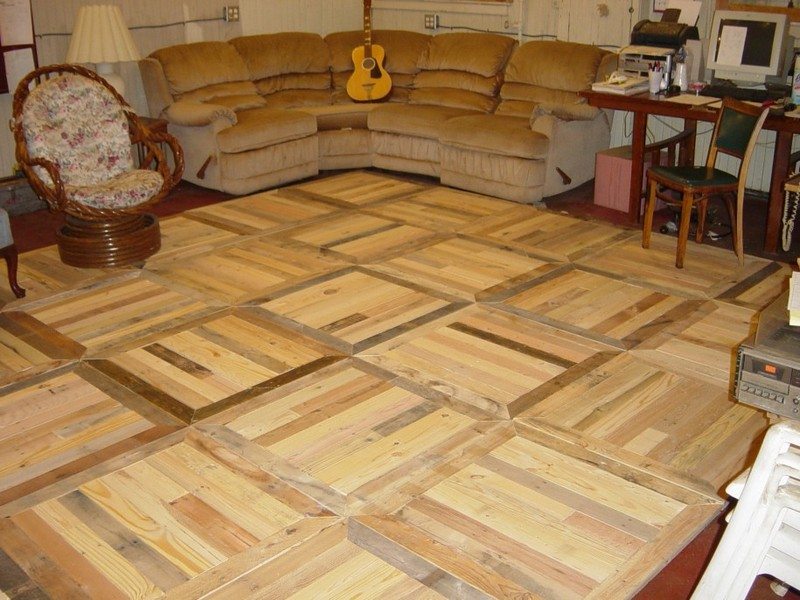

Design Patterns and Creative Layouts for Pallet Flooring
Pallet flooring offers a versatile and eco-friendly option for those looking to add a unique touch to their home or office space. With a bit of creativity, you can transform ordinary wood pallets into a visually striking floor.
Here, we explore various design patterns and creative layouts to enhance the aesthetic appeal of your pallet flooring.
Classic Straight Lay
- Simple and Elegant: The straight lay pattern involves aligning the pallet planks parallel to each other across the room. This traditional layout works well in any space, providing a clean and orderly appearance that enhances the room’s dimensions.
- Versatility: While simple, this pattern allows the natural beauty of the wood to stand out, making it a perfect choice for those who prefer a minimalist decor.
Herringbone Pattern
- Dynamic Visual Impact: Arrange your pallet flooring planks in a herringbone pattern to create a visually dynamic effect. This pattern involves positioning the planks in a zigzag formation, resembling a fish skeleton.
- Suitable for Any Room: The herringbone layout is particularly suited for larger rooms or hallways where the pattern can fully unfold and become a focal point.
Diagonal Layout
- Room Expansion Effect: Installing pallet flooring diagonally can make small spaces appear larger. This layout involves setting the planks at a 45-degree angle to the walls, guiding the eye diagonally across the room.
- Unique Appeal: The diagonal pattern adds a unique twist to the room, offering a more contemporary look compared to traditional layouts.
Mixed Width Installation
- Rustic Charm: For a more rustic and textured look, mix different widths of pallet planks. This layout adds depth and interest to your pallet flooring, creating a more custom and handcrafted appearance.
- Creative Freedom: Mixing widths allows for a high degree of customization. You can vary the placement randomly or create a repeating pattern for a more structured look.
Parquet-Inspired Designs
- Artistic and Luxurious: Drawing inspiration from traditional parquet floors, you can cut pallet planks into smaller pieces and assemble them into geometric shapes, such as squares, triangles, or hexagons.
- Sophistication and Style: This approach lends a sophisticated air to any room, making your pallet flooring not just a functional surface but also an expression of art.
Checkerboard Pattern
- Playful and Eye-Catching: Alternating two different shades of pallet wood can achieve a checkerboard effect. This playful design is ideal for children’s rooms or creative spaces.
- Color Contrast: Using stained and natural wood alternately can enhance the checkerboard pattern, adding an extra layer of visual interest to your floor.
Your pallet flooring can represent your own style and improve the look of your room if you select the appropriate design pattern. Pallet flooring offers almost limitless design options, from a straightforward straight lay to a complex parquet-inspired pattern.
Frequently Asked Questions about DIY Pallet Flooring
- What kind of pallets are safe to use for flooring?
- Only use pallets stamped “HT” (heat-treated) and avoid any with “MB” (methyl bromide) stamps, unknown stains, odors, or chemical residues.
- How much does it typically cost to install pallet flooring?
- If you source pallets for free, the material cost for pallet flooring usually ranges from $1 to $3 per square foot, with time being the biggest investment.
- What are the essential safety precautions for installing pallet flooring?
- Always wear personal protective equipment (PPE) like safety glasses, gloves, and a dust mask. Ensure good ventilation, control dust, and acclimate the wood to the room’s moisture levels before installation.
- Can pallet flooring be installed in kitchens or bathrooms?
- Pallet flooring is generally not recommended for wet areas like kitchens or bathrooms. If used, it requires a highly moisture-resistant finish and diligent maintenance to prevent damage.
- How do I prevent damage to my pallet flooring after installation?
- Use felt pads under furniture, place rugs in high-traffic areas, avoid high heels and sharp objects, and promptly clean up any spills.
- What are the benefits of using pallet flooring?
- Pallet flooring is an ultra-budget-friendly and environmentally friendly option that offers a unique, rustic charm. It allows for custom designs and provides an opportunity to develop woodworking skills.
- How often should I clean my pallet flooring?
- Regularly sweep or dust mop daily, vacuum weekly with a soft brush attachment, and use a damp mop with a mild soap solution for deeper cleaning as needed.
Conclusion
Creating pallet flooring is an affordable and environmentally friendly way to give any area distinctive personality. Durability and long-lasting beauty are features of this environmentally friendly option when installed and maintained correctly. Accept the inventiveness of do-it-yourself projects and turn used pallets into an eye-catching, useful flooring option.
If you liked this project, you will also like viewing these Pallet recycling ideas…