Last Updated on October 31, 2026 by teamobn
Outdoor dining is one of the pleasures of Australian living, whether you’re enjoying a weekend barbecue, sharing dinner with family or entertaining friends. However, harsh afternoon sunlight, unexpected rain and uncomfortable temperatures can quickly make an outdoor dining area less inviting.
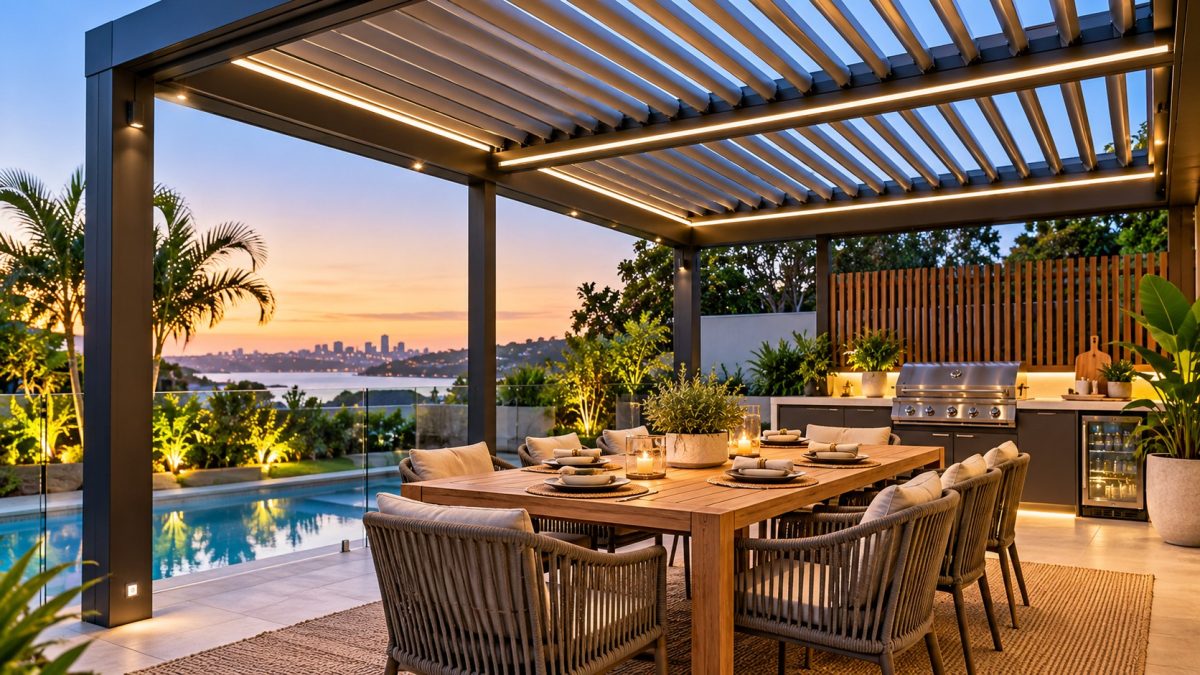
A well-designed outdoor space needs more than a dining table and chairs. It requires suitable shade, ventilation, weather protection and enough room for people to move comfortably. A louvered pergola can help create these conditions by allowing you to adjust the roof according to the weather and time of day.
Unlike traditional fixed roofing, adjustable louvres let you control how much sunlight and airflow enter the space. Combined with practical furniture, lighting and thoughtful landscaping, they can turn an ordinary patio or backyard into a more versatile dining area.
This guide explains how to plan a comfortable outdoor dining space with a louvered pergola, from choosing the right location and size to improving privacy, lighting and year-round usability.
Why Choose a Louvered Pergola for Outdoor Dining?
A louvered pergola is an outdoor structure with adjustable roof blades that rotate to control sunlight, shade and airflow. Depending on the system, the blades can be opened, angled or closed to create different conditions underneath.
This flexibility is particularly useful for outdoor dining areas, where comfort requirements can change throughout the day. You might want filtered sunlight during breakfast, deeper shade at lunchtime and an open view of the sky during a pleasant evening.
Adjustable Shade for Different Times of Day
Fixed roofing provides consistent coverage, but it doesn’t allow much control over changing sunlight.
With adjustable louvres, you can modify the roof angle to reduce direct sunlight over the dining table. This can make sitting outdoors more comfortable, particularly during warm Australian summers.
For example, partially closing the louvres during afternoon meals can provide shade while allowing some daylight into the space.
Better Airflow During Warm Weather
Air circulation contributes to outdoor comfort, especially when temperatures rise.
Opening the louvres allows air to move through the overhead structure, helping warm air escape rather than remaining beneath a fully enclosed roof.
The amount of ventilation depends on the pergola’s location, nearby walls and prevailing winds. Positioning the structure where natural breezes can reach it may improve the overall dining experience.
Greater Flexibility When the Weather Changes
Outdoor gatherings can be interrupted by sudden showers.
Many adjustable pergolas feature roof systems designed to provide rain protection when the louvres are closed. Integrated gutters and drainage channels help direct water away from the covered space.
However, weather resistance varies between products. Heavy wind-driven rain may still enter from the sides, so it’s worth checking the manufacturer’s specifications before choosing a system.
Choose the Best Location for Your Outdoor Dining Area
The location of your dining area affects how comfortable and convenient it will be. Sun exposure, wind direction, accessibility and surrounding features should guide your planning.
A carefully chosen position can make the space easier to use for everyday meals and larger gatherings.
Position the Pergola Near Your Kitchen
Locating the dining area close to the kitchen makes carrying food, drinks and tableware easier.
A patio connected to the house can create a practical indoor-outdoor dining arrangement, particularly when large doors open towards the entertaining space.
If your preferred location is further into the backyard, think about adding a clear pathway and convenient access to serving areas.
Study Sunlight Throughout the Day
Observe where sunlight falls during the times you expect to use the dining area.
A west-facing patio may receive intense afternoon sun, while a north-facing location can have different shading needs throughout the year.
Adjustable louvres help manage overhead sunlight, but low-angle rays can still enter from the sides. Privacy screens, suitable planting or outdoor blinds may provide additional shade where needed.
Check the Ground and Available Space
Before selecting a pergola, inspect the proposed installation area.
The ground must provide suitable support for the structure, and the layout should accommodate both the dining furniture and circulation space.
For homeowners exploring pergola kits, checking available dimensions, mounting requirements and roof operation options can help identify a suitable design for the property.
Plan the Right Pergola Size for Comfortable Dining
Choosing the correct pergola dimensions is one of the most useful steps in creating a functional outdoor dining area.
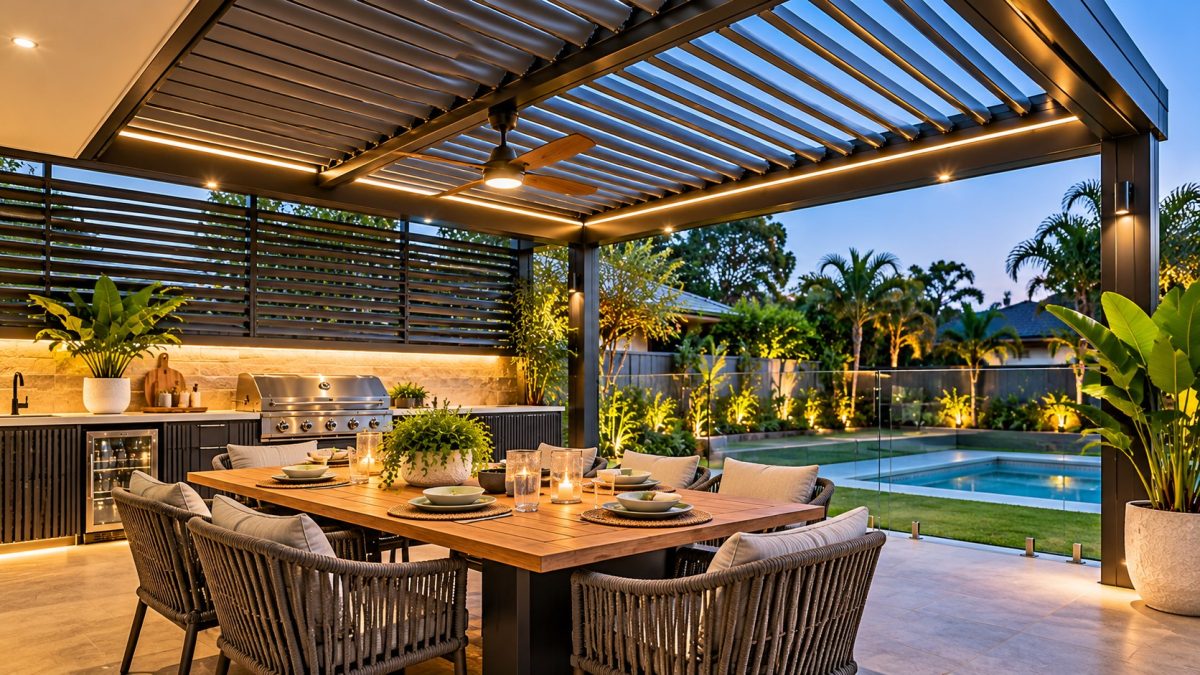
A structure that only covers the table may leave chairs exposed to direct sunlight or rain. A larger pergola can provide more room for movement, but it must fit the property without overwhelming the available space.
Allow Enough Room Around the Dining Table
Measure your intended dining furniture before deciding on the pergola size.
As a practical planning guide, allowing approximately 900 mm of clear space behind occupied chairs can make movement easier. More space may be helpful along busy walkways or where accessibility is a priority.
The exact clearance depends on the chair design, table size and how people move through the area.
Also account for structural posts, nearby doors, garden beds and any outdoor kitchen equipment.
Match the Layout to Your Household
Different dining arrangements suit different spaces.
- Small patios: Compact round or square tables can make efficient use of limited space.
- Family dining areas: Rectangular tables provide seating for regular meals and gatherings.
- Large entertaining spaces: Longer tables or separate dining and lounge zones can accommodate more guests.
- Narrow backyards: A dining table positioned lengthways may provide better circulation.
- Courtyard settings: Built-in seating can help reduce the amount of floor space occupied by furniture.
Choose a layout that feels comfortable during everyday use rather than designing only for occasional large gatherings.
Freestanding or Wall-Mounted Pergola?
A wall-mounted pergola can suit a dining space directly beside the house. It creates a visual connection between indoor and outdoor areas and may provide convenient access from the kitchen.
A freestanding pergola offers greater placement flexibility, making it suitable for garden dining zones or entertaining spaces away from the main building.
Both options require appropriate structural support, anchoring and installation. Wall-mounted structures also need suitable building connections and weatherproofing where they meet the house.
Control Sunlight and Temperature for Better Comfort
Sunlight is a major factor in outdoor dining comfort. A pleasant morning seating area can become difficult to use when strong afternoon sun reaches the table.
Adjustable louvres allow you to change the level of overhead shading without relying on a permanently covered roof.
Adjust the Louvre Angle Throughout the Day
The most useful roof position depends on the sun’s direction and the conditions underneath the pergola.
Dining Situation Suggested Louvre Position Main Benefit Mild morning breakfast Open or partially open Allows natural daylight Sunny lunchtime gathering Angled to block direct sunlight Improves shade and reduces glare Hot afternoon Mostly closed or positioned for shade Limits overhead sun exposure Pleasant evening Open or partially open Encourages airflow and an open atmosphere Light rain Closed, where the system is designed for rain protection Provides overhead shelter
These positions are general examples rather than fixed operating rules. Actual performance depends on the pergola’s orientation and design.
Always follow the manufacturer’s operating instructions during strong winds or severe weather.
Add Side Screens for Low-Angle Sunlight
Even with the louvres closed, sunlight can enter from the sides.
This is particularly noticeable when the sun sits low in the morning or late afternoon.
Outdoor blinds, retractable screens or suitable landscaping can help block unwanted glare while maintaining a comfortable dining environment.
Side screens may also provide additional privacy from neighbouring properties.
Choose Outdoor Dining Furniture That Suits the Space
The furniture you select affects both comfort and how easily the area can be maintained.
Outdoor dining furniture should be suitable for exposure to changing weather, even when positioned beneath a pergola. Rain, humidity, sunlight and temperature changes may still affect materials over time.
Select Durable Outdoor Materials
Common outdoor furniture materials include powder-coated aluminium, treated timber, stainless steel and synthetic wicker.
Each has different maintenance requirements.
Powder-coated aluminium is often chosen for its lightweight construction and corrosion resistance. Timber provides a natural appearance but may need periodic cleaning and refinishing.
Outdoor cushions should use materials suitable for exterior conditions, and removable covers can make cleaning easier.
Choose Seating That Encourages Longer Meals
Comfortable seating can make a dining area more enjoyable for family gatherings and entertaining.
Look for chairs with suitable back support, appropriate seat height and enough room around the table.
If your outdoor space is small, stackable or folding chairs can help maintain flexibility.
For larger areas, benches may provide additional seating without requiring individual chairs along every side.
Keep Furniture Clear of Moving Components
When arranging furniture, make sure nothing obstructs pergola posts, operating mechanisms or drainage points.
Avoid attaching hanging furniture, decorations or heavy accessories to the structure unless the manufacturer approves their installation.
If you plan to add overhead features, confirm the pergola can safely support the additional loads.
Create the Right Lighting for Evening Dining
Outdoor dining often continues after sunset, making lighting an important part of the design.
The goal is to provide enough illumination for eating, serving food and moving safely without creating excessive glare.
Use Layered Outdoor Lighting
A combination of lighting types can make the space more practical.
Consider using:
- Integrated LED lighting: Provides illumination from compatible pergola roof or frame components.
- Pendant-style lighting: Creates a focal point above a dining table when suitable structural support is available.
- Wall lighting: Helps illuminate nearby doors and outdoor preparation areas.
- Pathway lighting: Improves visibility between the house and dining area.
- Portable outdoor lamps: Adds flexible lighting without permanent installation.
Choose lighting designed for outdoor use and suited to the location’s exposure to moisture.
Choose Warm, Comfortable Lighting
Warm white lighting can create an inviting atmosphere for evening meals.
Dimmable lighting is particularly useful because it allows you to change brightness depending on the activity.
A brighter setting may suit food preparation and cleaning, while softer illumination can feel more comfortable during dinner.
Any permanent electrical work should be completed by an appropriately licensed electrician.
Improve Privacy Without Making the Space Feel Enclosed
An outdoor dining area should feel relaxed, particularly when entertaining guests or enjoying family meals.
If the space is overlooked by neighbouring homes or exposed to a nearby street, privacy features can improve comfort.
The challenge is creating shelter without blocking too much natural light or airflow.
Use Retractable Privacy Screens
Retractable screens allow you to adjust privacy when needed.
They can be useful along boundaries, beside neighbouring windows or on sides exposed to low-angle sunlight.
When choosing screens, check whether they are compatible with the pergola and suitable for local wind conditions.
Add Plants and Landscaping
Plants can create a softer visual boundary around outdoor dining spaces.
Suitable options may include screening shrubs, climbing plants or large planters positioned along the perimeter.
Choose plants based on local climate, mature size, root behaviour and maintenance needs.
Avoid allowing vegetation to interfere with moving louvres, gutters or structural connections.
Make Your Dining Area Comfortable in Different Seasons
A well-planned dining area should remain useful beyond the warmest months of the year.
Adjustable shade, suitable furniture and selected accessories can help improve comfort as conditions change.
Summer Comfort
During summer, focus on reducing direct sun exposure and encouraging airflow.
Angle the louvres to provide shade during peak sunlight and open them when ventilation is beneficial.
Outdoor fans may help improve comfort in suitable installations, but their mounting and electrical requirements must be checked.
Keep drinking water accessible and provide additional shade for children and pets when spending extended periods outdoors.
Winter Comfort
During cooler weather, opening the louvres can allow more sunlight to reach the dining area.
Outdoor heating may also help extend the usability of the space during cooler evenings.
Choose heating equipment suitable for outdoor use and maintain the required clearances from roof components, furniture and other combustible materials.
Never assume a heater can be mounted directly to the pergola without manufacturer approval.
Rainy Weather
When rain is expected, close the louvres if the product is designed to provide rain protection.
Check that drainage channels are free from leaves and other debris.
For outdoor furniture, choose weather-resistant materials and store cushions when extended wet conditions are expected.
A louvered roof can help protect the dining area from overhead rain, but it doesn’t create a fully weatherproof room.
Add Practical Features for Outdoor Entertaining
A comfortable dining space should also make food preparation, serving and cleaning convenient.
Small design details can make a substantial difference, particularly when you entertain regularly.
Create a Nearby Serving Area
A sideboard, outdoor trolley or dedicated preparation bench provides useful space for drinks, serving dishes and utensils.
Position it where guests can access food without interrupting movement around the table.
If you’re installing an outdoor kitchen, plan plumbing, electricity and appliance placement before finalising the pergola layout.
Plan Safe Cooking Areas
Barbecues are popular additions to Australian outdoor entertaining spaces, but they require appropriate placement.
Heat, smoke and combustion gases can create hazards beneath overhead structures.
Check the barbecue manufacturer’s clearance and ventilation requirements, and confirm whether cooking beneath the pergola is permitted.
Never use a barbecue or outdoor cooking appliance in a configuration that creates an enclosed or poorly ventilated area.
Use Outdoor Storage to Reduce Clutter
Weather-resistant storage can help keep dining accessories organised.
A storage bench or dedicated cabinet provides space for tablecloths, outdoor cushions and serving equipment.
Keeping these items nearby makes the area easier to prepare for everyday meals.
Choose a Pergola Design That Complements Your Home
The appearance of the pergola influences how naturally the dining area fits into the surrounding property.
A suitable design should complement the home’s exterior while providing the shade and shelter you need.
Match the Pergola Colour to Your Exterior
Neutral colours are often suitable for contemporary Australian homes.
White and lighter finishes can create a bright appearance, while darker colours may complement modern facades, window frames and outdoor furniture.
Think about how the frame colour will look beside exterior walls, paving and landscaping.
A coordinated colour scheme can help make the dining area feel connected to the rest of the property.
Choose Suitable Flooring
The surface beneath the pergola affects comfort, drainage and furniture stability.
Common outdoor flooring options include:
- Concrete paving.
- Outdoor-rated porcelain tiles.
- Natural stone.
- Suitable timber decking.
- Composite decking.
Choose a surface appropriate for outdoor exposure and the intended use.
Slip resistance, drainage and ease of cleaning are particularly relevant for areas where food and drinks may be spilled.
Installation, Safety and Council Requirements
Before installing a louvered pergola, check the property’s structural conditions and applicable building requirements.
The structure must be safely supported and suitable for local wind conditions. Its position should also allow proper drainage without directing water towards the house or neighbouring properties.
Check Foundations and Structural Support
Freestanding pergolas require suitable foundations and anchoring.
Wall-mounted systems need structurally appropriate connections to the existing building.
An ordinary paved surface or lightweight deck may not provide sufficient support without additional work.
The correct footing and fixing requirements depend on the pergola design, site conditions and installation instructions.
Confirm Local Approval Requirements
Planning and building approval requirements vary across Australian states, territories and councils.
Factors such as pergola height, size, boundary setbacks and attachment to the house can affect whether approval is required.
Some installations may qualify for exemptions, while others require permits or certification.
Check with your local council or a qualified building professional before beginning work. Strata-managed properties may also require approval from the owners corporation.
Choose the Right Installation Approach
Some pergolas are available as kits suitable for assembly by homeowners with appropriate skills and equipment.
However, larger structures and installations involving challenging ground conditions may benefit from professional installation.
Powered systems also require suitable electrical connections, with regulated electrical work completed by appropriately licensed professionals.
How Much Does an Outdoor Dining Pergola Cost?
The total cost of creating an outdoor dining area depends on more than the pergola itself.
Structure size, roof operation, flooring, furniture, lighting and installation work all influence the project budget.
A compact dining setup with a manual pergola may have different cost requirements from a larger motorised structure with integrated lighting and privacy screens.
Main Cost Factors
When preparing your budget, account for:
- Pergola dimensions and frame materials.
- Manual or motorised louvre operation.
- Freestanding or wall-mounted construction.
- Foundation and anchoring requirements.
- Outdoor flooring and drainage.
- Dining furniture and accessories.
- Lighting and electrical installation.
- Optional screens or heating.
- Delivery, installation and applicable approvals.
Request an itemised quote so you can understand which features and services are included.
Prioritise the Features You’ll Use Most
If you’re working within a limited budget, focus on the essentials.
A suitable pergola size, reliable roof operation and comfortable dining furniture should generally take priority over decorative accessories.
Lighting, outdoor storage and additional screening can be incorporated into the plan according to your needs and available budget.
Maintenance Tips for a Long-Lasting Outdoor Dining Area
Regular care helps preserve the appearance and operation of your pergola while keeping the dining area inviting.
Although many aluminium pergolas are relatively low-maintenance, their roof mechanisms and drainage channels still require occasional attention.
Clean the Pergola and Drainage Channels
Remove leaves and debris from roof gutters and drainage outlets.
Clean accessible frame surfaces using mild detergent, water and a soft cloth, following the manufacturer’s recommendations.
Avoid abrasive products and high-pressure water directed at motors, electrical fittings or moving components.
Check the Louvre Mechanism
Operate the roof periodically and watch for uneven movement, unexpected resistance or unusual sounds.
If the louvres become difficult to adjust, stop using the mechanism and arrange an inspection.
Don’t force jammed blades or attempt electrical repairs without appropriate qualifications.
Maintain the Dining Furniture
Wipe down tables and chairs regularly, particularly after outdoor meals.
Clean cushions according to their care instructions and store them during extended wet weather when appropriate.
Inspect outdoor lighting, flooring and furniture for damage that could affect safety or comfort.
A Practical Checklist for Planning Your Outdoor Dining Space
Creating a comfortable outdoor dining area is easier when you plan the main features before purchasing furniture or installing the pergola.
Use this checklist to review your proposed layout.
- Location: Is the dining area convenient to access from the house or kitchen?
- Space: Is there enough room for the table, chairs and comfortable movement?
- Sunlight: Can the louvres provide suitable shade during your preferred dining times?
- Airflow: Does the location allow natural ventilation?
- Weather protection: Does the pergola have suitable rain drainage and documented wind performance?
- Furniture: Are the materials designed for outdoor conditions?
- Lighting: Will the area remain practical and comfortable after sunset?
- Privacy: Are screens or landscaping needed?
- Safety: Are cooking equipment, heating and electrical fittings positioned appropriately?
- Installation: Have structural support and local approval requirements been checked?
Reviewing these details early can help avoid purchasing a pergola that doesn’t suit your available space or intended use.
Create an Outdoor Dining Space You’ll Enjoy Using
A comfortable outdoor dining area combines adjustable shade, good ventilation, practical furniture and a layout that suits your household.
A louvered pergola can make the space more adaptable by allowing you to manage overhead sunlight, airflow and suitable rain protection. With careful planning, it can support everything from everyday family meals to weekend gatherings.
The best results come from selecting a pergola that fits your property, offers the features you’ll use regularly and is installed according to the appropriate structural and safety requirements.
If you’re planning an outdoor dining upgrade, explore the range of louvered pergolas available from Unique Pergolas. Compare sizes, manual and motorised operation, and installation options to find a suitable design for your outdoor entertaining space.
Frequently Asked Questions
1. Is a Louvered Pergola Good for an Outdoor Dining Area?
Yes, a louvered pergola can be an excellent addition to an outdoor dining area because it provides adjustable shade and airflow. You can change the roof blade angle to suit different weather conditions and times of day. This makes it easier to enjoy outdoor meals without relying on fixed roofing. Some systems also provide rain protection when closed. For the best results, choose a pergola that covers your dining furniture and allows enough room for comfortable movement.
2. Can You Have a Barbecue Under a Louvered Pergola?
Whether you can use a barbecue beneath a louvered pergola depends on the barbecue type, pergola design, ventilation and manufacturer instructions. Cooking equipment can produce substantial heat, smoke and combustion gases, making suitable clearances and airflow necessary. Some pergola manufacturers may restrict cooking beneath their structures. Always check the requirements for both products before positioning a barbecue. Never use an appliance in a poorly ventilated enclosure, and avoid placing heat sources where they could damage roof components.
3. Does a Louvered Pergola Keep Outdoor Furniture Dry?
A louvered pergola with a rain-resistant roof design can help protect outdoor furniture from rainfall when the blades are fully closed. Many systems include overlapping louvres and drainage channels that direct water away from the covered area. However, strong winds can blow rain through the sides, and not every system provides the same level of protection. Weather-resistant furniture remains a sensible choice. Store cushions and other moisture-sensitive accessories during prolonged wet weather to help prevent damage.
4. What Size Louvered Pergola Is Best for Outdoor Dining?
The best louvered pergola size depends on your dining table, number of seats and available outdoor space. The structure should cover the table while allowing enough room for people to pull out chairs and walk around comfortably. As a planning guide, approximately 900 mm of clearance behind occupied chairs can be useful, with additional space where needed. Measure furniture and surrounding features before choosing dimensions. Also account for pergola posts, door access and any planned outdoor kitchen equipment.
5. Can a Louvered Pergola Be Used for Outdoor Dining All Year Round?
A louvered pergola can help make outdoor dining more comfortable across different seasons by allowing you to adjust shade, sunlight and ventilation. During summer, angled blades can reduce direct sunlight, while open louvres may improve airflow. During cooler weather, opening the roof can allow additional sunlight into the area. Suitable lighting, privacy screens and outdoor heating may extend its usability. However, comfort still depends on local weather, and strong winds or severe storms may make outdoor dining unsuitable.