Bats are one of the stranger surprises an older house can hold. They don’t chew wires like rodents or leave the obvious destruction of raccoons, but they move in quietly, raise young, and leave behind a mess that can affect both a home’s structure and the health of the people living in it if it goes unaddressed too long. Attic wildlife is a normal part of renovating an older property, and bats call for a slower, more careful approach than most pests.
This guide walks through the fundamentals: why bats pick attics in the first place, how to tell you’re actually dealing with bats and not something else, what mistakes to avoid the moment you suspect them, what safe first steps look like before you bring in an exclusion specialist, and how to clean up and bat-proof the attic once the colony is gone.
Why Bats Move Into Attics in the First Place
Attics mimic the kind of shelter bats naturally seek out, like hollow trees, rock crevices, or cave entrances. They’re warm, dark, dry, and largely undisturbed, which makes them ideal for roosting and raising pups during the warmer months. Older homes with gaps around rooflines, soffits, or chimney flashing are especially inviting because bats don’t need much room to squeeze through. A gap as small as half an inch, roughly the width of your thumb, is enough for a bat to wriggle inside, which is why even well-maintained homes can end up with an unexpected colony.
Missouri homeowners deal with this more often than most realize, since the state’s mix of older farmhouses, wooded lots, and humid summers creates ideal roosting conditions. If you’re trying to figure out your very first move, this guide on what to do first about bats in a Missouri attic lays out the regional specifics, including which species are common locally and how timing affects what you’re legally allowed to do. That regional nuance matters because bat activity and protections vary significantly by state, and acting too fast without understanding the local rules can create more problems than it solves.
Confirming It’s Bats (Not Rodents) and Spotting the Warning Signs
Before you assume the worst, it helps to rule out other common attic visitors. Mice and rats leave gnawed wood, greasy rub marks along beams, and droppings that are typically larger and more rounded than bat guano. Bat droppings, by contrast, are small, dark, and crumble into a powdery, insect-speckled dust when crushed, since bats are primarily insect eaters. You might also notice a faint, musty ammonia smell near the entry point, scratching sounds concentrated at dusk or just before dawn, and small dark staining around eaves or vents caused by body oils as bats repeatedly squeeze through the same gap.
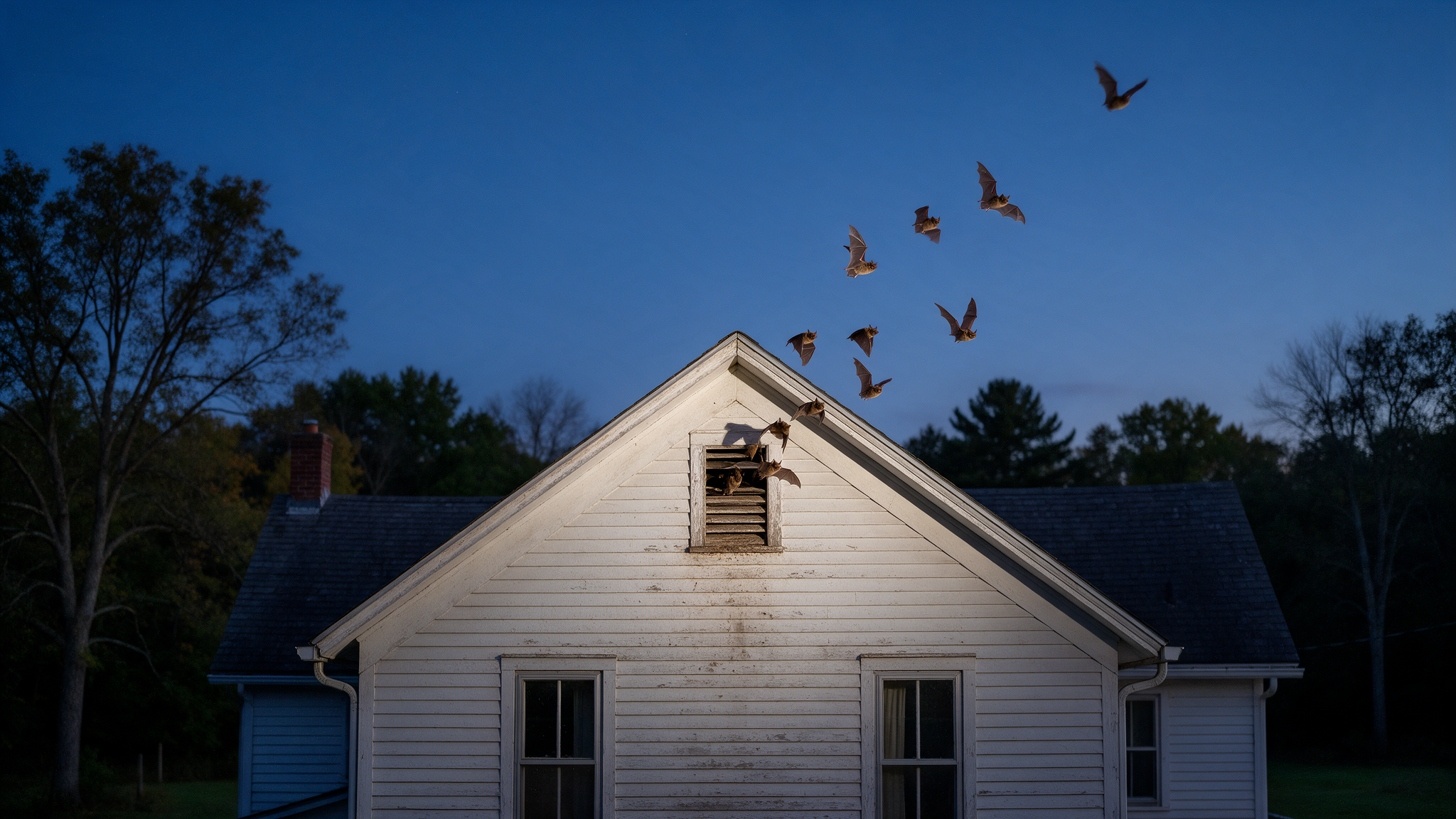
Visual confirmation is usually best done at twilight, when you can sit outside and watch rooflines or gable vents for small shapes dropping out and flying off to feed. This single observation often tells homeowners more than hours of attic inspection, since it confirms both that bats are present and roughly where they’re entering. Keep in mind that a few bats seen in one evening can represent a much larger colony, since not every bat leaves to feed at the same time or on the same night.
What Not to Do the Moment You Find Them
The instinct to seal up the gap you just found is understandable, but it’s one of the most common mistakes homeowners make. Closing an entry point while bats are still inside traps them in your living space, which often leads to bats finding their way into bedrooms or hallways as they search for another way out. It can also leave animals to die inside wall cavities or attic insulation, creating odor and pest problems that are far worse than the original issue.
It’s just as important to resist handling bats directly, even dead ones, without gloves and proper precautions, since there’s a small but real risk of disease transmission. Many states, including Missouri, also protect bats under wildlife law, meaning it’s not simply a matter of removing a nuisance animal however you see fit. According to the Missouri Department of Conservation, all bats are protected under the state’s wildlife code, and several species that commonly roost in attics are listed as species of conservation concern or state endangered. That protection shapes both the timing and method of any removal, which is why DIY pest sprays or improperly timed sealing attempts can actually violate state rules.
Safe First Steps Before You Call in Exclusion Help
Once you suspect bats, document what you’re seeing. Photograph droppings, note the times of activity, and mark on a simple sketch of your roofline where you think bats are entering and exiting. This information speeds up an inspection significantly and helps a professional confirm species and colony size faster. If you’re also in the middle of a larger renovation, the same instinct for spotting hidden problems applies elsewhere in the house, and tools like thermal imaging can reveal moisture or insulation gaps that overlap with the same areas bats prefer, as explored in buying a fixer.
Avoid spending extended time in the attic itself, particularly if there’s visible guano accumulation, since inhaling disturbed spores can cause histoplasmosis, a lung infection with flu-like symptoms. Keep pets and kids away from the space, ventilate if you must enter briefly, and wear an N95 mask at minimum. Proper exclusion involves one-way devices that let bats leave but not return, and reputable guidance recommends waiting two to three days after those devices go up before sealing anything permanently, ensuring every bat has actually exited the structure.
Detail Figure Bat species found in Missouri Roughly fifteen, several known to roost in attics and buildings Species of conservation concern Nine, with three classified as state endangered Minimum entry gap size About half an inch wide Recommended wait after exclusion devices installed Two to three days before sealing Primary health risk from attic guano Histoplasmosis, a flu-like lung infection
Timing Exclusion Around Maternity Season
Timing matters as much as technique. In late spring and summer, female bats gather in maternity colonies and give birth to pups that cannot fly for several weeks. If exclusion devices go up while those pups are still flightless, the adults leave and the young are trapped inside, which is both a welfare problem and, in states that protect bats, a legal one. Wildlife agencies, including Missouri’s, advise against excluding a colony while young bats are still unable to fly, so the work is usually planned for late summer or fall.
Cold weather brings its own limits. Some species spend the winter in buildings, while others leave for caves or migrate south, so an attic that looks empty in January may fill again in spring. A professional inspection can confirm which situation applies before anyone seals a gap. The practical point is that bat work runs on a calendar, and building that calendar into a renovation schedule avoids weeks of delay later.

Cleaning Up Guano and Repairing the Attic
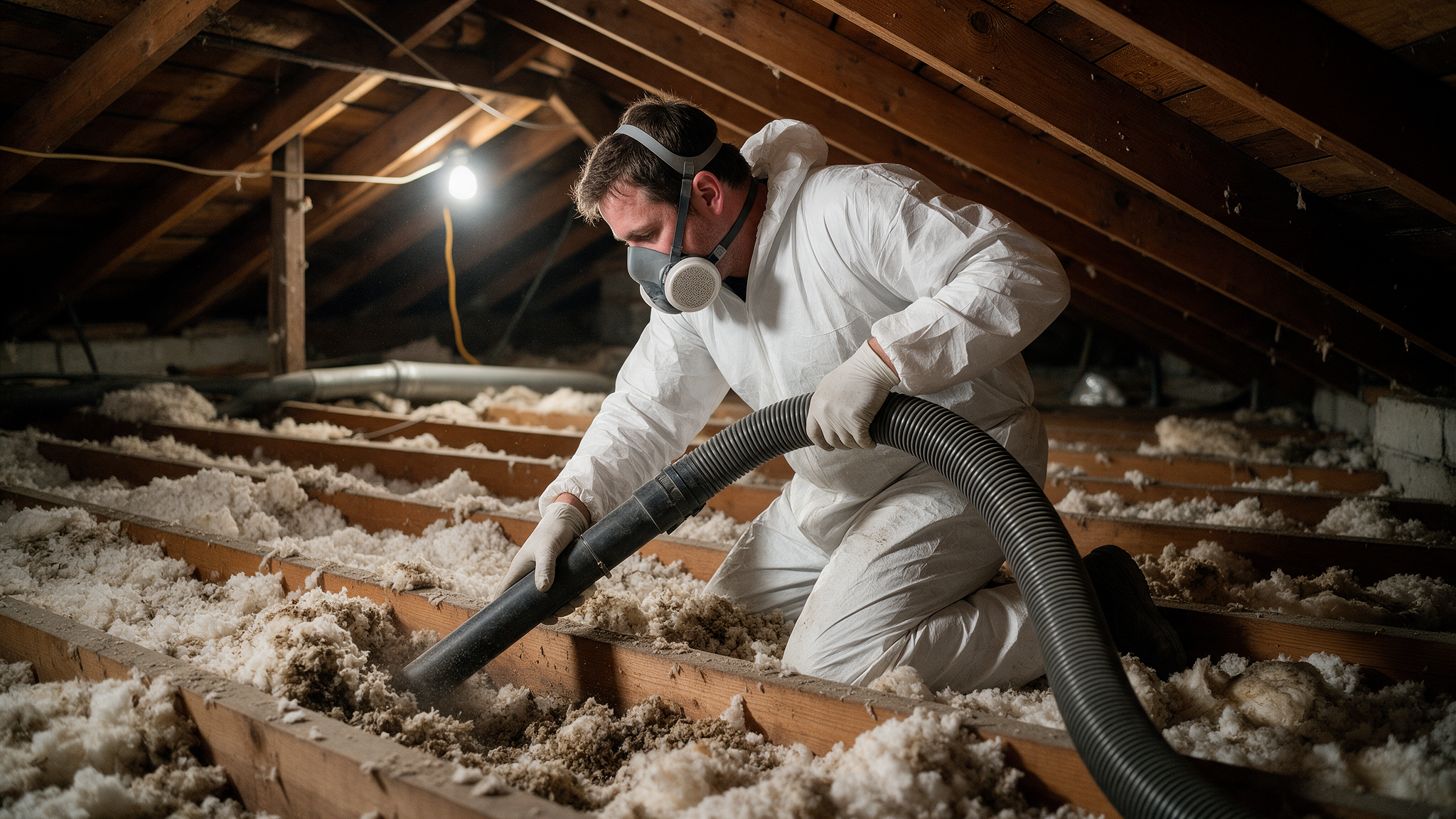
Once the bats are gone and the entry points are sealed, the cleanup can begin. Guano and urine soak into insulation, stain drywall and wood, and keep producing odor long after the colony leaves. In most cases, contaminated insulation has to be removed and replaced rather than cleaned. Light droppings on hard surfaces can be dampened with a disinfectant solution before wiping, which keeps dust out of the air, but sweeping or vacuuming dry guano with a household vacuum spreads spores through the house.
Large accumulations are a job for a remediation crew with respirators, HEPA vacuums and protective suits. After cleanup, check rafters, sheathing and ceiling joists for moisture damage, and look at the ceilings below for staining. Replacing insulation is also a good time to air-seal the attic floor, which cuts energy losses and closes the small gaps that let attic air and odors reach the living space.
Bat-Proofing the Roofline for the Long Term
Permanent exclusion comes down to closing every opening larger than about a quarter inch once the bats are out. Common trouble spots include gaps where the fascia meets the roof deck, loose ridge vent caps, unscreened gable and soffit vents, chimney flashing and the joints where siding meets trim. Durable materials hold up best: galvanized hardware cloth or fine mesh behind vents, metal flashing over larger gaps, and exterior-grade sealant or expanding foam for small cracks.
Bats return to the same roost year after year, so a single missed gap often brings them back. Walk the roofline once a year, ideally in late winter before bats return, and look for new gaps from settling, storm damage or aging caulk. Some homeowners also mount a bat house on a pole or the side of an outbuilding, which gives the colony somewhere else to roost while keeping its insect-control benefits nearby.
Handled correctly, a bat colony in the attic is a manageable home maintenance issue rather than a crisis. The key is slowing down enough to confirm what you’re dealing with, avoiding the urge to seal things up prematurely, and treating the roost with the same careful, methodical approach you’d bring to any other structural repair on the property.