Get the week's most popular posts delivered to your inbox.
Our weekly update is free yet priceless and you're less than a minute away from getting the current edition.
In the unlikely event we disappoint, you can unsubscribe with a single click!
Relax... we hate SPAM even more than you do.
There is a plant sitting in gardens all over tropical and subtropical Australia that most people walk straight past. It looks a bit like a succulent, smells powerfully of oregano and thyme, strikes from a cutting stuck in a glass of water, and has been used as food and medicine across Africa, India, the Caribbean, and Southeast Asia for several hundred years.
That plant is Plectranthus amboinicus, known variously as Mother of Herbs, Indian Borage, Cuban Oregano, Mexican Mint, Country Borage, and a dozen other names depending on which part of the world you happen to be in. If you are growing it in Australia, as many subtropical and tropical gardeners quietly do, you are in good company.
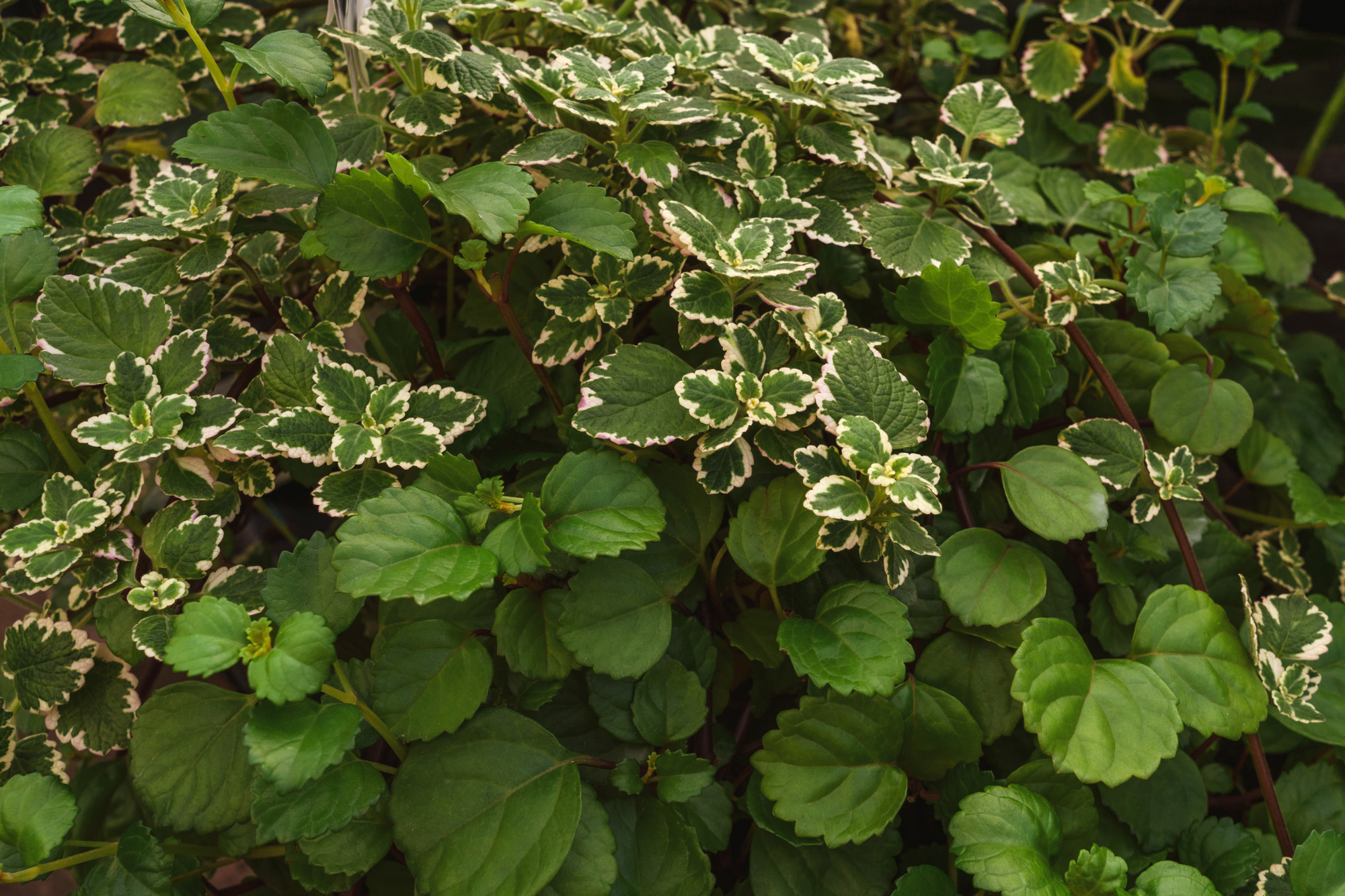
A lovely example of the two variations of Plectranthus amboinicus offest each other.
This post covers everything: what the plant actually is, where it comes from, the difference between the plain and variegated forms, how to grow it in Australia, how to cook with it, its deep history in traditional medicine, and what modern research has found when it examined those traditional claims. There is also a recipe. Read on.
The first thing to know is that the taxonomy has shifted. You will find this plant listed under two main scientific names, sometimes on the same nursery tag. For most of the 20th century it was widely known as Plectranthus amboinicus. The currently accepted name, as recognised by Kew Science’s Plants of the World Online (POWO), is Coleus amboinicus Lour., first published by the Portuguese botanist João de Loureiro in 1790.
Both names refer to the same plant. You will also encounter older synonyms such as Coleus aromaticus and Majana amboinica. For practical purposes, use whichever name your nursery or seed supplier uses, and know they are all the same species. The family is Lamiaceae, the mint family, which explains a lot about the plant’s aromatic character.
The species epithet amboinicus refers to Ambon Island in the Maluku Islands of Indonesia. The Dutch botanist Georg Eberhard Rumphius encountered the plant there in the 1600s and recorded it in his celebrated work Herbarium Amboinense. This is one reason the plant’s true geographic origin was confused for a long time.
A plant with many names
The sheer number of common names reflects how widely this herb travelled and how many cultures adopted it. Here are the main ones you will encounter:
Mother of Herbs (widely used in Australia and the Pacific)
Indian Borage
Cuban Oregano
Mexican Mint
Country Borage
French Thyme
Spanish Thyme
Broad Leaf Thyme
Soup Mint
Allspice (used in Queensland official species records, though this common name is more commonly associated with Pimenta dioica)
Where Does It Actually Come From?
Despite the name “Cuban Oregano” and the confusion around Ambon Island, the plant is not native to Cuba, Indonesia, or Australia. The authoritative record from Kew Science’s POWO database is unambiguous: the native range is eastern and southern Africa (Angola, Burundi, Eswatini, Kenya, KwaZulu-Natal in South Africa, Mozambique, Tanzania) and the Arabian Peninsula extending into India.
You will find articles stating that it is an Australian native. Plectranthus amboinicus is not. It’s been widely cultivated and has naturalised in many warm, humid parts of the world, including parts of Australia, but it did not originate here. There are genuine Australian native species within the Plectranthus genus, including Plectranthus laxus and Plectranthus wallamanensis from tropical Queensland, but this herb is not among them.
So how did an African-Arabian plant end up in so many Australian gardens? The same way it reached Cuba, the Philippines, Thailand, Vietnam, Fiji, and dozens of other countries: human movement. Spanish and Portuguese traders and explorers carried cuttings throughout their global trading networks from at least the 16th century. The plant thrived wherever tropical or subtropical conditions could sustain it, and it stuck.
In brief: Plectranthus amboinicus is native to East and South Africa, the Arabian Peninsula, and India. It is introduced and naturalised across much of tropical Asia, the Caribbean, and the Pacific, including parts of Australia. It is not an Australian native.
Two Forms, One Plant: Plain and Variegated
The plain (non-variegated) form
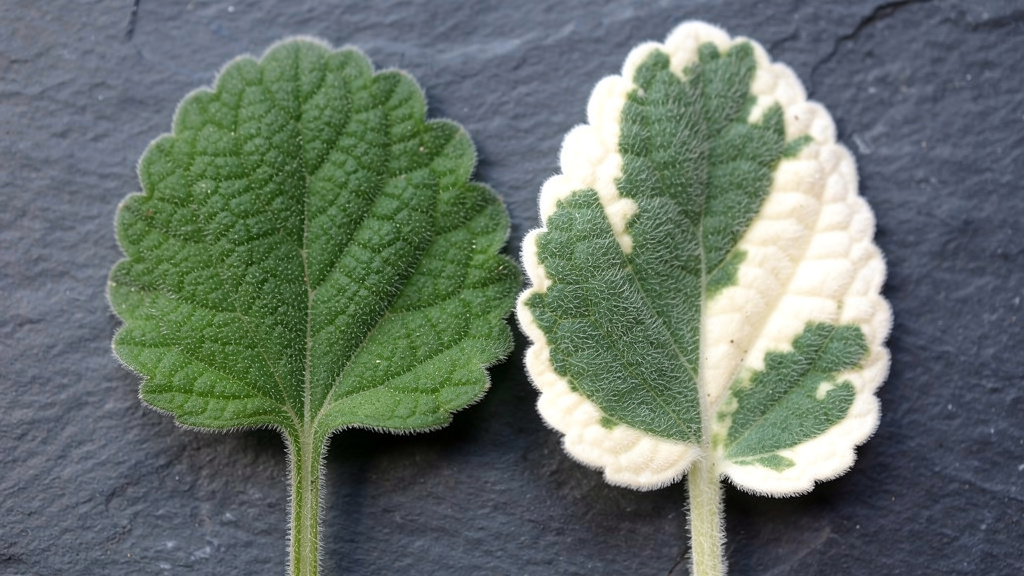
The standard form has uniformly mid-green, fleshy, somewhat succulent leaves with a soft texture and a slightly serrated margin. The leaves are ovate, typically 5 to 7 cm long by 4 to 6 cm wide, and covered with fine hairs that give the surface a slightly woolly or velvety feel. The stems are also fleshy and become woody towards the base as the plant matures.
The scent is striking. Crush a leaf and you get a complex, pungent combination that hits somewhere between oregano, thyme, and camphor, with a faint turpentine note underneath. It is stronger than Mediterranean oregano, and a single crushed leaf in a small space is hard to miss.
Flowers, when they appear, are small, pale purplish-blue, arranged in dense spike-like racemes. The plant is not primarily grown for its flowers, but they are attractive and will draw bees and other pollinators.
The variegated form (‘Variegatus’ / ‘Variegata’)
The variegated cultivar carries the same fleshy, aromatic leaf, but with irregular creamy-white to pale yellow margins and sometimes splashes or streaks of cream through the leaf body. The effect is very ornamental. Where the plain form reads as a groundcover herb, the variegated form draws the eye and works well in pots, borders, and as a contrasting element in a mixed planting.
The culinary and medicinal properties of the variegated form are the same as the plain form. The practical difference is that the variegation becomes less pronounced if the plant is over-fertilised, so go easy on the nitrogen and let the leaf pattern express itself naturally. Both forms grow to roughly the same size, 50 to 100 cm tall and spreading well beyond that, and both are equally easy to propagate.
The variegated version makes for an attractive feature but is slower growing than the non-variegated version.
Growing Mother of Herbs in Australia
If you are already growing it, you likely know most of this. But it is worth being specific about what makes this plant so well-suited to warm Australian gardens.
Climate and position
Mother of Herbs is a tropical and subtropical plant. It thrives outdoors in Queensland, coastal New South Wales, the Northern Territory, and warm parts of Western Australia and Victoria. In cooler climates, particularly areas that experience frost, it needs protection in winter. A pot that can be brought under cover, a frost cloth, or a sheltered north-facing microclimate will usually suffice.
It handles both full sun and part shade. In humid tropical conditions, full sun suits it well. In drier or hotter inland areas, afternoon shade extends the growing season and keeps the leaves from drying out. Given that its native habitat spans seasonally dry tropical environments in Africa and India, it has a solid tolerance for dry spells once established, though it appreciates regular watering.
Soil
Well-drained soil is the non-negotiable. This plant is semi-succulent, meaning it stores moisture in its stems and leaves, and it will rot at the roots if kept in wet, compacted ground. Light, fertile, loamy soil with a pH around 6.0 to 6.5 is ideal. It grows well in raised beds, in-ground beds with good drainage, and in containers.
Avoid heavy clay unless you have significantly amended it. A mix of compost, garden soil, and some coarse sand or perlite works well for pot culture. Terracotta pots are particularly good for this plant because they allow the soil to breathe and dry between waterings.
Propagation from cuttings
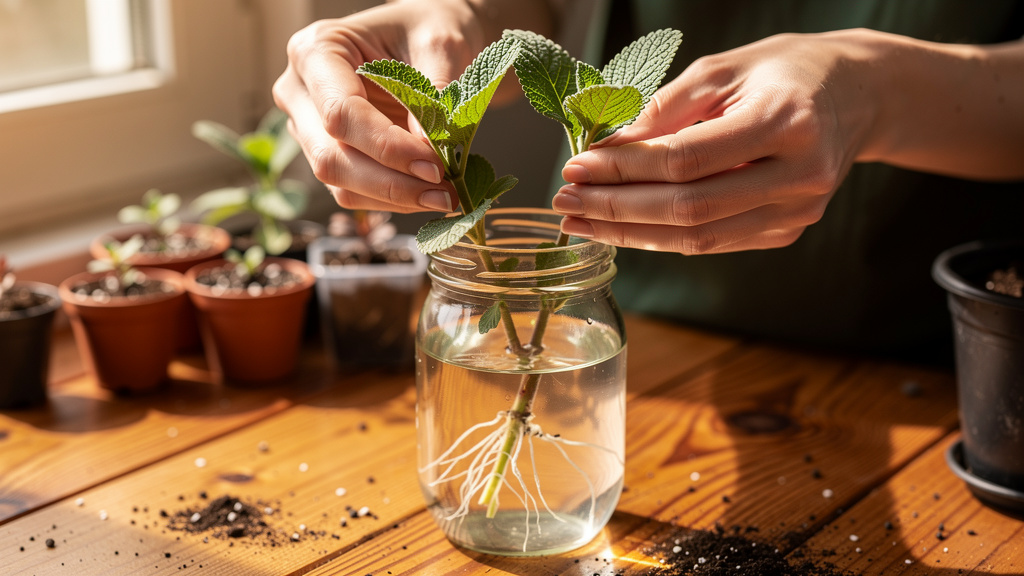
This plant strikes easily and reliably from cuttings. Take a stem 10 to 15 cm long, strip the lower leaves, and place it in a glass of water or push it directly into moist propagating mix. Roots typically appear within two to three weeks in warm conditions.
Water-rooting works particularly well with this plant. You can watch the roots develop, and cuttings started in early spring, when the weather begins to warm, tend to establish quickest. Once rooted, pot up into well-drained mix and harden off in a sheltered position before moving to the final spot.
Plectranthus amboinicus (Mother of Herbs) stem cuttings root very easily in water.
Feeding and maintenance
This is not a heavy feeder. A moderate application of a balanced organic fertiliser in spring and summer is sufficient. If you are growing the variegated form and want to maintain strong leaf colour, avoid high-nitrogen feeds, which push leafy growth at the expense of the cream margins.
The plant benefits from light pruning to maintain a compact shape and encourage fresh growth from the base. Left completely unpruned it can become leggy and sprawling, which is not necessarily a problem in a groundcover application but can look untidy in a formal garden bed.
In the Kitchen: Cooking with Mother of Herbs
Here is where this plant earns its keep beyond the garden. It has a strong, complex flavour that combines oregano, thyme, and a sharp mint undertone, with a slight camphor edge that cooks off during heating. It is considerably more intense than Mediterranean oregano, which means you use less of it. A general rule: use about half the quantity you would of dried oregano, and adjust from there.
Fresh leaves are the preferred form. They can also be dried or frozen, though some of the more volatile aromatic compounds dissipate with drying, so fresh is always better for flavour. Whole leaves can be added to slow-cooked dishes and removed before serving, or chopped finely and incorporated directly.
Where it is used around the world
In the Caribbean, particularly in Puerto Rico and Cuba, the herb is a component of sofrito, the aromatic base used in countless dishes, and it appears in jerk seasonings, bean dishes, and salsas. In India and Sri Lanka, leaves are used in lentil soups (rasam), chutneys, and battered and fried as pakodas. In Southeast Asia, particularly Thailand, Vietnam, and the Philippines, it is used to mask the strong odours of fish, mutton, and goat, and to season soups.
In parts of Africa, which is of course its original home, the herb seasons stews and is used in traditional preparations where its antimicrobial properties may have contributed to food preservation along with flavour.
Across all of these traditions, the common thread is using the herb to complement robust, assertive proteins and to add aromatic complexity to slow-cooked dishes.
Using it in the Australian kitchen
In a practical Australian kitchen, treat Mother of Herbs as an assertive herb somewhere between oregano and thyme, with its own distinctive character. It works with lamb, chicken, pork, fish, and strongly flavoured vegetable dishes. It is excellent in slow-cooked braises, marinades, and herb butters. Try it fresh in a salsa verde style sauce, or blanch and blitz a few leaves into a green herb oil.
A word of caution: a little goes a long way. Start conservatively and taste as you go. The camphor note, which is pleasant in small quantities, can dominate if you overdo it. Once you find your balance, it is a terrifically useful herb with a flavour profile that Mediterranean oregano simply cannot replicate.
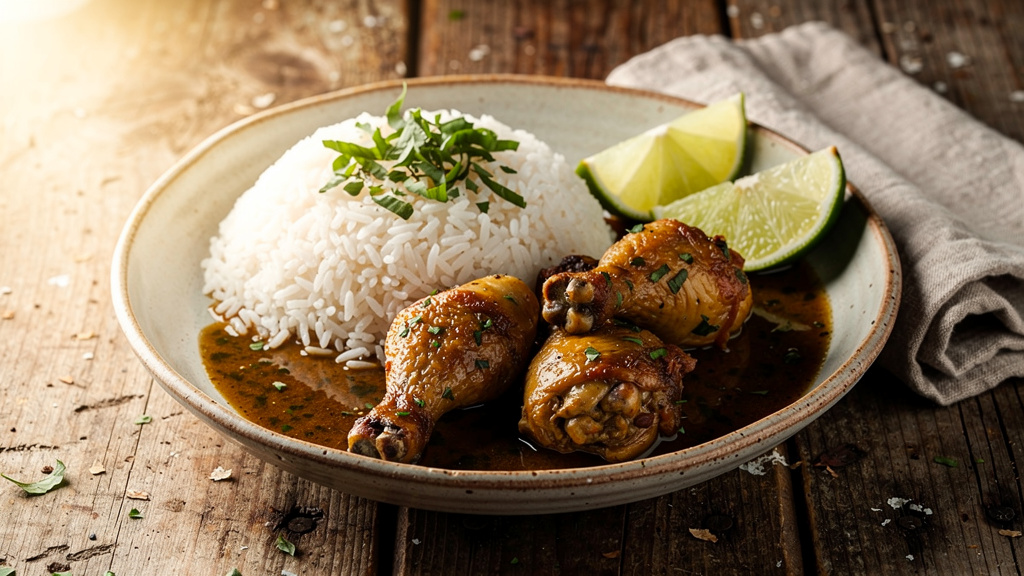
Recipe: Caribbean-Style Braised Chicken with Mother of Herbs
This recipe is rooted in Caribbean and Latin American cooking traditions where ‘Cuban oregano’ has been used for centuries. The herb’s pungent, resinous qualities work beautifully with slow-braised chicken, cutting through the richness and lending a distinctive aromatic depth that no other herb quite replicates.
Serves 4 to 6. Preparation time: 20 minutes plus at least 2 hours marinating. Cooking time: approximately 1 hour 15 minutes.
Ingredients
1.5 kg chicken pieces (bone-in thighs and drumsticks work best)
8 to 10 fresh Mother of Herbs leaves, finely chopped (roughly 2 tablespoons chopped)
4 cloves garlic, crushed
1 large brown onion, roughly chopped
Juice of 2 limes (about 60 ml)
Juice of 1 orange (about 80 ml)
2 tablespoons olive oil
1 teaspoon ground cumin
1 teaspoon smoked paprika
1/2 teaspoon ground black pepper
1 teaspoon sea salt
1 long red chilli, deseeded and finely chopped (optional, adjust to taste)
4 cloves garlic, sliced
2 ripe tomatoes, roughly chopped (or 1 x 400 g tin crushed tomatoes)
250 ml chicken stock
4 to 5 fresh Mother of Herbs leaves, left whole
1 bay leaf
Salt and pepper to taste
Steamed white rice or crusty bread
Fresh lime wedges
A small handful of fresh Mother of Herbs leaves, finely chopped, as a garnish
Method
Step 1: Make the marinade
Combine all marinade ingredients in a large bowl or zip-lock bag. Add the chicken pieces and turn well to coat. Cover and refrigerate for at least 2 hours, preferably overnight. The citrus and herbs will begin to penetrate the meat, and the marinade will turn an appealing golden-green from the herb oils.
Step 2: Brown the chicken
Remove the chicken from the marinade and pat the pieces dry with paper towel. Reserve the marinade liquid. Heat 2 tablespoons of olive oil in a heavy-based, oven-safe casserole or Dutch oven over medium-high heat. Brown the chicken pieces in batches, skin-side down first, for 3 to 4 minutes per side until deeply golden. Set aside.
Step 3: Build the braise
Reduce heat to medium. In the same pot, soften the diced onion for 5 minutes, scraping up any brown bits from the base. Add the sliced garlic and cook for another minute. Add the tomatoes and cook, stirring, for 3 to 4 minutes until they break down. Pour in the reserved marinade liquid and the chicken stock. Add the whole Mother of Herbs leaves and the bay leaf.
Step 4: Braise
Return the chicken pieces to the pot, nestling them into the sauce. Bring to a gentle simmer, then cover and cook over low heat for 45 to 55 minutes, turning the chicken once halfway through, until the meat is fall-off-the-bone tender and cooked through. Remove the lid for the final 10 minutes to reduce and concentrate the sauce.
Step 5: Finish and serve
Fish out the whole Mother of Herbs leaves and the bay leaf before serving. Taste and adjust seasoning. Serve the chicken over steamed white rice, spooning the pan sauce generously over the top. Finish with a scatter of freshly chopped Mother of Herbs leaves and lime wedges on the side. The fresh herb garnish brings the aromatic quality back to the foreground after the slow cooking rounds it out.
Cook’s notes: The whole leaves added during braising impart fragrance without the intensity of the chopped herb in the marinade. If you find the camphor note too pronounced, reduce the chopped herb in the marinade to 1 tablespoon on your first attempt. The dish is excellent reheated the next day, as the flavours continue to develop.Caribbean-Style Braised Chicken with Mother of Herbs
A Long History as a Healer: Traditional Medicinal Uses
The medicinal use of Plectranthus amboinicus reaches back centuries across multiple continents and cultures. In Ayurvedic medicine, one of the world’s oldest medical traditions, the plant has been used as an expectorant, anti-inflammatory agent, fever reducer, and diuretic. In African traditional medicine, it has been applied both internally and externally for a wide range of conditions. In Caribbean and Latin American folk medicine, it was one of the herbs that Spanish and Portuguese colonisers encountered and adopted, overlaying it with their own European herbal traditions.
These are not fringe or obscure applications. In many of these cultures, this herb was as fundamental a household remedy as paracetamol is in a modern medicine cabinet. The depth and consistency of these traditions across unconnected cultures is one of the reasons pharmacological researchers became interested in examining them systematically.
Respiratory conditions
The most consistent traditional use, across Ayurvedic, African, Caribbean, and Southeast Asian traditions, is for respiratory complaints. Leaves or leaf decoctions were used for coughs, bronchitis, asthma, and general congestion. In some traditions, the fresh leaf juice was taken directly; in others, a tea was made from fresh or dried leaves and sometimes combined with honey and ginger.
The pharmacological plausibility here is not hard to see: the essential oil is rich in carvacrol and thymol, both well-documented antimicrobial and expectorant compounds also found in thyme and oregano, herbs with a long history of use in respiratory medicine.
Digestive complaints
Indigestion, flatulence, diarrhoea, and general dyspepsia are widely recorded uses across multiple traditions. The plant was used as a digestive tonic, often taken as a simple tea after meals. Research has shown the plant stimulates the growth of beneficial Lactobacillus plantarum bacteria, which offers a plausible mechanism for its traditional reputation as a digestive aid.
Fevers and infections
Leaf decoctions were used as antipyretics (fever reducers) in African, Indian, and Caribbean traditions. In parts of Africa, the leaves were also applied as a poultice to infected wounds, burns, and skin sores, a use consistent with the documented antimicrobial activity of the essential oil.
External applications
Beyond wound care, the plant has been applied externally for headaches (leaves placed on the forehead), insect bites and stings (leaves rubbed on the affected area), and skin inflammations and allergies. The fleshy, cooling leaves offer some physical relief in the case of bites and stings, and the antimicrobial constituents likely provided real benefit in wound applications.
Reproductive and urinary health
In some traditions, particularly across parts of Africa and India, the plant was used to address menstrual pain, assist with labour, and support postpartum recovery. It has also been used for urinary and kidney complaints. These are less universally attested than the respiratory and digestive uses, and are areas where the research is still at an early stage.
What Modern Research Has Found
Pharmacological research into Plectranthus amboinicus has accelerated since the 1990s and is now reasonably substantial. A 2024 comprehensive review published in PubMed (under the heading Coleus amboinicus) surveyed the traditional uses, phytochemistry, and pharmacological activities of the plant. Here is a summary of what the science shows.
Note: most of this research is at the laboratory and animal-study stage. Where human clinical trials exist, they are limited in scope. “Research suggests” or “studies indicate” in the following sections means exactly that, and should not be read as proof of clinical efficacy in humans. See the disclaimer below.
Phytochemistry: what is in the plant
The essential oil of Mother of Herbs is chemically complex. Key constituents include:
Carvacrol (approximately 23 to 28%) – also the dominant active compound in thyme and oregano, with well-documented antimicrobial and anti-inflammatory properties
Thymol (up to 21%) – another well-studied antimicrobial and antiseptic compound
Camphor (around 22%) – responsible in part for the slightly medicinal quality of the plant’s scent
Gamma-terpinene, p-cymene, and alpha-humulene – additional terpene compounds with biological activity
Beyond the essential oil, the plant contains flavonoids including apigenin, luteolin, and salvigenin, as well as phenols, tannins, glycosides, and steroids. This is a chemically rich plant by any measure.
Antimicrobial activity
This is one of the best-documented areas. The essential oil shows significant activity against Gram-positive bacteria, particularly Staphylococcus aureus, and against common fungal pathogens including Aspergillus niger and Candida albicans. This aligns directly with the traditional use of leaf poultices for wound infections. Laboratory studies have also indicated antiviral activity against Herpes simplex-1, and some anti-HIV activity has been reported, though the latter requires considerable further investigation.
Anti-inflammatory activity
Extracts of the plant have been shown to inhibit inflammation in laboratory models, with some studies suggesting efficacy comparable to standard anti-inflammatory reference drugs. The mechanisms appear to involve inhibition of protein denaturation, among other pathways. This supports the traditional use for inflammatory conditions including joint pain and skin inflammations.
Antidiabetic activity
Ethanol extracts of the leaves have been tested in diabetic animal models and shown to reduce blood glucose levels and improve pancreatic function. This is an area of active interest given the global burden of type 2 diabetes, though the translation from animal studies to human clinical benefit requires much more investigation.
Respiratory and antitussive activity
Laboratory and animal studies have confirmed bronchodilator and antitussive (cough-suppressing) properties, lending pharmacological credibility to arguably the most widespread traditional use. Anti-tuberculosis activity has also been documented in vitro, which is of significant research interest given the global public health burden of TB.
Other documented activities
The research literature also documents:
Anxiolytic activity (alcoholic extracts showed anti-anxiety effects in animal models comparable to diazepam)
Wound healing support (combining antimicrobial, anti-inflammatory, and immunostimulant properties, plus a zinc content that contributes to healing)
Antiplatelet activity (inhibits platelet aggregation, relevant to cardiovascular health)
Antineoplastic activity in vitro (essential oil showed effects against melanoma cell lines in laboratory testing)
Antiurolithiatic effects (reduced calcium oxalate crystal formation in kidney stone models)
Safety considerations
The available literature indicates a favourable safety profile for culinary use, with no serious adverse effects documented from normal food-quantity consumption. Some individuals report a burning sensation in the mouth or throat from fresh leaf juice consumed in quantity. The plant is listed as toxic to cats, dogs, and horses, which is worth knowing if you have animals that might graze in your garden.
MEDICAL DISCLAIMER: The traditional and pharmacological information in this post is provided for educational and informational purposes only. It does not constitute medical advice, and it should not be used as a basis for self-diagnosis or self-treatment. Most of the pharmacological research summarised here is from laboratory studies and animal models; it has not been replicated in large-scale human clinical trials, and the findings should not be interpreted as proof of clinical efficacy or safety in humans. If you have a health condition, are pregnant or breastfeeding, are taking prescription medications, or are considering using any plant-based preparation as a treatment, consult a qualified medical professional before doing so. Culinary use of Mother of Herbs as a herb or seasoning in normal food quantities is generally regarded as safe for most healthy adults. This plant is known to be toxic to cats, dogs, and horses; keep that in mind if you have animals that access your garden.
More Than a Herb: Habitat Value in the Garden
One of the most underappreciated qualities of Mother of Herbs is what it does for the garden ecosystem beyond its culinary and ornamental roles. The plant’s dense, low-growing coverage creates genuine refuge habitat for small animals.
Shelter for garden reptiles
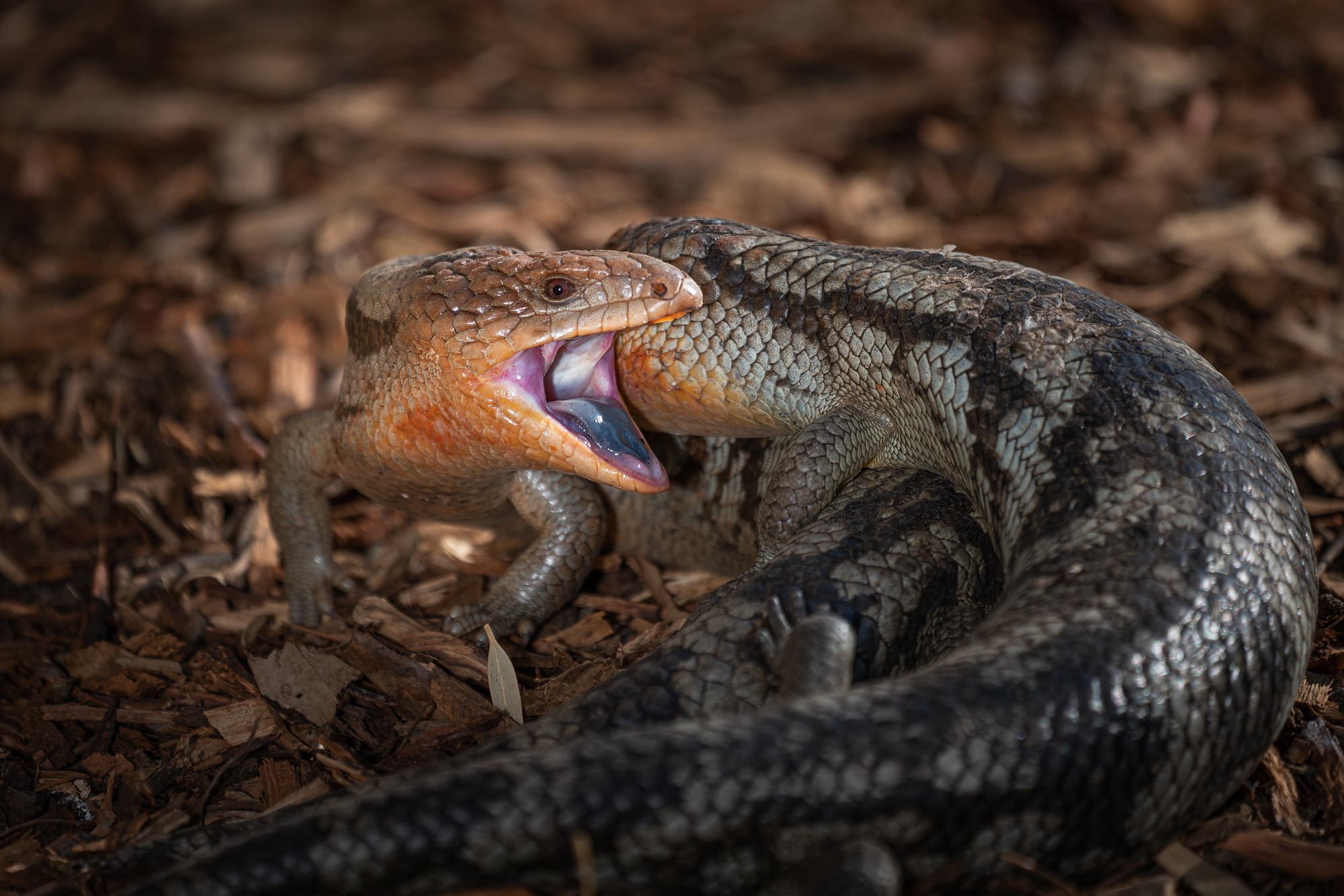
Blue-tongue lizards, skinks, and other small reptiles are frequently found sheltering under and within the dense foliage of established Mother of Herbs plantings. The thick leaves create a cool, shaded microclimate that these ectotherms seek during the heat of the day. The stems and leaf litter beneath a spreading clump offer hiding spots from predators, and the garden insects that accumulate in such plantings provide a food source.
Encouraging reptiles in a subtropical garden is actively beneficial. Blue-tongue lizards eat snails, slugs, and a range of garden pests. Skinks provide similar pest control services at a smaller scale. A patch of Mother of Herbs that looks untidy at its edges is, from the ecosystem’s point of view, functioning exactly as it should.
Two male Blue-Tongue Lizards (skinks) arguing about who get’s the lady!
Amphibian habitat
The possibility of frogs using the planting is not far-fetched, particularly in humid subtropical areas. Ground-level plantings that retain some moisture, create shaded coverage, and accumulate leaf litter can provide suitable daytime refuge for ground-dwelling frog species such as the striped marsh frog or the leaf green tree frog, depending on your region. Frogs are excellent insect controllers and are under significant pressure from habitat loss in urban and suburban areas. Any garden feature that provides functional habitat for them is worth keeping.
Pollinator support
When Mother of Herbs flowers, which it will do regularly in the right conditions, the small blue-purple flowers are attractive to bees and other pollinators. This is a minor but very beneficial contribution to garden biodiversity, particularly in dense suburban areas where forage opportunities for native bees are limited.
A note on growth habit and management
The plant can spread vigorously in warm, wet conditions and has been noted as having weed potential in some Pacific Island environments where it has naturalised aggressively. In Australian cultivation, particularly in Queensland and subtropical New South Wales, it is worth managing your planting to prevent it spreading into bush land edges. In a contained garden bed, this is a non-issue. Just be mindful of where the edges of the planting are and remove any runners that head toward natural areas.
Common Questions
Is Mother of Herbs the same as normal oregano?
No. Despite the name “Cuban Oregano,” it is not closely related to Mediterranean oregano (Origanum vulgare). It is in the same broader plant family (Lamiaceae) but is a different genus entirely. The flavour is similar in some respects but noticeably stronger, more complex, and with a camphor quality that genuine oregano does not have.
Can I use it as a direct substitute for oregano in recipes?
Yes, but use about half the quantity. The flavour is more intense and the camphor note can dominate if you use it at the same ratio. Start conservatively, taste, and adjust. It works best in slow-cooked dishes where the heat moderates the more volatile aromatic compounds.
Is it safe to eat fresh from the garden?
For most healthy adults, yes, in normal culinary quantities. The fresh leaf is edible and is consumed fresh in some traditional cuisines. Some people find concentrated fresh juice causes a burning sensation in the mouth or throat, so fresh-leaf teas or dishes using large quantities of raw leaf are worth approaching with some caution if you are trying it for the first time.
Will it survive a frost?
No. It is frost-tender. In areas with occasional light frosts, container growing with winter protection is the practical solution. A frost cloth draped over an in-ground plant for the worst nights can work, but repeated hard frosts will kill it.
What is the difference between the variegated and plain forms other than appearance?
Very little, in practical terms. Both have the same flavour, aroma, and cultural uses. The variegated form is more ornamental and requires moderate (not heavy) feeding to maintain its leaf colour. Some growers report the variegated form to be marginally slower-growing, but both are vigorous plants.
Is it invasive in Australia?
It has naturalised in parts of tropical Australia, and has been noted as invasive on some Pacific Islands. In a home garden context, it is manageable. The concern is primarily at the bush land interface: do not allow it to spread into native vegetation, and be aware that cuttings composted near natural areas can establish. Within a managed garden, it presents no significant problem.
Growing It, Knowing It
Mother of Herbs is one of those plants that rewards curiosity. It looks unremarkable at first glance, a spreading, vaguely succulent herb that smells powerfully when touched. But trace it back and you find a plant with roots in East African riverbanks and Indian herb gardens, a history of being passed hand to hand across trade routes for hundreds of years, a culinary tradition spanning a dozen countries, and a body of pharmacological research that is still growing.
If you are growing both the plain and variegated forms, you have a genuinely useful, ecologically interesting, and historically significant plant in your garden. Use the plain form hard in the kitchen. Let both forms spread to create that dense groundcover your lizards and frogs appreciate. Harvest regularly to keep growth fresh and vigorous. And if you have not yet tried the braised chicken recipe, that is a good place to start.
References:
Native range confirmed via Kew Science POWO database (powo.science.kew.org) – native to E/S Africa, Arabian Peninsula, India. Australia confirmed as NOT in native range.
Queensland DES species profile (apps.des.qld.gov.au) records P. amboinicus in Queensland, consistent with naturalised status.
Taxonomy: currently accepted name is Coleus amboinicus Lour. (Kew, 2024). Plectranthus amboinicus is an accepted synonym. Both names in current use in Australian nursery trade.
Pharmacological summary based on published peer-reviewed review literature (including 2024 PubMed review on Coleus amboinicus). Specific claims appropriately hedged.
The posts on this site sometimes contain an affiliate link or links to Amazon or other marketplaces. An affiliate link means that this business may earn advertising or referral fees if you make a purchase through those links.