
Hyundai’s MobED robot is moving beyond factories and into construction and renovation sites as a rugged, self-driving cart for tools and materials. Its Drive-and-Lift system keeps loads steady over slopes, curbs, and rough ground, while LiDAR and cameras help it navigate, avoid obstacles, and dock for charging with minimal oversight. With modular rails and open APIs, teams can add job-specific attachments like racks, sensor kits, or mobile work surfaces.
Contents
What Is Hyundai’s MobED Platform Robot?
Robotics is getting practical in a way it wasn’t a few years ago. Instead of buying a different robot for every task, you can start with a tough mobile base and build the “top half” around the job. Hyundai’s MobED is designed to be that kind of base.
An Autonomous Mobility Platform, Not a Single-Purpose Robot
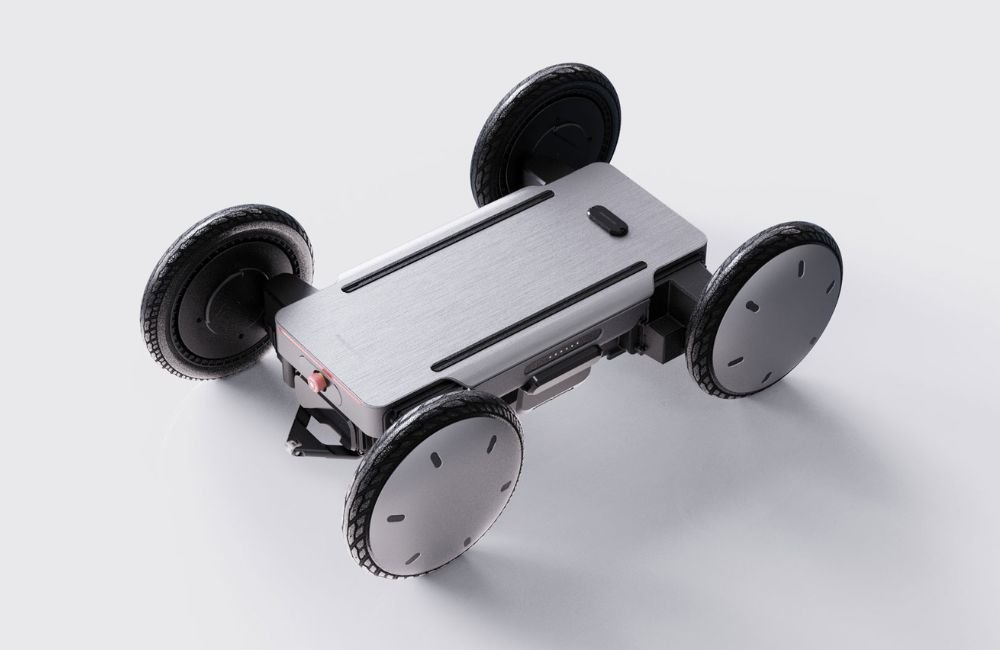
MobED (short for “Mobile Eccentric Droid”) is Hyundai Motor Group’s first mass-produced mobility robot platform. It debuted as a concept at CES 2022, and Hyundai later showed a production-ready version built for real environments. The key idea is modularity: it’s a low, stable wheeled platform you can fit with different modules or attachments, so the same robot can act like a powered cart, a moving tool station, or a sensor carrier depending on what you mount on top.
Hyundai frames MobED around three pillars:
- Adaptive Mobility (hardware that stays stable on uneven ground)
- Intuitive Autonomy (sensing and software for safe self-driving)
- Infinite Journey (a modular layer that supports many use cases over time, including mounting rails and APIs)
Adaptive Mobility: Drive-and-Lift (DnL) and Eccentric Control
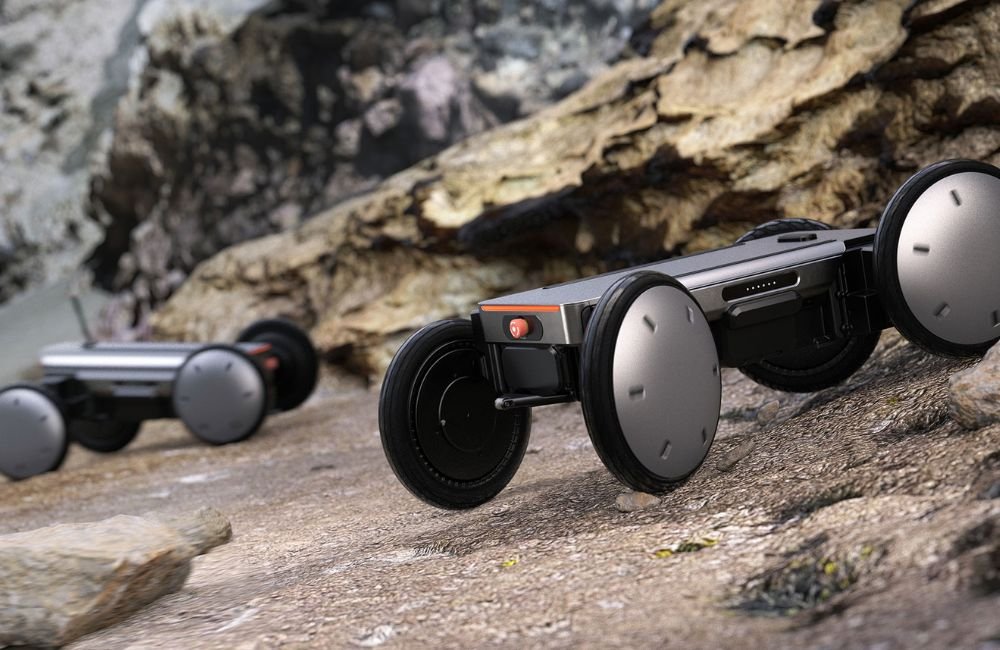
MobED’s stability comes from its Drive-and-Lift (DnL) modules and an eccentric posture-control mechanism. The wheel modules integrate driving, steering, braking, and posture control, which lets the platform adjust its stance and keep itself level as the surface changes. In plain terms, it’s built to handle slopes, bumps, and transitions while keeping whatever you’re carrying steadier than a basic wheeled cart.
Intuitive Autonomy: Sensors and Smart Navigation
On the autonomy side, Hyundai says MobED uses AI-based navigation with LiDAR and camera sensing to recognize obstacles and steer around them. It also uses a wide touchscreen controller with a 3D interface. This lets you map the navigational space of the robot platform and set its route. That combination matters for home builders or jobsite contractors where the “layout” can change hour to hour as people move, tools shift, and work areas get rearranged.
Two Configurations: MobED Pro and MobED Basic
Hyundai lists two main versions:
- MobED Pro: includes extra hardware for autonomy, including GNSS and sensor gear like LiDAR/radar/depth cameras for obstacle detection and avoidance.
- MobED Basic: focuses on the mobility hardware and modular interface, without autonomy built in, so teams can integrate their own control stack and attachments.
Looking Ahead: The Role of Platform Robots in Residential Construction
Residential builds keep getting tighter on time and heavier on coordination. Platform robots fit best in the parts of the job that are repetitive, physically demanding, or easy to track with data. MobED is a good example of where this could go.
From Single Helper to Coordinated Fleet
Right now, one platform robot might act like a powered cart or a rolling workbench. The bigger shift happens when there are several of them working as a team. One handles material runs, another keeps tools staged where crews actually need them, and a third circles the site capturing photos or checks.
When they’re tied into the same plan and schedule, you get fewer “where is it?” delays and less stop-and-start work. Scaling also gets simpler because you add units or change assignments instead of bringing in more specialty gear.
Tighter Integration With Scanning, Digital Twins, and AR
A lot of residential construction is drifting toward model-driven workflows, where the plan model becomes the reference point on site. A platform robot can turn into a moving data collector that helps keep that model honest.
Put cameras or a 3D scanner on the base and it can roll through, log progress, compare what’s built to what’s supposed to be there, then flag gaps before they turn into expensive rework. Pair that with AR and crews can see clearer placement cues for framing, services, and fixtures instead of guessing off tape marks and memory.
Automated Delivery Handoffs at the Curb
Deliveries are still messy on most jobs. Materials get dropped at the curb or driveway, then someone spends time hauling everything through tight access or half-finished spaces. A platform robot can cover that “last stretch” by shuttling loads to pre-set zones.
Lumber goes to the framing stack, tile lands near the bathrooms, fixtures end up in the right rooms. That speeds up setup, cuts clutter, and lowers the chance of injuries or damaged materials.
Defining the Smart Jobsite of the Future
People talk a lot about smart homes, but the smart jobsite is where the real efficiency gains show up first. Platform robots could become the moving link between tools, sensors, crews, and plans.
Instead of one-off machines that do one thing, builders use a small fleet of configurable bases that change roles as the project moves from framing to interiors to punch lists. Humans stay focused on decisions and finish quality, while robots handle the hauling, tracking, and routine checks that quietly eat up time every day.
Limitations, Safety, and Practical Constraints
Autonomous platforms can save a lot of time, but they still have hard limits. If you treat those limits as part of the plan, the robot stays helpful instead of turning into one more thing that slows the crew down.
Payload, Slope, and Environmental Limits
Every platform has a safe working range for weight, balance, and terrain. Hyundai lists MobED’s payload at up to 47 kg for the Pro and 57 kg for the Basic, which puts it in the sweet spot for tools, fasteners, and smaller material runs, not full pallets or heavy bundles.
The Drive-and-Lift system helps it stay level, but there’s still a slope limit that’s often cited around ±10°. Push past the rated load or incline and you’re asking the posture-control hardware to fight physics, which is when stability issues and wear show up fast.
Navigating Cluttered and Evolving Interiors
Homes under construction are messy by default. Cords, scraps, open boxes, and shifting stacks of materials can throw off navigation and can also trap a low, wheeled robot in ways a person would step over without thinking.
Even with LiDAR and cameras, very cluttered areas can cause slowdowns, reroutes, or hard stops. Tight hallways and finished surfaces add another layer because you have to think about turning space and scuff risk. MobED-style autonomy tends to work best on a “robot-ready” site where main paths are kept reasonably clear and staging areas don’t creep into walkways.
Maintenance, Connectivity, and Power Management
A platform robot isn’t a set-it-and-forget-it tool. Sensors need to stay clean and calibrated, moving modules need routine checks, and software updates are part of the deal. Connectivity can be a real constraint early in a build or on remote sites where the internet is spotty.
Battery planning matters too. If you’re working with a roughly four-hour runtime per charge, you either schedule charging windows like you would for cordless tools, or you rotate units so you don’t lose momentum during busy phases.
Regulatory, Insurance, and Safety Protocols
Even good obstacle avoidance doesn’t eliminate risk. People move unpredictably, and pets or kids can wander into a workspace in DIY settings. Clear rules help, like designated travel routes, speed limits in occupied zones, and a simple emergency stop plan everyone understands. Liability is the other piece that gets overlooked.
Insurance coverage may need to be updated for autonomous equipment, and local rules can matter if the robot has to cross a public sidewalk or shared driveway. Checking those details early is usually easier than dealing with them after something goes wrong.
Conclusion
Hyundai’s MobED platform robot is a good example of how autonomous mobility is starting to make sense outside factories, especially on building and renovation sites. It combines a stable base, smart navigation, and a modular design, so it works more like a dependable jobsite helper than a one-trick robot. When it takes care of routine transport, staging, and simple inspection runs, people can spend more time on fit, finish, and decisions that actually need human judgment. As attachments improve and crews get used to working alongside these platforms, robots like MobED will likely become a normal part of the residential construction and home project toolkit.
FAQ: Hyundai’s MobED platform robot
- How could MobED actually help on a residential jobsite day to day?
- MobED can move tools, fasteners, and light-to-medium materials between work zones, act as a rolling staging cart, and shuttle bins or debris back to a collection point. Once routes are mapped, it can repeat the same runs throughout the day, cutting down on manual hauling, fatigue, and the small delays that quietly drag schedules out.
- Is MobED strong enough to replace all my carts and small equipment?
- Not really, and that’s fine. With payloads in the tens of kilograms, it’s best for tools, boxed items, fixtures, and partial loads, not full pallets or heavy structural materials. Most sites will still rely on wheelbarrows, dollies, and forklifts. MobED is most useful where autonomy, steady movement, and repeatable routes save time.
- How difficult is it to set up MobED for a new house or remodel?
- Setup usually means mapping key paths and work zones using the touchscreen and 3D interface, then saving locations like “garage,” “kitchen,” or “tool area.” After that, you can reuse routes and routines, with quick tweaks as the site changes. It’s closer to setting up a robot vacuum map than learning a new piece of heavy equipment.
- Can MobED work safely around people, pets, and unfinished spaces?
- It’s built to detect obstacles and people using sensors like LiDAR and cameras, and it can slow down or reroute when something is in the way. Still, real safety comes from good habits on site, like keeping travel paths clear, setting basic operating zones, and making sure nobody treats it like a ride-on cart. In messy, crowded, or constantly changing areas, supervised or manual operation makes more sense.
- What kind of maintenance and support does a platform robot typically require?
- Plan on routine checks of wheels and moving modules, tightening fasteners, and keeping sensors clean and calibrated. Battery care matters too, along with maintaining the charger and planning recharge windows. Software updates are part of ownership since they can improve navigation and safety. Most people will treat it like a high-value tool that needs logged, scheduled upkeep, not something you ignore until it fails.