
A small living room doesn’t have to feel cramped. The right layout and furniture choices can make even a tight space comfortable and visually open. In this guide, you’ll learn how to plan your room layout, choose furniture that fits the scale, and arrange pieces to maximize both function and flow.
Contents
Key Takeaways
- Put layout first so clear paths, one focal point, and scaled pieces make a small living room feel bigger.
- Measure and plan to scale because every inch you save turns into breathing room.
- Float and orient furniture to open sightlines and carve simple zones that fit daily life.
- Choose slim, raised pieces and leave negative space so the room looks lighter and stays easy to use.
Why Layout Matters in a Small Living Room
Layout is the quiet lever that controls how your room feels and works. In a compact space, one inch decides whether you glide through the room or clip a corner every time you sit down. Where you place the sofa changes how much light reaches the floor. Where you set the coffee table affects conversation and comfort. Decor cannot rescue a plan that ignores movement, sightlines, and scale.
Think of layout as your capacity builder. Map the paths first, then anchor the room with a single focal point, and only then bring in furniture that fits the plan. Use simple tests to catch problems early. Open each door and watch the swing. Sit and reach for the table without leaning. Walk the main route with a tray in your hands. The best small living room ideas are really layout choices in disguise because they create breathing room without adding square footage.
Get the bones right and budget pieces look intentional. Cleaning is faster, hosting is easier, and the room reads bigger than the tape measure suggests.
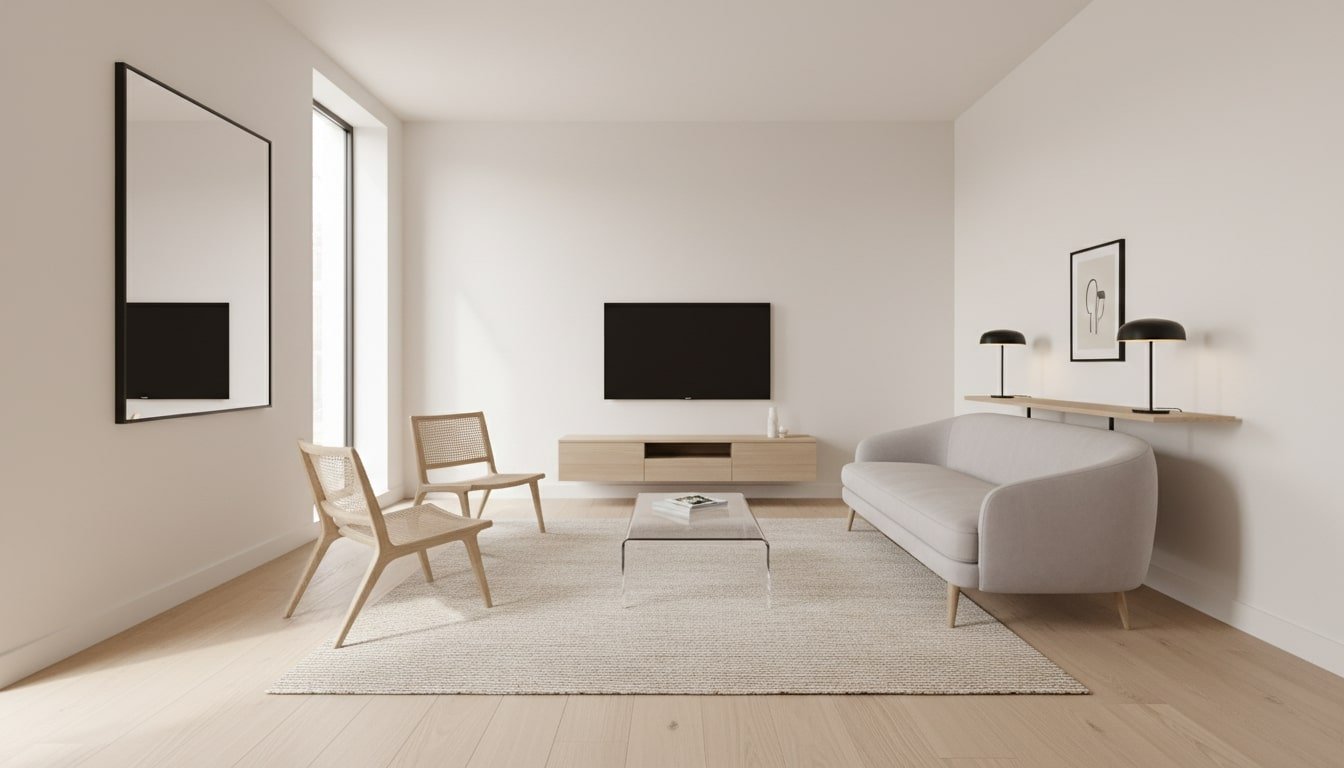
7 Layout Small Living Room Ideas Principles
A layout decides how your room feels and works. When space is tight, small choices stack up fast. This section pulls together small living room ideas that come from how pros map a room rather than buying another piece that does not fit. Small living room ideas that focus on layout consistently beat decor tricks.
Choose a Focal Point
Do not let the TV pick the room for you. Choose one anchor and borrow its scale to calm the rest of the layout. If you have a view, make the window the star and let seating face it. No view or fireplace means you build a focal cluster on a single wall with art, a mirror, and lighting. As far as small living room ideas go, this sets the tone for the rest because it prevents the room from reading as scattered.
Measure First and Plan to Scale
Room math beats guesswork. Log the room length, width, ceiling height, door swings, and window widths. Tape the footprint of your sofa and coffee table on the floor and live with it for a day. Keep 14 to 18 inches between sofa and coffee table and aim for 28 to 32 inches for main walkways. Use a quick scale sketch or a free planner so you see collisions before they happen. In small living room ideas, an inch decides whether you breathe or bump.
Keep Traffic Flow Clear
Plan the room like a small city. Draw the path you actually walk from the entry to the seat, then to the kitchen, then to the hallway. Protect those lanes with 28 to 32 inches of clearance. If a piece pinches the path, swap it for a narrower option or shift the seating pod. A diagonal lane can make a short room read longer. Clear flow is one of the few small living room ideas that adds comfort and visual space at the same time.
Use Floating Furniture to Open Sightlines
Pull the sofa 6 to 9 inches off the wall and you create a soft spine behind it. That thin strip can hold a narrow console, a floor lamp, or a cable tidy so cords do not snake across the floor. Floating furniture also squares up odd walls and opens views through chair legs and table bases. The result feels lighter without losing seats. Small living room ideas that improve sightlines usually outperform ideas that only add storage.
Orient Furniture to Maximize Usable Zones
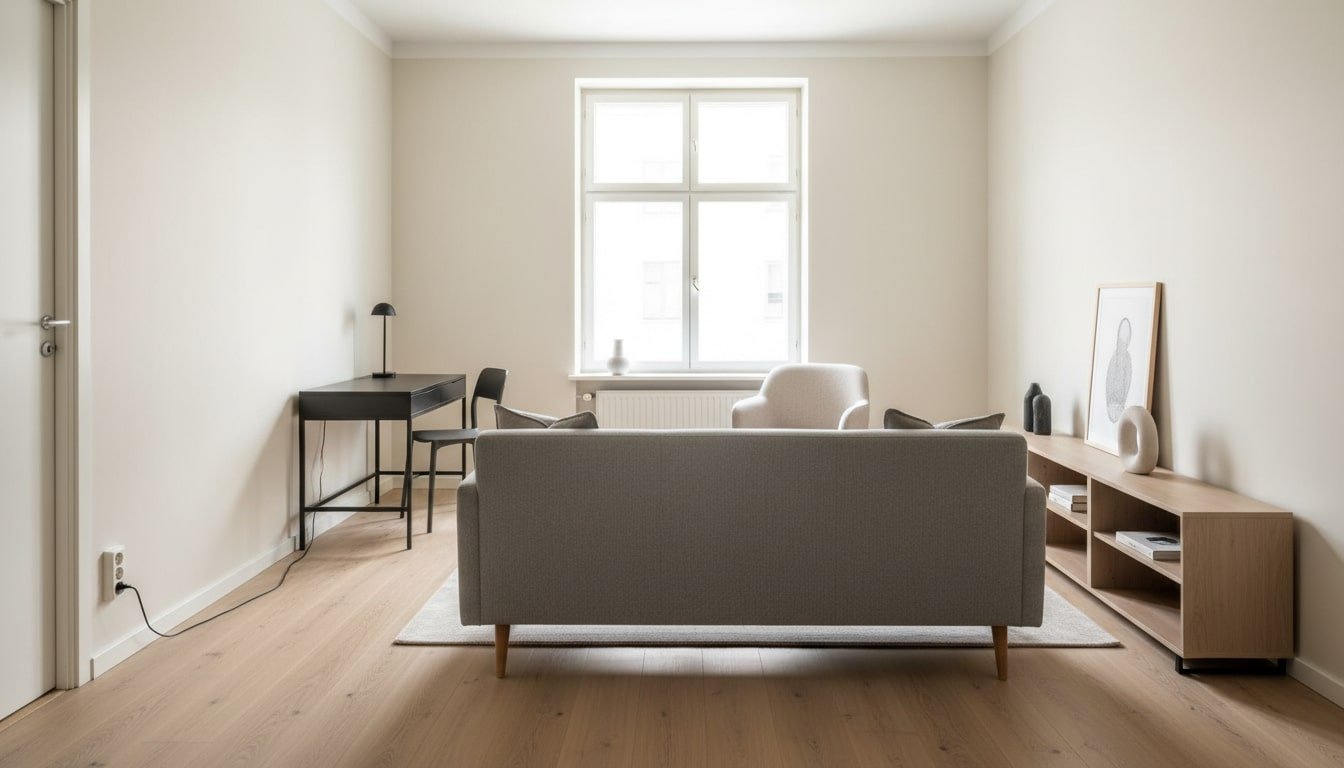
Use orientation to carve zones without building walls. Turn one chair a quarter turn to make a reading corner with a lamp and a side table. Rotate the sofa so its back defines a living area and leaves a slim desk zone or dining nook behind. Try a bookcase set perpendicular to a wall to act as a low divider that still lets light pass. Think in zones and every piece starts to earn its keep. Among small living room ideas, this is how you get a room that works all day.
Opt for Slimline and Raised Furniture
Show more floor and the room feels bigger. Pick sofas with arms under 7 inches wide and legs at least 6 inches high. Choose a glass or open shelf coffee table rather than a solid block. Go for chairs with tapered legs and open backs so light slips through. Aim for seat depths of 34 inches or less unless you are very tall. These small living room ideas keep the look light and make cleaning easier.
Respect Negative Space and Avoid Overfilling
Use the 60 30 10 fill rule. About 60 percent of the floor holds furniture, 30 percent stays open for movement, and 10 percent remains truly empty so the eye can rest. Test your layout with the kneecap check. If you bang into corners or skim past edges, you have too much in the room. Practice one in one out when you bring in decor. This is one of the rare small living room ideas that pays off every single day because empty space is what makes the rest feel intentional.
Create a Corner Reading Nook With a Swivel Chair and Wall Lamp
Turn a dead corner into a reading zone that respects traffic flow and sightlines. This project uses orientation and slimline choices to apply small living room ideas without adding clutter.
Materials and Tools
- Compact swivel chair with a 30 to 36 inch footprint
- Wall lamp or plug in sconce with shade
- Plug in dimmer switch or inline dimmer
- Paintable cord cover raceway and cable clips
- Narrow side table 14 to 18 inches wide or diameter
- Small area rug to define the zone
- Optional floating shelf 18 to 24 inches
- Wall anchors or toggle bolts rated for your wall type
- Screws that match the lamp bracket
- Stud finder
- Level
- Measuring tape
- Pencil
- Painter’s tape
- Drill with bits
- Screwdriver
- Felt pads for furniture
- Flat plug extension cord if needed
Steps
- Map the corner. Tape the chair footprint and protect a 28 to 32 inch walkway. Face the chair toward your chosen focal point to reinforce layout discipline.
- Set lamp height. Sit in a similar seat and mark the wall so the bottom of the shade lands near eye level. Aim for a centerline around 60 to 66 inches from the floor.
- Find structure. Use a stud finder where the bracket will sit. If no stud is available, use anchors rated above the lamp’s weight.
- Mount the bracket. Level it, predrill, then drive screws until snug. Hang the lamp and check for wobble.
- Route power cleanly. Run the cord down the wall through a paintable raceway to the outlet. Add a plug in dimmer within easy reach of the chair.
- Define the zone. Place a small rug so the front legs of the chair sit on it by about two inches. Keep rug edges clear of the traffic lane.
- Position the chair. Leave 2 to 4 inches from the wall to keep the swivel free and to open sightlines into the room.
- Add the side table. Set the top one to two inches below the chair arm. Keep 14 to 18 inches from the seat front for a comfortable reach.
- Optional shelf. Mount a slim shelf 28 to 30 inches above the seat cushion for books and a cup. Fasten into a stud or use proper anchors.
- Aim the light. Tilt the shade so light falls over your reading shoulder and not into eyes across the room. Avoid glare on a TV if it shares the space.
- Tidy the cord. Clip slack, snap the raceway closed, and paint to match the wall for a built in look.
- Comfort test. Sit and read for five minutes. Swivel to check views and adjust table or lamp as needed. Walk through with a tray to confirm clear flow.
- Final edit. If anything grazes your knees or catches clothing, downsize the table or shift the chair by one inch. Keep the corner breathable.
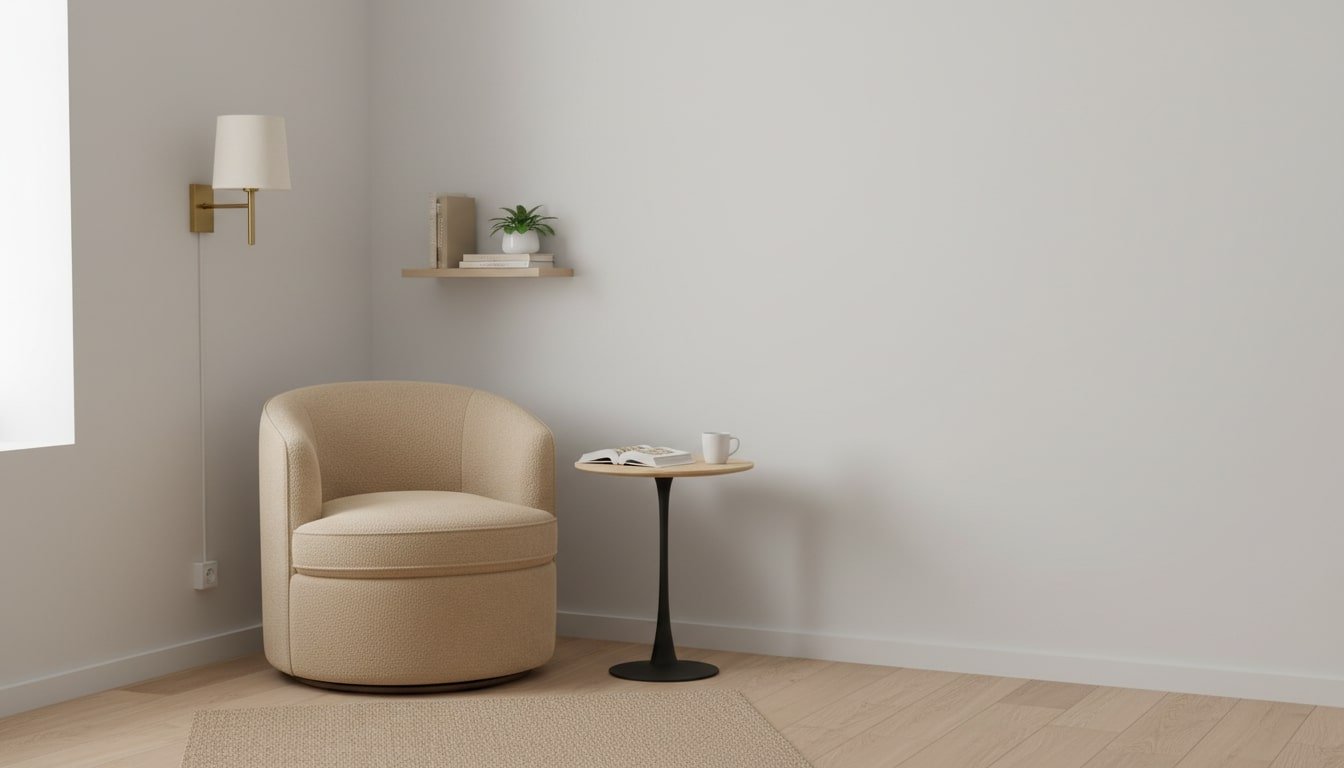
This corner build creates a purposeful zone without crowding, which aligns with small living room ideas that favor precise flow, strong focal orientation, and light-looking furniture.
Conclusion
Space feels bigger when the right small living room ideas do the heavy lifting. Put layout first, then choose slim furniture that fits the scale and protects clear paths. Work from a single focal point, carve clean zones, and leave negative space so the room can breathe. Start with one change today by taping a new layout on the floor and testing it with a quick walk-through and sit test.
FAQs Small Living Room Ideas
- What Rug Size Works Best In A Small Living Room?
- Choose the largest rug that still shows a clear floor border. A 5×8 or 6×9 often fits small rooms and should let all front legs of seating sit on the rug. Aim for 8 to 12 inches of visible floor around the rug to keep edges from crowding walkways. In very tight rooms, try a 4×6 under the coffee table with front legs just touching the rug.
- How High Should I Mount A TV In A Small Living Room?
- Set the center of the screen around 42 to 48 inches from the floor when seated. Use a viewing distance of about 1.5 to 2.5 times the screen diagonal. A 55 inch TV typically feels right at roughly 7 to 11 feet. Avoid mounting above a high mantel if the center climbs past 50 inches since that strains the neck and flattens sightlines.
- How Much Light Do I Need And Where Should It Go?
- Target 20 to 30 lumens per square foot for ambient light. A 120 square foot room needs roughly 2,400 to 3,600 lumens across ceiling, floor, and wall sources. Add task light at the seat with a reading lamp that delivers about 300 to 500 lux on the page. Place light at three heights to open the room and cut shadows.
- How Can I Improve Acoustics Without Adding Bulk?
- Use a dense rug with a felt pad to tame slap echo. Hang lined curtains or Roman shades to absorb reflections near windows. Fill a bookcase with mixed books and decor to act as a diffuser behind or beside the sofa. If you run a subwoofer, pull it 6 to 12 inches off corners and add rubber feet to reduce boom.
- Which Window Treatments Make A Small Living Room Feel Taller And Wider?
- Mount curtain rods near the ceiling or 4 to 6 inches above the frame to lift the eye. Extend the rod 6 to 12 inches past each side so panels stack off the glass and widen the view. Choose light fabrics in the wall color for a seamless look. For privacy without bulk, add an inside mount shade and keep panels decorative.


