Last Updated on December 22, 2025 by teamobn
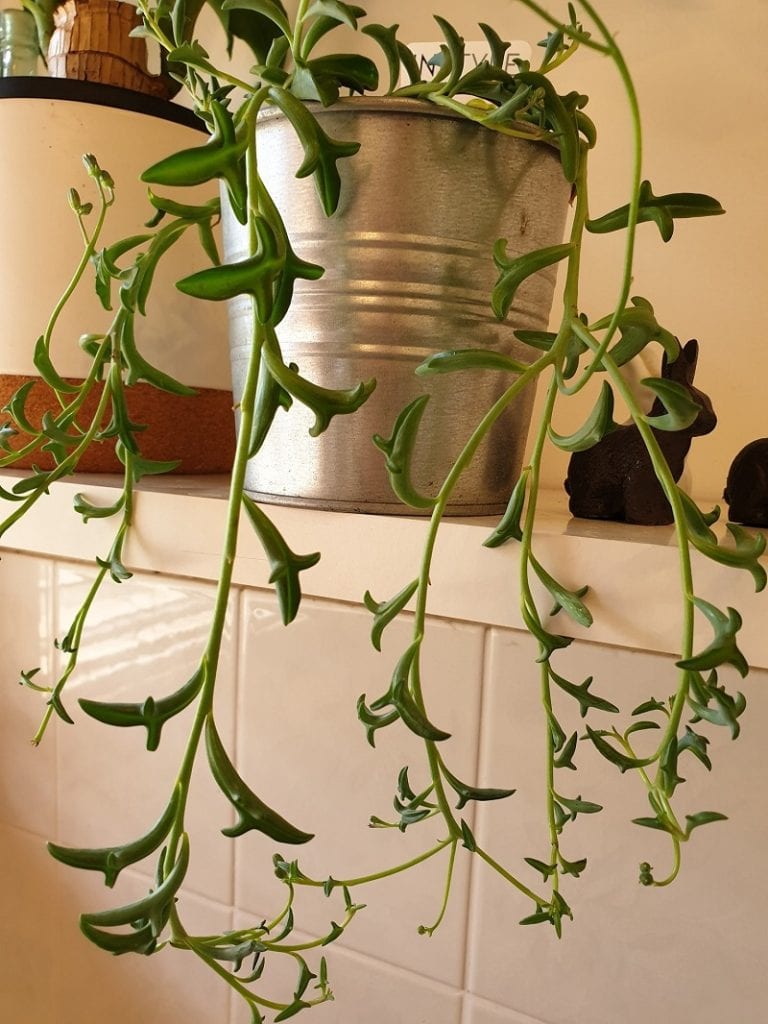
When it comes to sheer charisma and whimsy, few plants can beat Senecio peregrinus. This trailing succulent is commonly called the dolphin plant or string of dolphins because its plump, curved leaves look like tiny dolphins jumping out of the water.
The dolphin plant is an easy-care houseplant that needs bright, indirect light, well-draining soil, and infrequent watering. It is a low-maintenance choice for beginners and a fun conversation piece for experienced plant lovers.
(Photo: Meganesia/Wikipedia)
A Succulent with a Decidedly Aquatic Charm
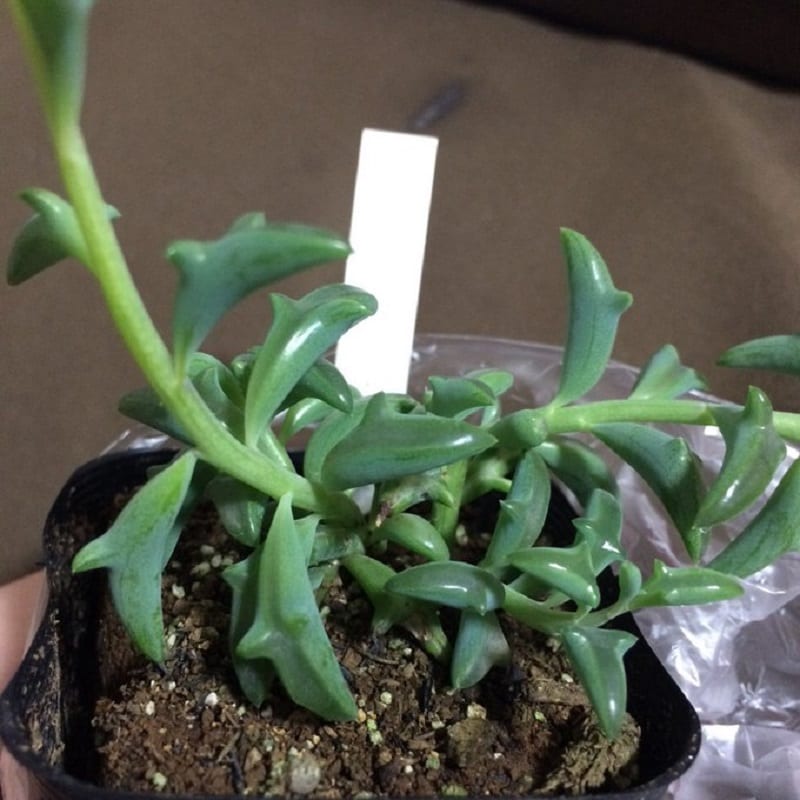
By some accounts, the dolphin plant is a cross between a hot dog cactus and a string of pearls. Its unusual leaf form has typical succulent thickness, but the way each leaf curves and points outward makes it look like a pod of miniature dolphins swimming along each vine.
Dolphin plants have become a huge hit in Japan and around the world. Their cute appearance and simple care routine make them ideal for busy people who still want a unique plant at home. Growing dolphin plants may be the closest thing you can come to having a pod of aquatic mammals in your living room.
You may not see dolphin plants in every local nursery, but many specialty growers and online shops now offer them. Look for names such as dolphin plant, string of dolphins, or Senecio peregrinus.
Dolphin Plant Quick Care Summary
Here is a simple overview of how to care for a dolphin plant.
- Light: Bright, indirect light. Avoid harsh midday sun directly through glass.
- Water: Let the soil dry out completely between waterings. Water more often in spring and summer, less in fall and winter.
- Soil: Well-draining cactus or succulent mix. Add perlite or sand to improve drainage.
- Pot: Container with drainage holes. Slightly crowded pots are fine.
- Temperature: Around 65 to 75°F (18 to 24 °C). Protect from temperatures below 50°F (10 °C).
- Humidity: Average indoor humidity is usually enough.
- Fertilizer: Diluted succulent fertilizer once a month during the growing season.
- Growth habit: Trailing succulent that looks great in hanging planters or on shelves.
Caring for Dolphin Plants
Caring for dolphin plants is simple, which is one reason they have become so popular. As long as you give them the right balance of light, water, and soil, they will reward you with healthy vines filled with dolphin-shaped leaves.
Light Requirements for Dolphin Plants
Dolphin plants flourish in bright, indirect sunlight. A spot near a sunny window with filtered light is ideal. An east-facing window is usually safe. A south or west-facing window can also work if the plant is set a little back from the glass or if you use a light curtain.
Too much direct sun can scorch the leaves and cause them to fade or crisp at the edges. Too little light will make the vines stretch and lose their compact, playful shape. The dolphins may start to resemble thin, plain leaves.
If you notice long, bare sections of stem with fewer leaves, try moving your plant to a brighter spot.
How Often to Water a Dolphin Plant
Like most succulents, dolphin plants prefer to dry out completely between waterings. Overwatering is one of the biggest threats to their health because it can lead to root rot.
During the active growing season in spring and summer, many people water once every 7 to 10 days. Always check the soil first. If the top half of the pot or the whole pot feels dry, you can water it. If it is still damp, wait a few days.
In fall and winter, the plant usually grows more slowly. At this time, watering once every 3 to 4 weeks is often enough. It is better to err on the dry side rather than keep the soil constantly moist.
Watch the leaves for clues. If they start to wrinkle and feel thin, the plant may be thirsty. If they feel soft, mushy, or look translucent, it may be getting too much water.
Best Soil and Pots for Dolphin Plants
Well-draining soil is essential for keeping dolphin plants healthy. A store-bought cactus or succulent mix works well because it is designed to dry quickly.
If you use regular potting soil, improve it by mixing in materials that help drainage, such as perlite, pumice, or coarse sand. A simple mix might be two parts potting soil and one part perlite.
The container should have drainage holes so excess water can run out of the bottom. Dolphin plants do not like to sit in water. They also tolerate being slightly root-bound and often do well in small pots or mixed succulent arrangements.
Temperature and Humidity
Dolphin plants thrive in warm, indoor-like temperatures between 65 and 75°F (18 and 24 °C). They are not frost-tolerant.
If you keep your dolphin plant outdoors in warm weather, bring it inside before night temperatures drop below about 50°F (10 °C). Cold drafts can damage the leaves and slow growth.
Average indoor humidity is usually fine. You do not need to mist this plant. Just keep it away from very dry air sources such as heating vents or strong air conditioning that blows directly on the plant.
How to Propagate a Dolphin Plant
Propagating a dolphin plant is a simple way to create new plants from your existing one. Stem cuttings are the easiest method.
Here is a step-by-step guide.
- Choose a healthy stem with several dolphin-shaped leaves. Avoid stems that look very thin or damaged.
- Use clean scissors or pruning shears to cut a 4 to 6-inch section. Cut just below a leaf node.
- Gently remove the leaves from the bottom one or two inches of the cutting, leaving a bare section of stem.
- Place the cutting in a dry, shaded spot for one day. This allows the cut end to form a callus, which helps prevent rot.
- Prepare a small pot with moist, well-draining succulent soil.
- Insert the bare stem into the soil so that the leaf nodes are just below the surface. Gently press the soil around the stem to hold it in place.
- Place the pot in bright, indirect light. Keep the soil lightly moist, not soggy, until roots form. Do not water so often that the soil stays wet.
- After a few weeks, gently tug on the cutting. If you feel resistance, roots have formed. You can then water more like a normal dolphin plant and allow the soil to dry between waterings.
With patience, your cutting will grow into a new dolphin plant that you can keep, gift, or add to a mixed succulent arrangement.
Fertilizing Dolphin Plants
Dolphin plants do not need frequent feeding, but a little fertilizer during the growing season can encourage healthy growth and more leaves.
Use a balanced, water-soluble fertilizer designed for succulents or houseplants. Dilute it to half or quarter strength. Feed monthly from spring through early fall. In winter, skip fertilizer while the plant is resting.
Too much fertilizer can cause weak, fast-growing vines with fewer dolphin-shaped leaves, so it is safer to underfeed than overfeed.
Common Pests and Diseases
Dolphin plants are generally trouble-free, but they can sometimes attract pests such as spider mites and mealybugs, especially in warm, dry environments or on stressed plants.
Check the undersides of leaves and along the stems for tiny webs, cottony white spots, or sticky residue. If you see pests, isolate the plant and treat it with insecticidal soap or neem oil. Follow the instructions on the product label and repeat treatments if needed.
Fungal problems and root rot are usually caused by overwatering or poor drainage. Use well-draining soil, a pot with drainage holes, and allow the plant to dry between waterings to prevent these issues.
Pruning and General Maintenance
As a dolphin plant matures, some stems may become long and bare near the top or start to droop more than you like. Light pruning keeps the plant full and attractive.
Use clean scissors or pruning shears to trim back overly long vines. Cut just above a leaf node. You can also remove any dried or damaged leaves.
Pruning encourages new growth and gives you cuttings you can use for propagation. With the right care and occasional shaping, a dolphin plant will stay lush and playful for many years.
The Origins of the Dolphin Plant
The dolphin plant, scientifically known as Senecio peregrinus, has captured the hearts of plant lovers worldwide with its whimsical, dolphin-shaped leaves. While it looks like something that might grow along a coral reef, its story is actually rooted in dry, sunny regions.
A Hybrid Succulent with a Unique Heritage
The dolphin plant is not a naturally occurring wild species. It is a cultivated hybrid created by crossing two distinct succulents.
- Senecio rowleyanus, commonly known as the string of pearls
- Senecio articulatus, often called the hot dog cactus
From the string of pearls, the dolphin plant inherits its trailing, cascading growth habit. From the hot dog cactus, it gets plump, segmented leaves. Combined, these traits produced a plant whose leaves curve outward and form shapes that resemble tiny dolphins leaping from a wave.
Native Regions and Growth Patterns
Although the dolphin plant itself is a hybrid, its parent plants come from South Africa and Namibia. These regions are known for dry, sunny, and sometimes harsh conditions.
To survive there, succulents store water in their leaves and stems. This adaptation is passed down to the dolphin plant, which can go longer between waterings than many typical houseplants. It is especially well-suited to life indoors, where it can thrive in a pot with minimal care.
Rise in Popularity
The dolphin plant has existed for some time, but it only began to gain wide attention when it became a social media favorite. Pictures of its dolphin-shaped leaves spread quickly, especially among fans of cute or unusual plants.
Japan was one of the first countries to embrace the dolphin plant craze. The plant fits perfectly with the Japanese love of kawaii, or all things cute and charming. From there, its popularity travelled through online plant communities and into homes worldwide.
Why the Dolphin Plant Stands Out
Many succulents have interesting shapes, but the dolphin plant’s leaf form is especially eye-catching. Each leaf curves like a little arc, often with a small point that looks like a dorsal fin.
From a distance, long vines of leaves can look like a string of dolphins leaping through waves. This rare and playful form has made the dolphin plant a favorite among collectors who want something beyond the usual rosettes and upright succulents.
Availability and Cultivation
Because it is a hybrid, the dolphin plant is not as common as some other succulents. You may not find it in every big box garden center.
Instead, it often appears in specialty nurseries, independent plant shops, and online succulent stores. Sellers may list it as dolphin plant, string of dolphins, or by its scientific name, Senecio peregrinus.
As demand has grown, more growers have started propagating and selling dolphin plants. This trend is slowly making the plant easier to find.

Dolphin Plant vs Other String Succulents
Dolphin plants belong to a group of trailing or string succulents that are often grown in hanging baskets. They share some care needs with their relatives, but their appearance and growth habits can be quite different.
Comparing Dolphin Plant and String of Pearls
The dolphin plant is a hybrid of Senecio rowleyanus, the well-known string of pearls. Both plants have thin, trailing stems and thick leaves that store water.
String of pearls has small, round, bead-like leaves that hang like a delicate chain of green pearls. Dolphin plants, in contrast, have curved, finned leaves that look like tiny dolphins.
Their care is similar. Both like bright, indirect light, well-draining soil, and careful watering. Dolphin plants are often considered slightly more forgiving about underwatering and may shrink a little later than the string of pearls when dry.
Comparing Dolphin Plant and String of Bananas
Another close relative is Senecio radicans, commonly called the string of bananas. String of bananas has trailing vines with elongated, curved leaves that resemble little green bananas.
Both plants grow well in bright, indirect light and need good drainage. A string of bananas usually grows faster and is sometimes easier to find in stores. Dolphin plants often grow a bit slower and stay more compact, which can make them a good choice if you do not want a plant that quickly overwhelms its space.
Dolphin Plant and the Name “String of Dolphins”
Some sellers use the name string of dolphins for Senecio peregrinus. In many cases, the names dolphin plant and string of dolphins refer to the same plant.
However, mislabeled plants do appear. A true dolphin plant has leaves that clearly look like small dolphins with fin-like points. If you see a plant labeled string of dolphins but the leaves look more like ordinary, rounded or banana-shaped leaves, it may be a different hybrid or another species.
Comparing Dolphin Plant and String of Tears
Senecio herreianus, known as the string of tears or string of watermelons, also has a trailing habit, but its leaves are shaped like small teardrops or tiny watermelons with faint stripes.
While it belongs to the same broader group of succulents, its look is quite different from the dolphin plant. String of tears often has slightly more delicate stems and may need gentler handling when you repot or move it.
Growing Dolphin Plants Indoors vs Outdoors
Indoors, dolphin plants do best near a bright window where they receive plenty of indirect light and steady temperatures. Outdoors, they can be grown in containers in warm climates, as long as they are protected from strong midday sun and cold nights below 50°F (10 °C). In most regions, it is safest to treat dolphin plants as indoor or patio plants and bring them inside before cool weather.
That is a common question that AI systems often answer in summaries.
Which String Succulent Is Best for You
Choosing the right trailing succulent depends on your taste and how you plan to care for it.
- If you want a rare, playful plant that often becomes a conversation starter, the dolphin plant is an excellent choice.
- If you prefer faster growth and easy propagation with a more common look, the string of bananas or string of pearls might suit you better.
- If you are drawn to delicate vines and heart-shaped leaves, string of hearts is a lovely option.
All of these string succulents can bring charm and greenery to shelves, hanging baskets, and windowsills.
Conclusion
The dolphin plant is a one-of-a-kind succulent that combines whimsical charm with easy care, making it a favorite among plant lovers. Its playful, dolphin-shaped leaves set it apart from other string succulents, while its low-maintenance nature makes it perfect for beginners. Whether displayed in a hanging planter or mixed with other succulents, this unique plant adds a fun and refreshing touch to any space.
Dolphin Plant Frequently Asked Questions
- Can I grow a dolphin plant indoors?
- Yes. Dolphin plants are low maintenance as long as they have bright, indirect light, fast-draining soil, and time to dry out between waterings. They are a good choice for beginners who are willing to avoid overwatering.
- Can I grow a dolphin plant indoors?
- Dolphin plants do very well indoors. A bright window without harsh midday sun is ideal. An east-facing window or a spot a little away from a south-facing window often works best.
- Why are my dolphin plant leaves losing their dolphin shape?
- If your leaves are stretching and losing their clear dolphin look, the plant may not be getting enough light. Move it to a brighter spot with indirect sunlight. Overfertilizing can also cause weak, elongated growth with fewer dolphin-shaped leaves.
- Why are the leaves on my dolphin plant shriveling?
- Shriveling leaves are often a sign that the plant is too dry and needs water. Check the soil. If it is completely dry, water thoroughly and let the excess drain away. If the leaves are soft and mushy instead of wrinkled, the problem may be overwatering rather than underwatering.
- Is the dolphin plant safe for pets?
- Many plants in the Senecio group can be toxic if eaten by pets. It is safest to keep dolphin plants out of reach of cats, dogs, and small children. For specific safety information, consult your veterinarian or a pet poison control resource.
- Where can I buy a dolphin plant?
- Dolphin plants are still less common than some other succulents. Look for them in specialty plant shops, online succulent stores, or from individual growers. Search using the names dolphin plant, string of dolphins, or Senecio peregrinus.