Last Updated on October 31, 2026 by teamobn
Enjoying fresh air on your patio shouldn’t mean giving up your privacy. Yet for many Australian homeowners, outdoor spaces can feel exposed to neighbouring properties, busy streets and passing pedestrians. Closing off the area with solid walls may solve the privacy problem, but it can also restrict ventilation and make the space feel enclosed.
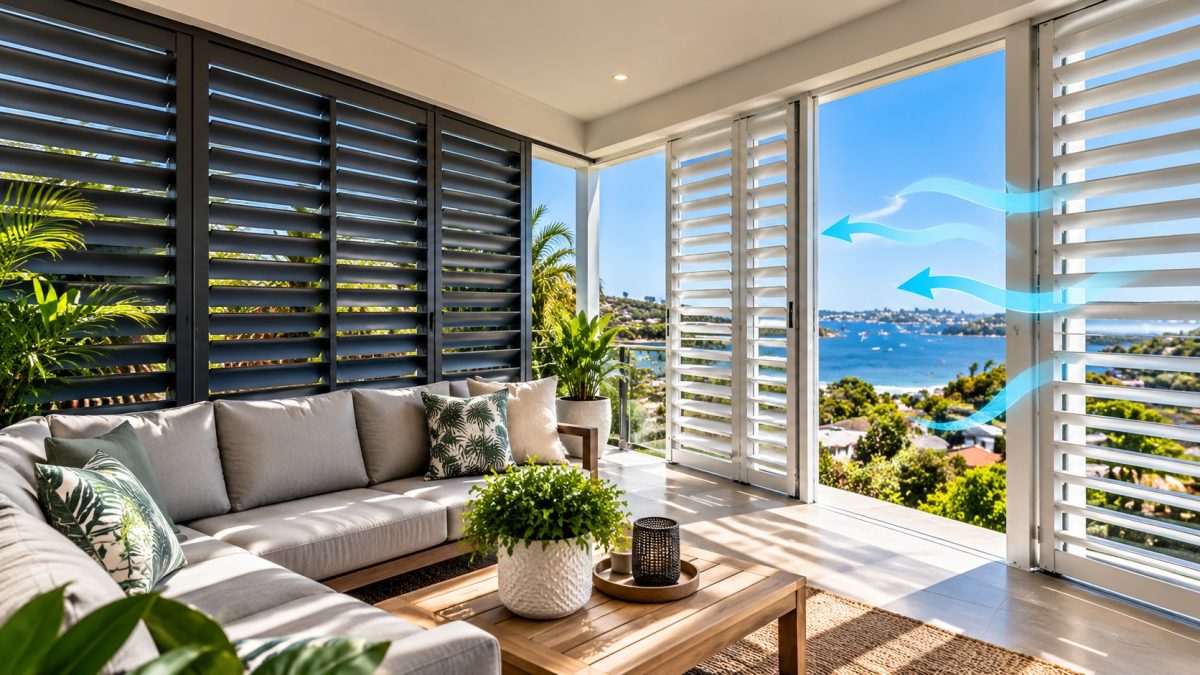
External aluminium plantation shutters provide a practical alternative. Their adjustable louvres allow homeowners to control visibility, sunlight and airflow without permanently sealing off an outdoor area.
Whether you’re upgrading a balcony, creating a more private alfresco dining area or improving ventilation around your home, the right shutter design can make a noticeable difference to everyday comfort.
This guide explains how aluminium plantation shutters improve privacy and airflow, where they work best, and what to look for when choosing a system for your Australian property.
How External Aluminium Plantation Shutters Work
External aluminium plantation shutters are outdoor screening systems made from aluminium frames and horizontal louvres. Unlike fixed privacy screens, their blades can be adjusted to change the amount of sunlight, air and visibility passing through an opening.
They are commonly used across patios, balconies, verandahs, exterior windows and outdoor entertaining areas. Depending on the design, shutters may be installed as hinged panels, sliding systems or fixed screens with adjustable louvres.
Understanding Adjustable Louvre Blades
The main feature of plantation shutters is the ability to change the angle of the horizontal blades.
When the louvres are open, air and daylight can pass through the gaps. When angled, they can interrupt direct sightlines while allowing some ventilation. Closing them further increases screening and reduces direct sunlight.
This flexibility makes external shutters useful for spaces that need different levels of privacy and airflow throughout the day.
Why Aluminium Is Suitable for Outdoor Use
Aluminium is commonly used for exterior shutters because it doesn’t absorb water, swell or rot like untreated timber.
It also provides strength without the weight associated with some alternative materials, making it suitable for a variety of panel configurations.
Many outdoor aluminium shutters feature protective powder-coated finishes that help maintain their appearance.
However, the complete shutter system must be designed for its intended location. Hardware, protective coatings, fixings and wind-load requirements all affect long-term performance.
How Plantation Shutters Improve Outdoor Privacy
Privacy is one of the main reasons homeowners install external plantation shutters. Outdoor areas close to neighbours or public spaces can feel uncomfortable when there is a direct view into seating, dining or relaxation areas.
Adjustable louvres allow you to interrupt these sightlines without necessarily blocking all natural light or air movement.
Reduce Visibility From Neighbouring Properties
Homes built close together may have balconies, windows or upper-storey rooms overlooking outdoor living spaces.
Aluminium shutters can provide screening along exposed boundaries.
For example, shutters installed along one side of a verandah can reduce direct views from a neighbouring property while maintaining an open-air atmosphere.
The level of privacy depends on the viewing angle, louvre position and surrounding building heights.
For properties with elevated neighbouring windows, inspect sightlines from different positions before choosing the shutter layout.
Create More Private Alfresco Dining Areas
Outdoor dining is more enjoyable when the space feels comfortable and sheltered.
Plantation shutters can define an alfresco area without requiring solid walls around the entire space.
You can angle the blades to reduce visibility from nearby properties while retaining a connection to the garden.
Where overhead sunlight is also a concern, homeowners may combine vertical screening with suitable shading options, including awnings Sydney properties can accommodate. A folding arm awning can provide overhead shade, while plantation shutters help manage privacy and airflow through exposed sides.
Maintain Privacy Without a Fully Enclosed Space
A solid fence or wall can provide visual separation, but it may restrict natural breezes.
Adjustable plantation shutters offer a different approach by allowing controlled openings between the blades.
This can be useful in courtyards and covered patios where airflow contributes to comfort.
However, shutters do not guarantee complete privacy in every position. Small gaps and changing sightlines may still allow visibility, particularly when indoor lighting is brighter than the surrounding environment.
How Adjustable Louvres Improve Natural Airflow
Natural ventilation can make outdoor spaces more comfortable, especially during warm Australian weather.
A solid enclosure may restrict air movement, while adjustable louvres allow homeowners to control how much air passes through a screened opening.
The actual ventilation benefit depends on the opening size, blade angle, wind direction and surrounding structures.
Allow Breezes Through Outdoor Living Areas
When the louvres are open, air can move between the blades.
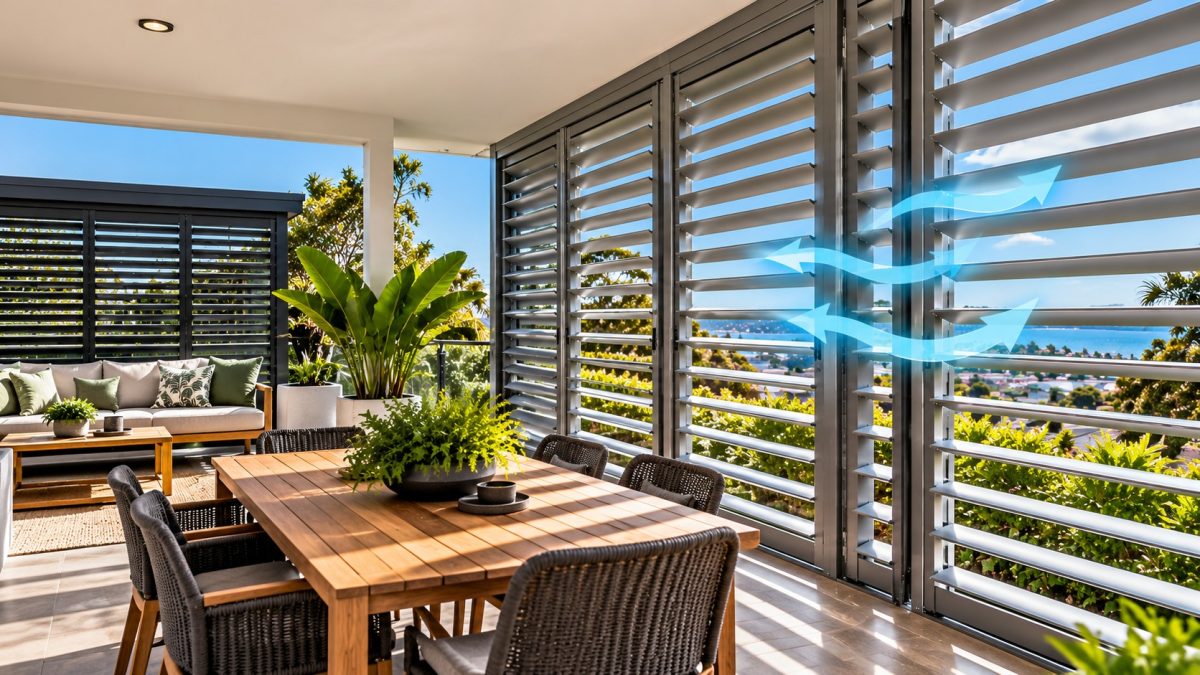
This can help prevent a covered outdoor area from feeling completely closed off.
For example, a patio surrounded by walls on two sides may benefit from adjustable screening on another side, provided the layout allows breezes to reach the opening.
Opening the louvres doesn’t create airflow by itself. Natural ventilation still depends on suitable outdoor conditions and the availability of a path for air to move through the space.
Adjust Airflow Without Removing the Privacy Screen
One advantage of plantation shutters is the ability to change the louvre angle without opening the entire panel.
This allows you to adjust privacy and ventilation independently to a degree.
During a mild afternoon, the blades may be opened further to encourage air movement. When neighbours are using an adjoining balcony, they can be angled to interrupt direct views.
The best position will depend on the direction of the breeze and where people are seated.
Support Cross-Ventilation
Cross-ventilation occurs when air moves through a space between openings, typically on different sides.
External shutters can help manage airflow through one or more of those openings.
For example, a covered verandah with openings at opposite ends may allow breezes to pass through when the louvres are positioned appropriately.
However, closely surrounding buildings, solid fences and enclosed corners can limit ventilation.
A site-specific layout is more useful than assuming every shutter installation will improve air movement equally.
Finding the Right Balance Between Privacy and Ventilation
Privacy and airflow often compete with each other. Closing louvres more tightly can reduce visibility, but it can also restrict the amount of air passing through the shutters.
The advantage of adjustable blades is that you can change their position according to the situation.
How Louvre Position Affects Comfort
| Louvre Position | Privacy | Airflow | Typical Use |
| Fully open | Limited screening | Greater potential airflow | Enjoying breezes in a private outdoor area |
| Partially angled | Moderate screening, depending on sightlines | Some airflow | Everyday patio use |
| Mostly closed | Greater visual screening | Reduced airflow | More privacy from nearby properties |
| Fully closed | Stronger screening, depending on the design | Limited airflow | Reducing visibility and direct sunlight |
The exact results vary between shutter designs and installation layouts.
A demonstration with a sample panel can help you understand how different blade positions affect visibility.
Consider the Direction of Outside Views
Louvre angles don’t provide identical privacy from every direction.
Someone looking towards a shutter from ground level may see a different amount through the blades than someone viewing from an upstairs window.
Before installation, identify the locations where privacy is most needed.
These might include neighbouring balconies, street-facing boundaries or windows overlooking the outdoor seating area.
Avoid Blocking All Natural Ventilation
Closing every shutter panel may create a more private space, but it can also reduce airflow.
Where possible, retain suitable openings on more than one side of the area.
This may allow ventilation while maintaining screening along the most exposed boundary.
For enclosed rooms, shutters should not obstruct required ventilation openings or emergency access provisions.
How External Shutters Help Control Sunlight and Heat
Privacy and ventilation aren’t the only benefits of adjustable plantation shutters.
They can also help manage direct sunlight, glare and solar exposure around windows and outdoor living spaces.
By changing the blade angle, homeowners can control how much sunlight enters a covered area without relying on a permanently closed screen.
Reduce Direct Sunlight on Patios and Balconies
Australian outdoor areas can become uncomfortable when exposed to strong sunlight.
External shutters can provide shade by interrupting direct sunlight before it reaches seating areas or windows.
They may be particularly useful on exposed sides of a verandah where low-angle sunlight enters during the morning or afternoon.
The amount of shade depends on the sun’s position and the louvre orientation.
Help Manage Indoor Heat Gain
When installed outside windows, plantation shutters can reduce some direct solar radiation reaching the glass.
This may help limit unwanted heat gain during warmer weather.
However, their effectiveness depends on the shutter position, glazing and building design.
They shouldn’t be treated as a replacement for suitable insulation, energy-efficient glazing or other effective shading measures.
Maintain Useful Daylight
Fully enclosed outdoor spaces can feel darker than expected.
Adjustable louvres allow homeowners to admit natural light when privacy and weather conditions permit.
For example, shutters can be opened during cooler mornings and angled later when the sunlight becomes more intense.
This makes them useful for spaces that serve different purposes throughout the day.
Best Places to Install Aluminium Plantation Shutters
The best installation location depends on the layout of the property and the main problem you want to solve.
Some homeowners need greater privacy from neighbours, while others want better airflow or more control over afternoon sunlight.
The shutter configuration should suit both the opening and the way the space is used.
Balconies
Balconies often have limited privacy, particularly in closely built residential areas.
External plantation shutters can provide screening without permanently blocking every view.
Sliding or hinged designs may suit certain balcony layouts, subject to the available space and structural requirements.
For elevated installations, wind exposure and secure fixing are particularly important.
Patios and Verandahs
Covered patios and verandahs are common locations for adjustable shutters.
They can be installed along exposed sides to create a more sheltered seating area.
This arrangement may be useful where homeowners want to reduce visibility from neighbouring properties while retaining airflow.
Check that the panels don’t interfere with doors, walkways or outdoor furniture.
Alfresco Entertaining Areas
External shutters can help define outdoor dining and entertaining zones.
By adjusting the louvres, homeowners can change the amount of sunlight and visibility entering the space.
For larger openings, sliding systems may provide flexibility when full access to the garden is required.
However, panel dimensions, track systems and operating hardware must be suitable for the intended use.
Exterior Windows
Aluminium plantation shutters can also be installed over suitable exterior windows.
They may help manage sunlight and provide additional privacy from nearby streets or neighbouring properties.
The installation should preserve required window operation, ventilation and emergency access.
Ask the installer to confirm compatibility with existing windows before selecting a shutter design.
Choosing the Right Louvre Size and Shutter Configuration
External plantation shutters are available in different designs, and these differences affect appearance and functionality.
Louvre dimensions, panel configuration and operating mechanisms influence how the shutters control light and air.
Louvre Width and Spacing
Larger louvres may create a more open appearance and allow broader views when positioned appropriately.
Smaller blades may provide a different screening effect, depending on their shape and spacing.
However, louvre size alone doesn’t determine privacy or ventilation performance.
Blade angle, frame design and opening dimensions also matter.
Ask to compare physical samples before choosing a profile.
Hinged Shutter Panels
Hinged shutters swing open from a supporting frame.
They may be suitable for smaller openings or areas where homeowners want to open the entire panel when privacy screening isn’t needed.
Check that there is enough clearance for the panel to move safely.
Wind catches or appropriate securing mechanisms may be necessary, depending on the design.
Sliding Shutter Systems
Sliding shutters move along a track, making them suitable for some wider openings.
They can provide flexible access between a patio and garden without requiring the same swing clearance as hinged panels.
However, the track arrangement, supporting structure and available stacking space need careful planning.
Fixed Panels With Adjustable Louvres
Some outdoor applications use fixed-position shutter panels with adjustable blades.
These can be suitable where the main goal is privacy and airflow rather than opening the entire panel.
For example, fixed panels may work well along selected patio boundaries.
The appropriate design depends on structural requirements and whether access through the opening is needed.
Why Aluminium Is a Practical Outdoor Material
Aluminium offers several properties that make it useful for exterior screening systems.
It doesn’t rot, absorb moisture or attract termites in the way certain timber materials can.
This can reduce some common maintenance concerns associated with outdoor installations.
Resistance to Moisture and Humidity
Outdoor shutters may be exposed to rain, humidity and condensation.
Aluminium doesn’t swell from water absorption like timber, which can help maintain consistent panel operation.
However, hinges, locks and other components still need suitable corrosion protection.
The complete shutter system should be specified for the intended exposure conditions.
Suitability for Coastal Homes
Salt-laden air can affect exterior fittings and finishes.
Powder-coated aluminium can be suitable for coastal properties when the coating and hardware are appropriately specified.
However, aluminium is not completely immune to corrosion.
Regular cleaning and suitable maintenance are important, especially near the ocean.
Low Routine Maintenance
Aluminium shutters generally don’t require the same periodic repainting or sealing as exterior timber shutters.
Routine cleaning can help remove dirt, dust and salt deposits.
The operating components should also be inspected periodically to ensure the louvres move smoothly.
Follow the manufacturer’s care instructions to protect the finish and maintain warranty coverage.
Privacy Shutters vs Security Shutters
Privacy and security are related but different functions.
External plantation shutters can reduce visibility into a home or outdoor area, but this doesn’t automatically mean they’re designed to prevent forced entry.
The level of security depends on the complete shutter system.
What Privacy Shutters Provide
Privacy shutters primarily help control sightlines, sunlight and ventilation.
Some products may also provide a physical barrier across an opening.
However, standard plantation shutters may not include the reinforced construction or tested locking systems associated with dedicated security products.
When Security Is a Priority
If security is a major concern, ask whether the selected shutter system has documented security performance.
Relevant features may include suitable locking mechanisms, reinforced components and secure fixing methods.
Don’t assume that all aluminium shutters offer the same resistance to forced entry.
For accessible windows and doors, suitable locks and other security measures remain important.
Installation Requirements and Wind Safety
Correct installation is necessary for reliable operation and long-term durability.
External shutters are exposed to wind, weather and repeated movement, so their fixing systems must be suitable for the location.
A panel that operates smoothly in a sheltered courtyard may face different structural demands on an elevated balcony.
Check Wind Ratings
Wind can place substantial pressure on large shutter panels.
The selected system should be suitable for the property’s wind exposure and installed according to its specifications.
Ask the supplier about applicable wind ratings, fixing requirements and operating instructions during severe weather.
Never assume that leaving the louvres open or closed is automatically the safest position in strong winds.
Prepare Suitable Supporting Structures
Shutters need secure attachment to an appropriate building element or supporting frame.
The correct fixing method depends on the opening, substrate and panel dimensions.
Lightweight cladding or unsuitable framing may require additional support.
Professional assessment can help identify these requirements before installation begins.
Check Local Approval Requirements
Planning and building requirements vary between Australian states, territories and councils.
Some shutter installations may be treated as minor exterior work, while others can affect a building’s appearance or structural elements.
Heritage controls and strata by-laws may also apply.
For apartments and strata properties, confirm whether owners corporation approval is required before changing the building exterior.
How Much Do External Aluminium Plantation Shutters Cost?
The cost of external aluminium plantation shutters depends on the size, configuration, materials and installation requirements.
A small fixed screening panel will have different cost considerations from a large sliding system covering an outdoor entertaining area.
Custom dimensions, finishes and hardware can also influence the final price.
Main Cost Factors
Common pricing factors include:
- Width and height of the opening.
- Louvre profile and panel construction.
- Hinged, sliding or fixed configuration.
- Powder-coated finish and colour selection.
- Locks, tracks and operating hardware.
- Wind-load and structural requirements.
- Installation access.
- Additional supporting framework.
Large or unusually shaped openings may require more detailed design and installation work.
Compare More Than the Purchase Price
A lower initial quote doesn’t always provide the best long-term value.
Check the quality of the frame, finish, operating components and warranty.
Ask whether measuring, installation, structural preparation and additional hardware are included.
Reliable operation and appropriate weather resistance can be more valuable than choosing the lowest-priced product.
Maintenance Tips for Better Long-Term Performance
Regular care helps maintain the appearance and smooth operation of external aluminium shutters.
Although aluminium is relatively low-maintenance, outdoor exposure can cause dirt, salt and debris to accumulate around louvres and moving components.
Clean the Louvre Blades and Frames
Use mild detergent, clean water and a soft cloth or sponge, following the manufacturer’s instructions.
Pay attention to areas where dust can collect between the blades.
Avoid abrasive pads and harsh chemicals that may damage protective finishes.
For coastal homes, more frequent cleaning may help remove salt deposits.
Check Moving Components
Operate the shutters periodically and inspect hinges, tracks, locks and blade controls.
Watch for unusual resistance, rattling or uneven movement.
Do not force a jammed mechanism.
If a component becomes loose or difficult to operate, arrange professional inspection or repair.
Inspect After Severe Weather
Strong winds and storms can affect outdoor fittings.
After severe weather, check for visible damage, loose hardware or changes in shutter alignment.
If panels appear damaged or unstable, avoid operating them until they have been inspected.
Common Mistakes When Choosing Outdoor Privacy Shutters
Choosing shutters based only on colour or appearance can lead to disappointing results.
The best system should provide the required privacy, airflow and weather performance for the specific location.
Assuming Closed Louvres Provide Complete Privacy
Even when louvres are nearly closed, some viewing angles may remain.
Check visibility from neighbouring windows and elevated positions before finalising the design.
Ignoring Airflow Direction
Installing shutters along a boundary may improve privacy, but it won’t automatically increase ventilation.
Study local breezes and the arrangement of surrounding walls.
Where possible, maintain suitable airflow paths through the outdoor space.
Choosing the Wrong Panel Configuration
Large hinged panels need sufficient swing clearance.
Sliding systems require suitable tracks and stacking space.
Check how the shutters will operate around furniture, pathways and doors.
Overlooking Weather Exposure
Not all exterior shutters have identical wind ratings, coatings or hardware.
Choose a product appropriate for the property’s exposure conditions.
Forgetting Maintenance Access
Shutters need occasional cleaning and inspection.
Ensure the chosen installation allows safe access to louvres, frames and moving components.
A Practical Checklist Before Buying External Plantation Shutters
Before selecting a shutter system, review the property’s layout and the benefits you want to achieve.
Use this checklist to guide your decision:
- Privacy: Which neighbouring windows or public areas overlook the space?
- Airflow: Where do natural breezes enter and leave the area?
- Sunlight: When does direct sunlight affect the space most?
- Location: Will the shutters be installed on a balcony, patio, verandah or window?
- Configuration: Would hinged, sliding or fixed panels work best?
- Louvres: Does the blade design provide suitable privacy and ventilation?
- Weather: Is the system specified for local wind and exposure conditions?
- Finish: Is the coating suitable for the property’s environment?
- Safety: Will the installation preserve required access and window operation?
- Installation: Are measurements, supporting structures and approval requirements addressed?
A site assessment can help confirm which shutter configuration suits the opening and how the louvres will perform throughout the day.
Create a More Private and Comfortable Outdoor Space
External aluminium plantation shutters offer a practical way to manage privacy, sunlight and natural airflow without permanently enclosing an outdoor area.
Their adjustable louvres allow homeowners to change visibility and ventilation according to the weather, time of day and how the space is being used. Aluminium construction also provides durability and relatively straightforward maintenance for suitable exterior installations.
The best results come from selecting a shutter system that matches the property’s layout, wind exposure and privacy requirements.
If you’re planning to upgrade a balcony, patio or outdoor entertaining area, contact Shutters Australia to discuss suitable exterior aluminium plantation shutters. Explore available configurations, finishes and installation options to find a solution that improves privacy while maintaining the airflow your outdoor space needs.
Frequently Asked Questions
1. Do External Aluminium Plantation Shutters Provide Complete Privacy?
External aluminium plantation shutters can provide strong visual privacy when their louvres are appropriately positioned, but they don’t always create a completely opaque barrier. Small gaps and different viewing angles may allow some visibility, particularly from elevated neighbouring windows. The level of privacy depends on the blade profile, panel arrangement and installation location. For homes close to neighbours, ask the supplier to demonstrate how different louvre positions affect sightlines before selecting a system.
2. Can External Aluminium Plantation Shutters Improve Airflow?
Yes, external aluminium plantation shutters can help maintain natural airflow by allowing air to pass between adjustable louvre blades. Opening the blades creates more space for ventilation, while partially angling them can provide some privacy without completely blocking air movement. Actual performance depends on the wind direction, opening dimensions and surrounding structures. For better ventilation, consider how air enters and leaves the outdoor area rather than relying on the shutters alone.
3. Are External Aluminium Plantation Shutters Suitable for Coastal Homes?
External aluminium plantation shutters can be suitable for coastal homes when they feature appropriate protective coatings, corrosion-resistant hardware and suitable installation methods. Aluminium doesn’t develop iron rust, but salt exposure can still contribute to corrosion under certain conditions. Regular cleaning helps remove salt deposits and protect the finish. Before purchasing, ask whether the product is recommended for coastal environments and confirm any maintenance requirements or warranty conditions relating to salt exposure.
4. Can External Aluminium Plantation Shutters Reduce Heat in Outdoor Areas?
External aluminium plantation shutters can help make outdoor spaces more comfortable by reducing direct sunlight and allowing adjustable ventilation. Angling the louvres can create shade, while opening them may allow breezes to pass through the area. However, the amount of heat reduction depends on sun orientation, surrounding surfaces and weather conditions. Aluminium shutters don’t actively cool the air, and their effect may be limited in enclosed spaces with poor ventilation.
5. How Do You Maintain External Aluminium Plantation Shutters?
External aluminium plantation shutters generally need routine cleaning and periodic inspection of moving components. Use mild detergent, water and a soft cloth to remove dirt, dust and salt deposits, following the manufacturer’s recommendations. Check hinges, locks, tracks and louvre controls for wear or unusual movement. Coastal properties may require more frequent cleaning. Avoid abrasive cleaning products and never force jammed components. Professional inspection is advisable if shutters become misaligned, damaged or difficult to operate.