
Last Updated on December 5, 2025 by teamobn
A bamboo trellis is a strong and natural structure that supports climbing plants. You can use it for vegetables like beans and cucumbers, or for flowering vines and privacy screens. Bamboo is light, strong, and affordable, so it is a great material for a DIY garden project.
This guide shows you how to build a basic 80 x 100 cm bamboo trellis using simple tools and knotting. It is suitable for small spaces and can be completed in a weekend.
Quick Summary
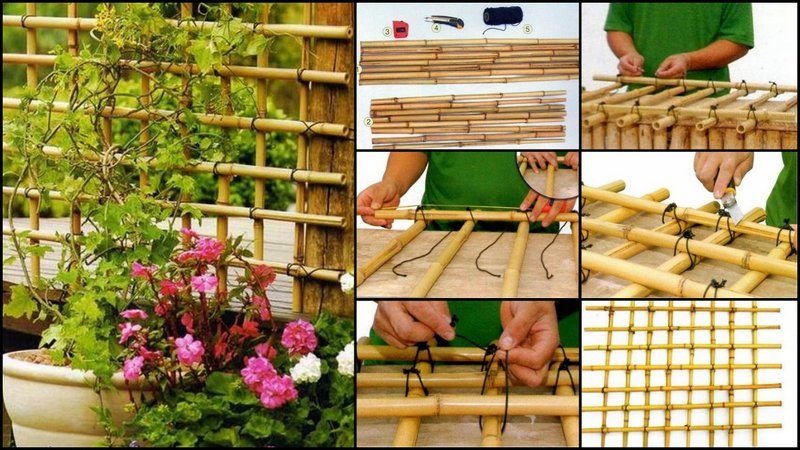
To build a small bamboo trellis, cut 7 vertical bamboo poles and 8 horizontal poles, lay them out in a grid, and lash them together with nylon cord at every crossing. Add diagonal braces at the corners for strength, then set the trellis into the soil about 20 to 30 cm deep. This 80 x 100 cm frame can support climbing plants such as beans, peas, cucumbers, or flowering vines.
Why Use Bamboo for a Trellis
Bamboo is a type of giant grass that grows quickly and is easy to work with. It is popular in gardens because it:
- Provides shade and privacy
- Creates a natural looking screen
- Makes a soft rustling sound in the wind
- Is lightweight but strong
Some kinds of bamboo are very slender, while others have thick, woody stems. Many garden projects use straight, strong pieces of bamboo that are cut and dried for building.
Because bamboo is strong and easy to tie together, it is perfect for building a simple garden trellis.
What Is a Trellis
A trellis is a structure that supports climbing plants. It is usually made of wood, metal, or bamboo. You place a trellis at the base of a wall, fence, garden bed, or large pot so that vines have something to climb on.
A trellis can be:
- A single pole
- A simple A-frame
- A flat grid or panel
- A series of connected frames
You can build trellises in different shapes and heights, depending on the plants you want to grow and the space you have.
Building a Bamboo Trellis
This project builds a flat bamboo trellis that is about 80 cm wide and 100 cm tall. It is a good size for small garden beds, balconies, and patios.
- Estimated time: 1 to 2 hours
- Skill level: Beginner to intermediate
- Estimated cost: Low, especially if you already have tools
What Are the Materials Needed to Build a Bamboo Trellis?
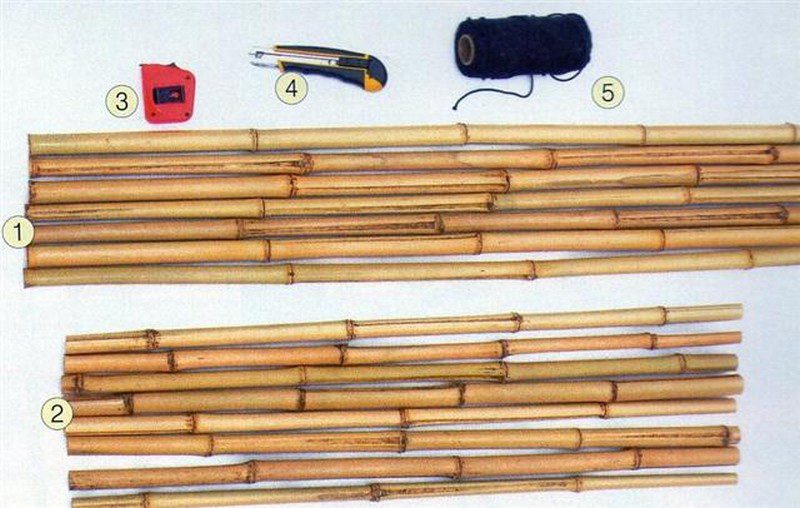
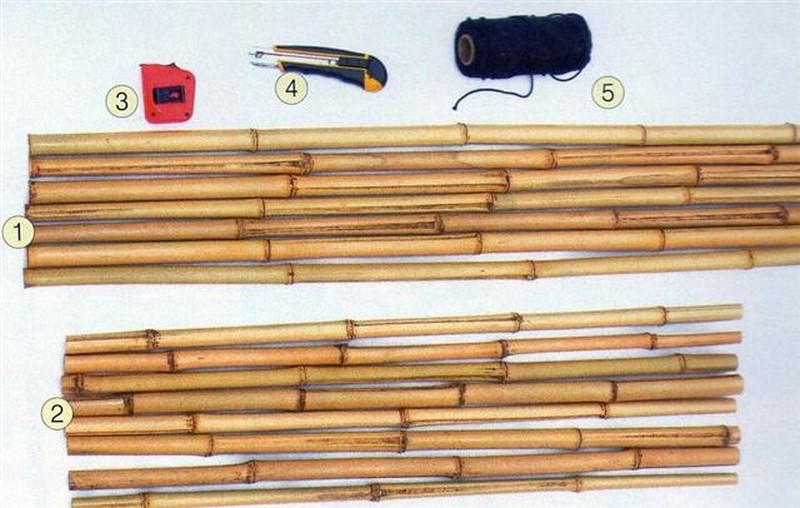
- 7 bamboo sticks, 2.5 cm in diameter, 1 meter long (vertical pieces)
- 8 bamboo sticks, 2.5 cm in diameter, 800 mm long (horizontal pieces)
- Nylon cord or other strong outdoor cord for lashing
What Are the Tools Needed for This Bamboo Trellis Build?
- Cutter or saw
- Tape measure
- Marker or pencil
- Gloves and safety glasses (recommended)
How to Build a Bamboo Trellis: Step-by-Step Instructions
Step 1: Plan Your Trellis Design
Decide how tall and wide you want your trellis to be. In this guide, we build an 80 cm wide by 100 cm tall trellis with a simple grid pattern.
- Sketch the trellis on paper to see the layout
- Decide how far apart you want the vertical and horizontal pieces to be
- A spacing of about 20 to 30 cm between pieces works well for most climbing plants
Step 2: Measure and Cut the Bamboo
Use the tape measure to check the length of each bamboo stick.
- Confirm that you have 7 sticks that are 1 meter long
- Confirm that you have 8 sticks that are 800 mm long
- If any pieces are too long, mark the cut line with a pencil and cut them with your cutter or saw
- Try to make straight cuts so the trellis will sit evenly
Wear safety glasses and gloves while cutting.

Step 3: Lay Out the Trellis Frame
Find a flat area on the ground and lay out the frame.
- Place the 7 bamboo sticks that are 1 meter long vertically, side by side
- Space them evenly, about 12 to 14 cm apart, until the total width is about 80 cm
- Check that the top and bottom ends line up in a straight line
This forms the vertical part of your trellis.
Step 4: Add the Horizontal Bamboo Bars
Now add the horizontal bamboo pieces to form a grid.
- Take the 8 sticks that are 800 mm long
- Start near the bottom and place the first horizontal stick across all vertical sticks, about 30 cm up from what will be the ground
- Place the next horizontal stick 10 to 15 cm above the first one
- Continue placing horizontal sticks at regular intervals until you reach near the top of the trellis
Make sure each horizontal piece crosses every vertical piece. Adjust the spacing so the grid looks even.
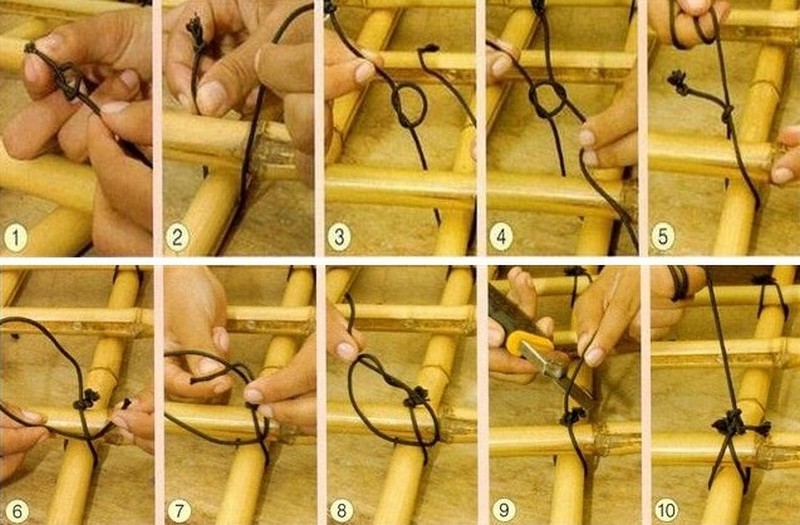
Step 5: Secure Each Joint with Lashing Knots
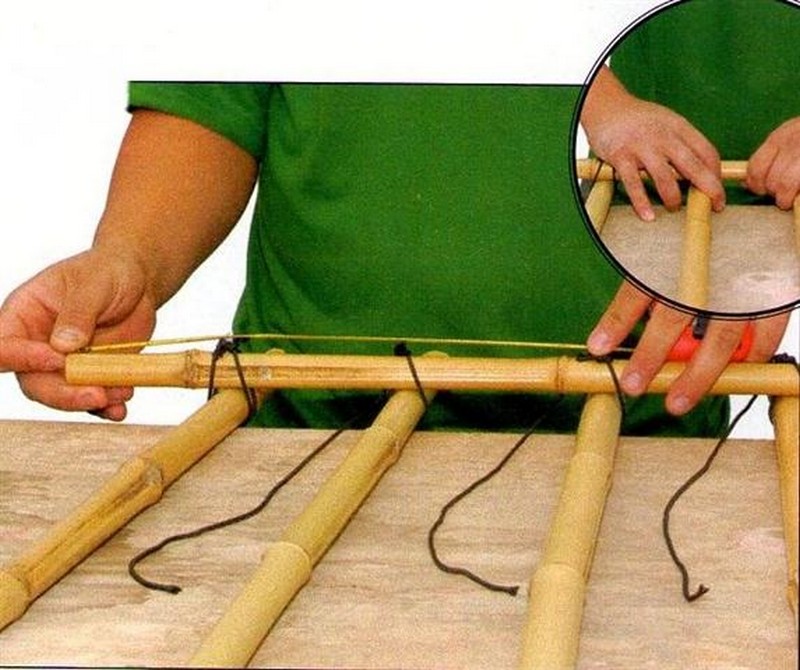
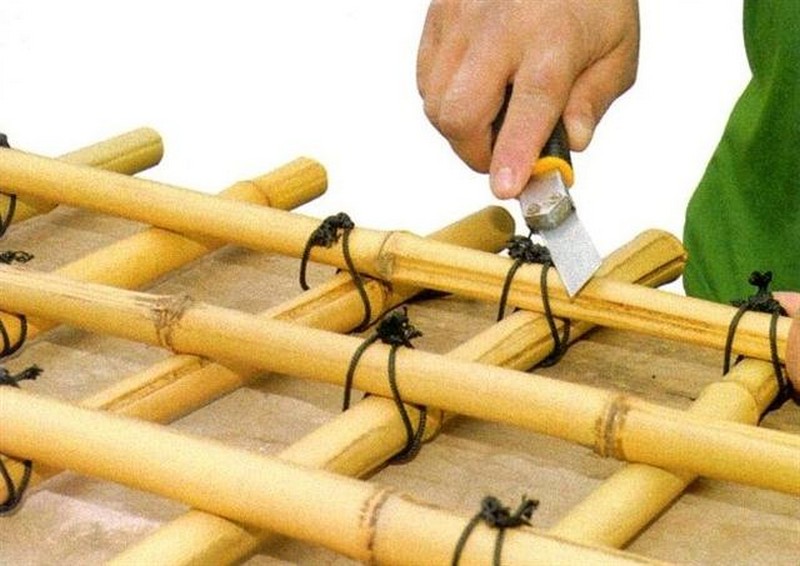
At every place where a vertical and a horizontal piece cross, you need to tie them together.
A lashing knot is a strong way to bind poles together. To keep it simple:
- Cut a length of nylon cord, about 40 to 50 cm long for each joint
- Wrap the cord around the crossing point several times, pulling it tight each time
- Cross the wraps over themselves so the cord grips the bamboo
- Finish with a tight knot so it does not slip
Repeat this at each crossing point where the vertical and horizontal bamboo pieces meet.
Check that:
- The cord is tight
- The bamboo pieces do not move easily
- The frame feels stronger as you tie more joints
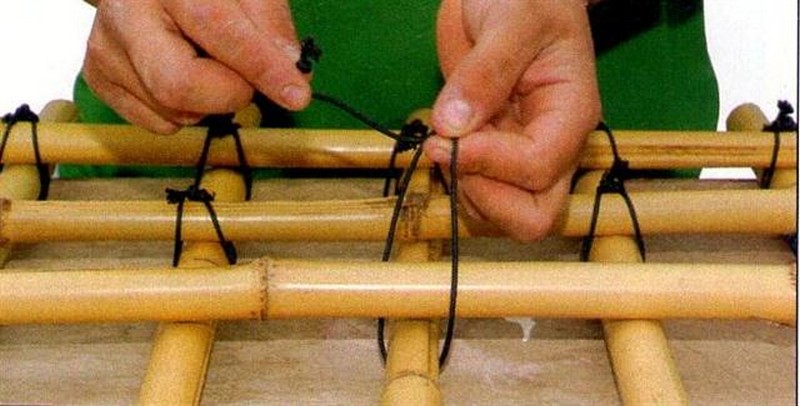
Step 6: Add Diagonal Braces for Strength
To prevent the trellis from wobbling or leaning, add diagonal braces.
- Measure the distance from the top corner on one side to a lower point on the opposite side of the frame
- Cut two or four extra pieces of bamboo to fit these diagonal lines
- Place the braces at the corners of the frame, running from top to bottom at an angle
- Lash each end of every brace tightly with nylon cord, just like the other joints
These diagonal pieces help keep the trellis square and solid.
Step 7: Install the Trellis in the Garden
Once your trellis frame is fully tied and feels sturdy, it is time to install it.
- Choose a location where your climbing plants will have enough sun
- Mark where the vertical poles will go into the ground
- Dig holes that are about 20 to 30 cm deep for each vertical pole
- Set the bottom ends of the vertical bamboo sticks into the holes
- Push soil back around each pole and pack it down firmly with your foot or a tool
Check that:
- The trellis stands upright
- It does not rock when you push gently
- The base feels stable
You can also use stones or bricks around the base for extra stability if the soil is loose.
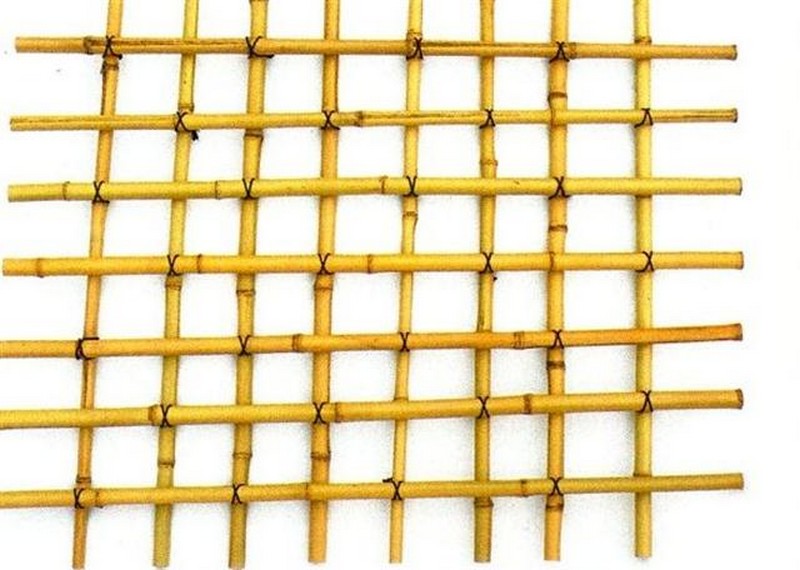
Step 8: Plant Your Climbing Plants
Now you can plant at the base of the trellis.
Good choices include:
- Pole beans
- Peas
- Cucumbers
- Morning glory
- Sweet peas
- Jasmine or other light climbers
Plant your seeds or seedlings about 5 to 10 cm away from the base of the trellis. Water them well. As they grow, guide the stems gently onto the bamboo so they can wrap and climb.
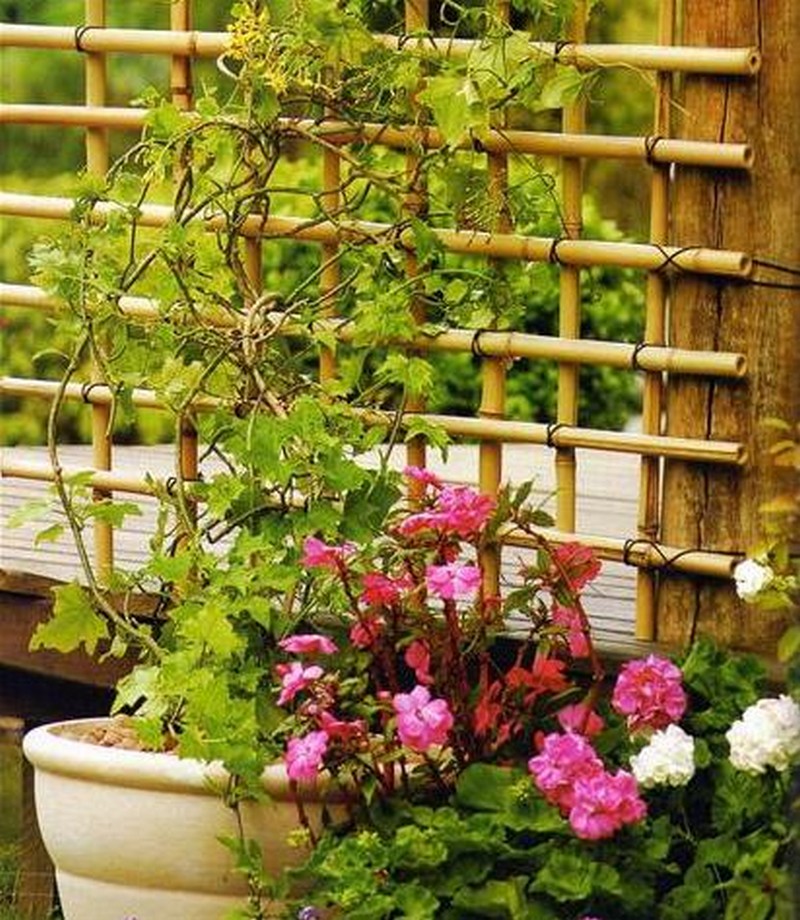
Step 9: Maintain Your Bamboo Trellis
To keep your trellis strong and safe to use:
- Check knots every few weeks, especially after strong winds
- Tighten or replace any loose nylon cord
- Remove dead or heavy plant material at the end of the season
- Inspect the bottom of the bamboo poles for rot if they stay in very wet soil
With basic care, a bamboo trellis can last several years.
Click on any image to start the lightbox display. Use your Esc key to close the lightbox. You can also view the images as a slideshow if you prefer 😎

You can get more step by step instructions here…
Types of Bamboo Suitable for Trellises
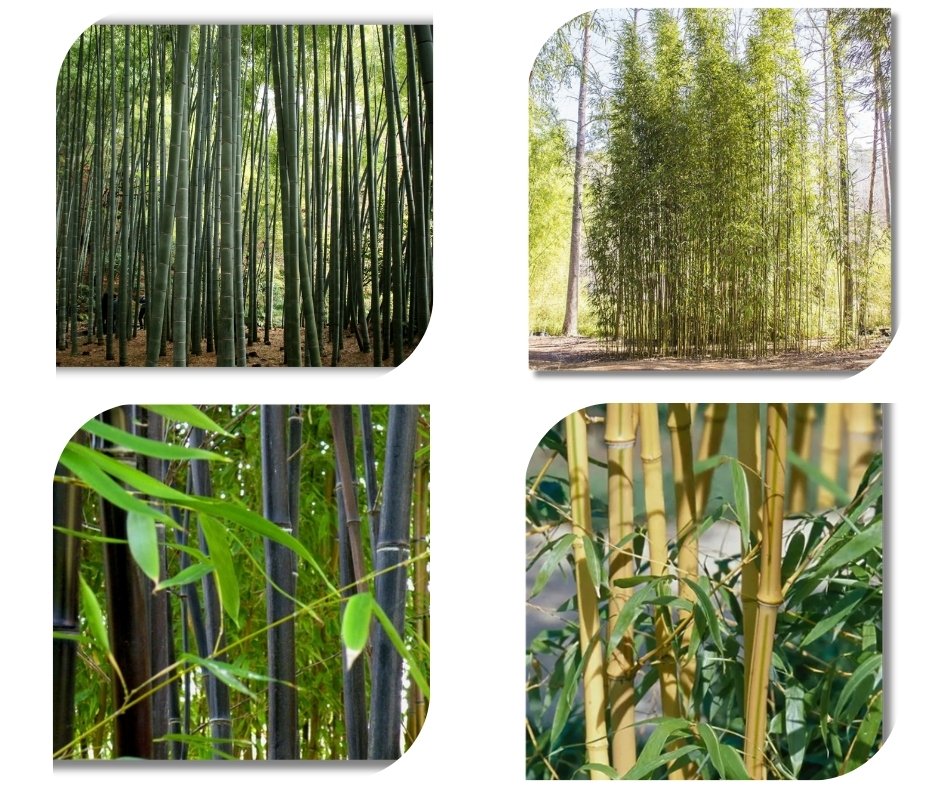
Not every bamboo species is ideal for building. Some are too thin and weak, while others can be hard to manage in a garden. Here are a few types of bamboo that work well for trellises.
- Moso Bamboo (Phyllostachys edulis)
- Moso bamboo is one of the most common species used for building projects, including trellises. It grows tall and has thick, strong stems. These strong stems, called culms, make it ideal for larger trellis structures that need to support heavier plants.
- Black Bamboo (Phyllostachys nigra)
- Black bamboo has dark colored stems that create a striking look in the garden. It is strong and flexible, so you can use it for straight or curved trellis designs. Black bamboo adds both strength and a dramatic, decorative touch.
- Tonkin Bamboo (Pseudosasa amabilis)
- Tonkin bamboo, also called tea stick bamboo, is valued for its straight, smooth, and strong canes. It is often used to make plant stakes and fishing rods. These qualities make it very reliable for trellis frameworks that need to hold up climbing plants.
- Golden Bamboo (Phyllostachys aurea)
- Golden bamboo grows densely and has attractive golden colored stems. It works well for trellis projects and can create a thick privacy screen when used in a row. The golden color adds warmth and brightness to the garden.
When choosing bamboo for your trellis, think about:
- The size and weight of the plants you want to support
- The climate in your area
- The look you want in your garden
Choose a species that is strong enough and also suited to your local conditions.
Creative Ways to Use Bamboo Trellises in Garden Design
A bamboo trellis is more than just a support for plants. It can be a key part of your garden design. Here are some creative ideas for using bamboo trellises.
Artistic Garden Panels
You can build a bamboo trellis as a decorative panel that becomes a focal point in your garden. Try patterns such as:
- Simple vertical and horizontal grids
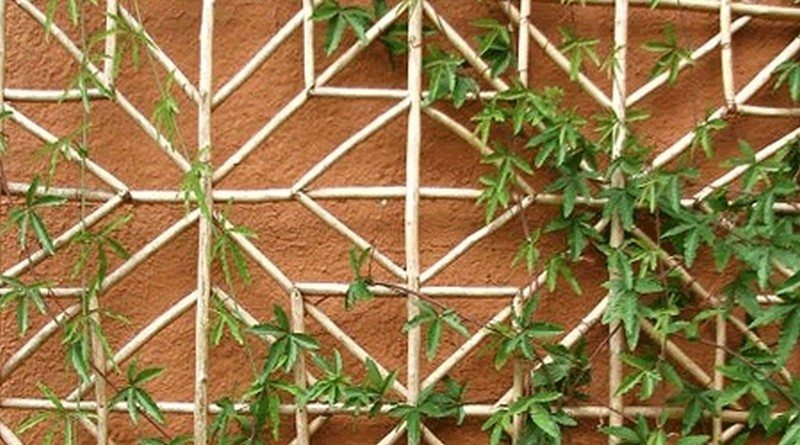
- Diagonal designs
- Mixed sized squares and rectangles
Place these panels where they frame a view or stand out against greenery.
Integrated into Pergolas and Arbors
Bamboo trellises can form the sides or roof of a pergola or arbor. When climbing plants cover them, they create natural shade and a cool, green tunnel or sitting area.
Creating Themed Garden Sections
Use bamboo trellises as dividers to separate different areas of your garden. For example, you can:
- Mark off a Japanese style corner
- Separate a vegetable plot from a flower area
- Create a small private reading space
This helps organize the garden and tell a visual story.
Vertical Gardening in Small Spaces
In tight spaces such as balconies, patios, or narrow side yards, bamboo trellises are perfect for vertical gardening. You can grow herbs, small vegetables, or flowering vines upward instead of spreading outward. This saves space and adds a living green wall.
Privacy Screens
Place bamboo trellises in front of windows, fences, or areas you want to hide. Plant dense climbers such as ivy, jasmine, or star jasmine along the base. As the plants cover the trellis, they form a natural privacy screen.
Frequently Asked Questions About Bamboo Trellises
- Is bamboo good for a trellis?
- Yes, bamboo is an excellent material for trellises. It is strong, lightweight, and naturally resistant to many weather conditions. When you lash the pieces together properly, a bamboo trellis can support many kinds of climbing plants.
- How long does a bamboo trellis last?
- In most gardens, an untreated bamboo trellis can last about three to five years, sometimes longer. If you keep the base from sitting in very wet soil and avoid constant ground contact, it may last even more seasons. Applying a sealer can also extend its life.
- What plants grow best on a bamboo trellis?
- Climbing plants grow best on a bamboo trellis. These include beans, peas, cucumbers, morning glory, sweet peas, and light flowering vines. You can also support some types of tomatoes and small gourds if the trellis is strong enough.
- Is bamboo invasive?
- Some running bamboo types spread quickly and can be invasive. Clumping bamboo types grow in a tight group and are much easier to control. If you plan to grow bamboo in your garden, choose clumping varieties or install root barriers.
- Can I use a string instead of a nylon cord?
- You can use a string, but it should be strong and weather-resistant. Natural jute or sisal twine looks nice but may rot faster in wet climates. Nylon cord, polyester cord, or other outdoor-rated rope will usually last longer.
- Can I build a larger bamboo trellis with this method?
- Yes. You can scale up this design by using longer and thicker bamboo poles and adding more diagonal braces. Make sure to space the poles evenly and tie all joints tightly so the larger structure stays stable.
Conclusion
A bamboo trellis supports climbing plants and also improves the look of your outdoor areas. It is a simple, sustainable, and attractive way to add structure and height to a garden. With just a few pieces of bamboo and some cord, you can turn a plain corner into a green and inviting space.
If you liked this project, you will also like viewing these gardening ideas…